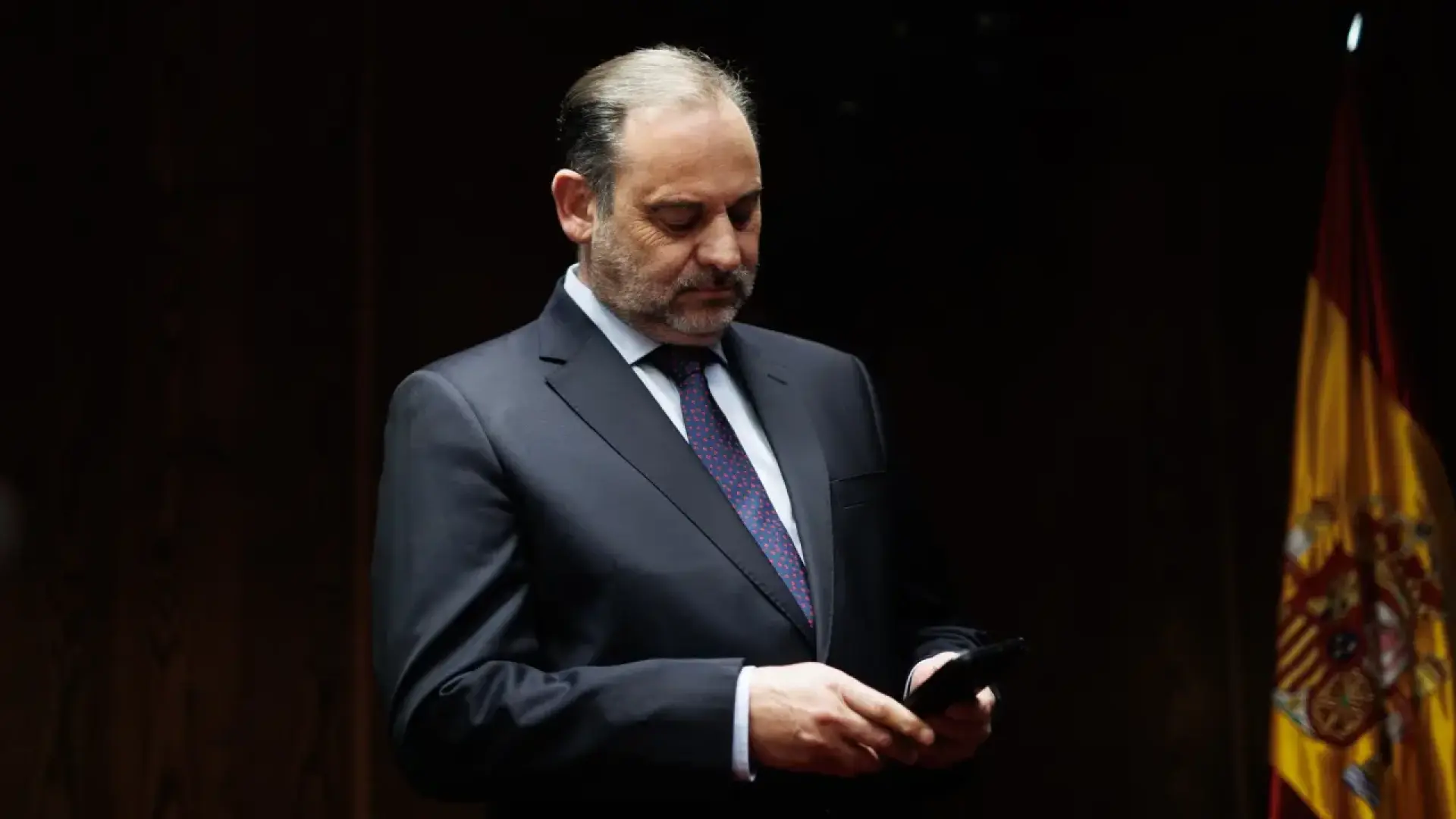
Former Minister of Transport José Luis Ábalos plans to seek protection from the Constitutional Court to annul the 24-year prison sentence handed down this Monday by the Supreme Court, according to sources from his defense team confirmed to 20minutos. The constitutional guarantees body, presided over by magistrate Cándido Conde-Pumpido with an expired mandate, is the only way that can prevent Ábalos from serving his sentence, beyond a possible pardon that no one in the Government has currently proposed.
The sentence in the masks case does not put an end to the entire Koldo case, which continues to be investigated in the National Court, but it marks a historic milestone for several reasons. José Luis Ábalos is not the first former minister of Spain convicted of corruption, but never before had a former minister been convicted while the president who appointed him remains in the Palacio de La Moncloa.
Furthermore, he has received the longest sentence of all former ministers convicted of corruption, including Socialist José Luis Barrionuevo, sentenced to 10 years for embezzlement of public funds and falsification of official documents, among other crimes, in the GAL case, and José Antonio Griñán, former Minister of Health and later Labor, sentenced to six years for the ERE case. Also convicted were Popular Party members Jaume Matas — six years for the former Minister of the Environment for the Palma Arena case —, Rodrigo Rato — former Minister of Economy and former Vice President sentenced to four and a half years for the Bankia case — and Eduardo Zaplana — former Minister of Labor sentenced to ten years for the Erial case.
Ábalos, following in the footsteps of former Attorney General Álvaro García Ortiz, will seek to save himself in the Constitutional Court. The defense of the former minister, led by lawyer Marino Turiel, faced the trial with an eye already on the possibility of appealing to the guarantees court, just like the lawyer of Koldo García, Leticia de la Hoz. In fact, the former ministerial advisor's defense already sought to have the guarantees body halt the trial before the first sessions began, an attempt that proved futile.
Both defenses have focused much of their efforts before and during the trial on pointing out violations of fundamental rights. Among the most recurring claims by Ábalos' defense was the accusation that the former minister was the subject of investigations by the UCO when he was a deputy, before Congress gave the Supreme Court permission to indict him.
Appeal to the Supreme Court's Appeals Chamber
The situation the former Transport Minister now faces is similar to that faced after his conviction by the former Attorney General of the State, although Álvaro García Ortiz was only sentenced to two years of disqualification from the position he held. Just as the former Attorney General did, Ábalos must now first appeal to the Supreme Court's Appeals Chamber, the last instance remaining in the judicial process. This is an essential requirement that García Ortiz also carried out before filing before the Constitutional Court an appeal that is still pending resolution.
Once Ábalos files this appeal and the Appeals Chamber rules, likely rejecting it, the former number three of the PSOE can then appeal for protection to the Constitutional Court.
The Criminal Chamber already anticipates this possibility in the sentence handed down this Monday. In it, it dedicates a section to responding to the allegations of the defenses of Ábalos and Koldo García. As it did throughout the investigation and during the trial, the Supreme Court denies that the defendants were prevented from accessing "the data in the case files, particularly those of a technological nature, such as conversations, messages, or emails."
In the condemning resolution, the Chamber rules out that the right "to a fair trial" or the principle of equality of arms have been violated, as denounced dozens of times by Koldo García's lawyer. The court already ruled on this matter in an order of March 3 and now states that its conclusion "has not only not been undermined after the plenary sessions, but has been reinforced."
"None of the evidence presented in this oral trial minimally supports the thesis that the parties' right to access all incubatory and/or exculpatory material has been curtailed in any way," the high court rules. In its opinion, the trial sessions have revealed "the parties' knowledge of the evidentiary material [...] which has been the subject of an extensive and detailed analysis, with absolute respect for the principle of contradiction."
The Chamber also does not believe that "possible breaches of the chain of custody" of the evidence have occurred. The same applies to the allegation by Ábalos' lawyer about the investigation of his client without judicial authorization. The court emphasizes that "at no time was there a clandestine investigation" and adds that "each and every one of the investigative measures carried out had judicial backing."


