
《科创板日报》May 30 (Reporter Wang Nai) When NVIDIA's Vice President of Robotics and Edge AI, Deepu Talla, said at the opening of BEYOND Expo 2026: "In the next 10 to 20 years, there may be hundreds of billions of robots globally." Looking ahead is always full of infinite possibilities. The history of technology repeatedly proves that we often "overestimate the short term and underestimate the long term."
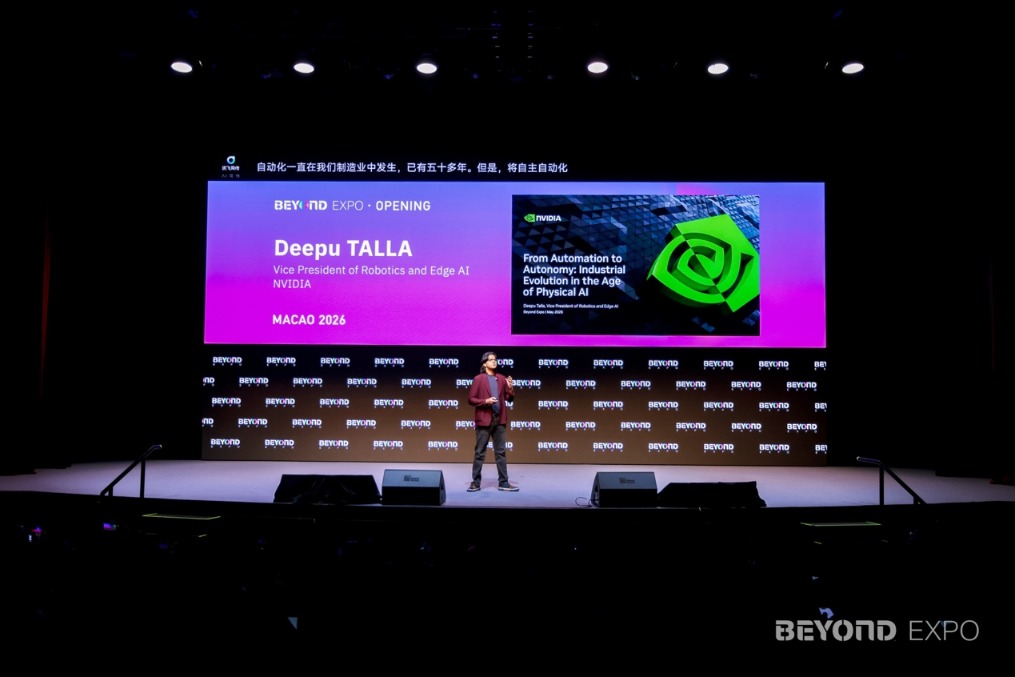
But in the past two years, we've heard too many similar grand narratives. At the exhibition site, entrepreneurs and investors are more often asking: What about now?
From May 27 to 30, BEYOND Expo 2026 was held in Macau. The theme of this year's conference was "AI: Digital and Physical Symbiosis." Nearly 800 exhibitors and over 1,000 global guests participated, coming from China, South Korea, Southeast Asia, the UAE, Saudi Arabia, Qatar, Brazil, the EU, and other countries and regions.
Ho Hau Wah, Vice Chairman of the National Committee of the Chinese People's Political Consultative Conference; Ho Iat Seng, the fifth Chief Executive of the Macau Special Administrative Region; Ho Sio San, Vice President of the Legislative Assembly of Macau; Chui Sai Cheong, President of the Macau Chinese Chamber of Commerce; and Lu Gang, co-founder of BEYOND Expo, attended the opening ceremony.
Whether it's the theme of the exhibition or the sub-forums, the focus almost unanimously points in the same direction: how artificial intelligence moves from the digital to the physical world. At the exhibition site, the slogan "AI: DIGITAL TO PHYSICAL" was everywhere.
After four days of exhibitions and forums, one clear feeling is that the industry has fully shifted from discussing "whether to do Physical AI" to the practical stage of "how to do it" and "who will do it."
The 'Last Mile' of AI is the Physical World
Walking through the BEYOND Expo exhibition area, the most直观 feeling is that humanoid robots have indeed started "entering factories"—some are directing traffic on the road, others are sorting packages in logistics warehouses. At the exhibition, many service-type humanoid robots also played the role of "coffee barista." However, humanoid robots that can run and dance often become helpless once beyond the preset scenario.
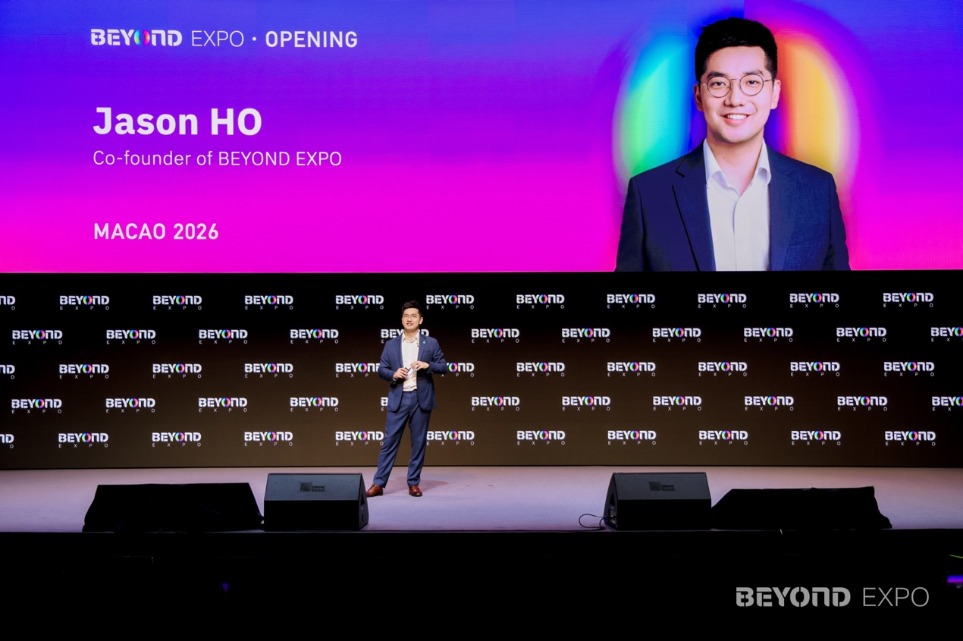
At the opening ceremony, BEYOND Expo co-founder He Jiandong mentioned that Asia not only has AI software and model innovation, but also advanced manufacturing, hardware innovation, and infrastructure capabilities, which can provide important support for AI entering the physical world. From chips and hardware to Physical AI, digital intelligence truly needs a physical foundation to carry and manufacture it in the real world.
Zhang Tao, founder and CEO of Pudu Robotics, gave a relatively calm assessment of the "ChatGPT moment for embodied intelligence": at least 3 to 5 years are still needed. The logic is simple: achieving algorithmic breakthroughs in autonomous driving requires over 10 million hours of real-world data, and robots are much more complex than cars, needing "tens of millions to hundreds of millions of hours of real-world data. Many companies are just beginning to build their data pyramids."
Zhang Haixing, founder and CEO of Matrix Superintelligence, provided a more specific timeline for the demand explosion of humanoid robots. He believes the real demand explosion period is between 2028 and 2030, with comprehensive explosion after 2030 to 2035. There are two constraining factors: cost reduction in the industrial chain and the generalization ability of the brain.
Regarding the timing of industry reshuffling, Zhang Haixing thinks it will happen within 18 to 24 months at the fastest, and at most within 36 months. Therefore, many companies will consolidate their cash positions early. Relying entirely on external financing is very risky. Once the environment changes and funding dries up, if revenue and profit haven't materialized, those companies will definitely be acquired or eliminated.
From the perspective of robot form, Zhang Yu, founding partner of Qingzhi Capital, believes that industrial scenarios and commercial service scenarios should be distinguished, and they don't all need to be humanoid. "The current robotics track is somewhat off-track—deliberately made 'humanoid' to replace humans, but logically, machines that replace humans don't need to be humanoid." He points out that what can truly be commercialized at this stage are specialized robots for "limited scenarios"—window cleaning, floor sweeping, inspection, logistics.
What does this mean? It means that most of the robots on the exhibition floor that can do flips, perform boxing, or brew coffee are still at the "demonstration level" or "single-scenario specialized level."
The service life and durability of robots are also a concern.
A staff member from a dexterous hand company, Xingguang Year, said: "Many manufacturers claim their no-load tests reach millions of cycles, 'but these are just moving in the air, not actually working.'" She noted that as robots enter factories, focusing too much on no-load test cycles is no longer meaningful. The real bottleneck lies in precision decay after long-term grasping and practical usability issues.
"Currently, many companies' humanoid dexterous hands are entering factories for POC (Proof of Concept) this year." She estimates, "This year is mainly the process from 0 to 1, and actual volume production should start next year."
The consensus among many participants is that the complexity of the physical world is far more brutal than the "test set" of the digital world. Currently, robots can perform specific tasks in specific scenarios, but once the scenario changes, tasks increase, or precision degrades over long-term operation, problems emerge.
What Are Investors Focused On? Where Is the Money Going?
If the industrial side is still tackling "generalization capabilities," the capital side has already narrowed its focus to more specific dimensions.
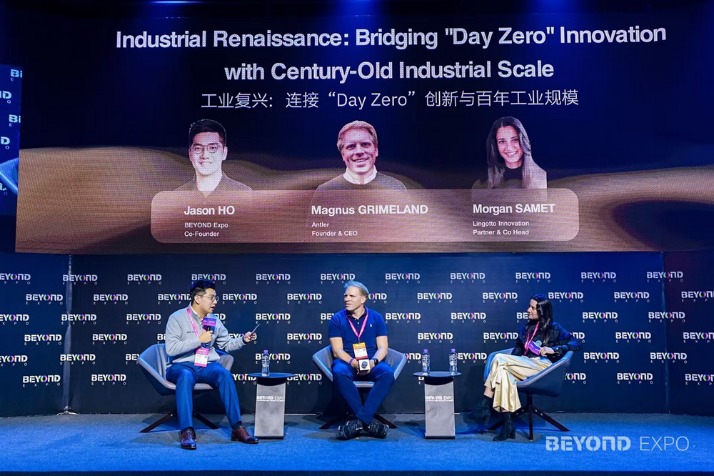
At the International Investment and Financing Summit, Antler founder and CEO Magnus Grimeland shared a statistic: In the past, very few global cities could produce billion-dollar tech companies; now that number has exceeded 200. Opportunities have increased, but the judgment criteria hasn't changed—"we look for people who can solve hardcore problems."
In his view, the Physical AI market is large enough. The real key is not valuation, but whether you can find pragmatic teams willing to "start with one or two small orders"—first get a real scenario running, then talk about scaling.
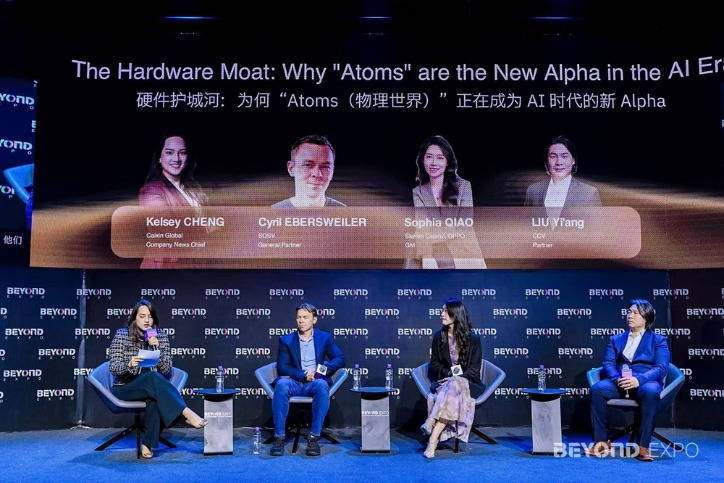
SOSV General Partner Cyril Ebersweiler was more direct. In a dialogue, he mentioned that he has invested in many consumer hardware companies in the past, "some profitable, some losing." "Hardware entrepreneurship is a cash-intensive business. Going from prototype to mass production is like crossing a 'bridge of death.' When you run out of cash, can't afford inventory costs, and still need to spend on marketing, that becomes the bottleneck for most founders."
Regarding whether there is a bubble in hardware company valuations, Qiao Yuting, Investment General Manager at OPPO Starry Investment, believes that high valuations cannot be generalized. "The valuations of many smart hardware companies are actually quite reasonable." Companies that succeed are those whose teams have truly found product-market fit and have the ability to build a moat integrating software and hardware. "Pure algorithm teams making AI smart hardware often struggle with supply chain management."
The consensus among many investors is that pure software is easily replaceable in the AI era, but the combination of "software + hardware + scenario + supply chain" is hard to replicate in the short term.
Yao Maoqing, partner at Zhiyuan Robotics and President of the High Embodied Business Unit, further dissected the meaning of "software-hardware integration." He pointed out, "Only doing the brain, not the hardware, and not touching the scenario, is a very dangerous model. Because embodied intelligence is a systemic system, the true winner will be a company with strong full-stack capabilities." In addition, strong engineering delivery capabilities are needed to stably deploy robots to frontline sites.
Cui Li, Chief Development Officer at ZTE Corporation, offered another perspective from the "delivery" angle in a discussion. She believes that competition in AI infrastructure has shifted from "can it be built" to "can it be delivered well."
The future infrastructure will involve mixed deployment of chips, servers, and network equipment from multiple manufacturers. How to efficiently schedule heterogeneous resources and make computing power "available on demand" is a core challenge in the implementation phase. Among them, the speed of deployment is very important.
Citing ZTE's practice: when helping enterprises build industry-specific large models, they need to quickly complete incremental training, inference optimization, even "within minutes." She calls this capability "soft power"—resonating with uncertainty, and speed is key.
Zhang Yu is the founding partner of Qingzhi Capital. He told the reporter that when evaluating AI-related businesses, they have added a new investment judgment dimension—"the ability to use AI."
He gave an example: In the past, world-class scientists who took 20-30 years to produce results and talent were absolute moats for companies. But in the AI era, they might be surpassed by someone who understands data and models. "Future work is done by humans and AI together. Whether you can clearly express intentions and understand AI's strengths is itself a core competitiveness."
The 'All Kinds of AI' Phenomenon: Who Will Stand Out?
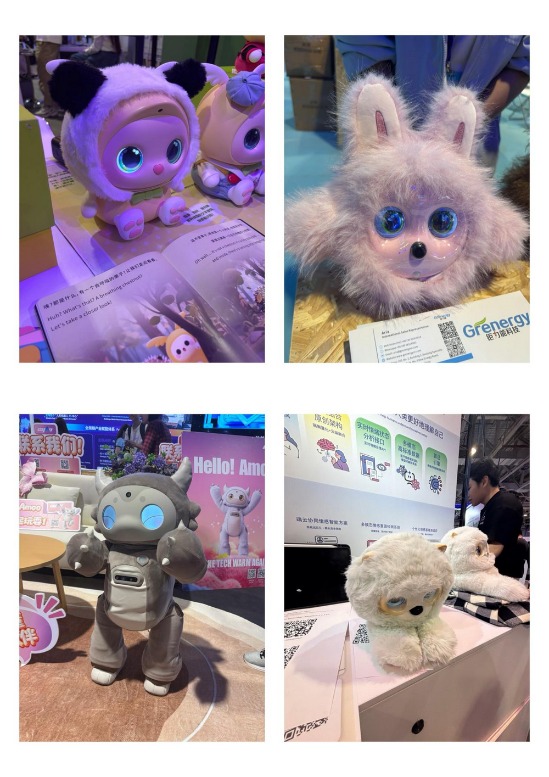
In addition to major leading companies, this BEYOND Expo 2026 also featured a large number of small and medium-sized companies. Roughly counting, there were at least five or six startups focusing on AI companion dolls, each with different positioning: sleep companion, infant companion, emotion recognition, etc.
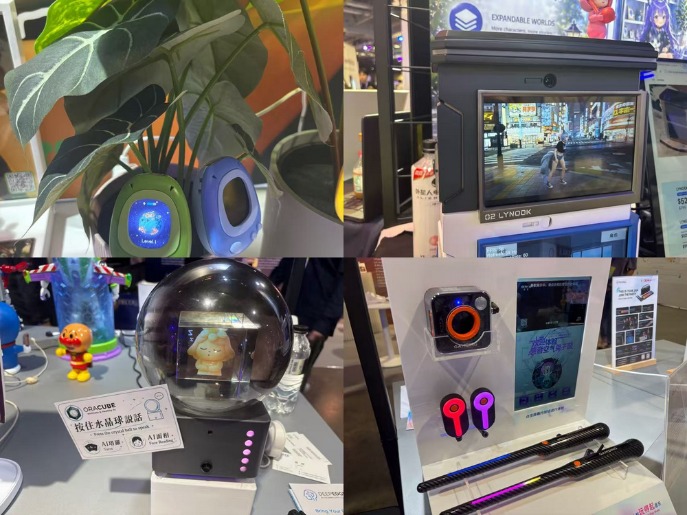
Other small and medium-sized companies showcased products with diverse forms and functions: meditation cushions, smart agent boxes, virtual houses for avatars, and smart hardware that looks like a toy but actually assesses plant growth.
The reporter learned that many teams only started product development last year and have already brought DEMOs to Macau to "test the waters," planning official sales in the second half of this year. From idea to sale, the iteration cycle has been compressed to one year or even less.
Zhang Yu told the reporter, "At the current juncture, for hardware products, your creativity, speed, and execution ability become very important. Speed has become a new barrier."
During the exhibition, I couldn't help but wonder: do these products really have a market? Which ones will be eliminated in the future?
Zhang Yu believes, "Everyone's knowledge boundary is different. What people see is just the part they can explore, which is also part of creativity. The fearless are often the ignorant. Run 1,000 such companies, and one or two will come out. Those one or two may not be the ones with the highest technical level."
Sun Yang, founder of Looki, offered another dimension of observation from the product side. He frankly stated that the current AI hardware market is still in a "very early" stage, with many demands being "fake demands" or "real demands" with weak signals. "In the next one or two years, real demand will amplify, but what should be accumulated during the window? Not the hardware itself, but the organizational capability around the model and the prediction of model evolution trends."
In his view, the biggest difference between this wave of AI hardware and the consumer electronics overseas expansion of ten years ago is that value no longer comes from the "hardware itself" but from the "model." Hardware largely serves the model. "When starting hardware today, you need to predict where the model might be in a year's time."
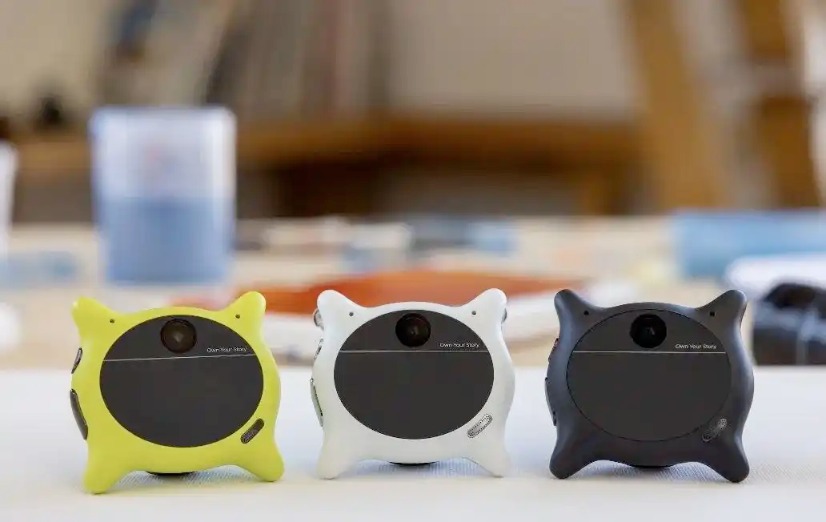
Sun Yang revealed to the reporter that since the launch of his company's AI wearable device in August last year, cumulative sales have exceeded 20,000 units, with an expected 100,000 units by the end of the year. They are currently planning the next-generation product, expected to be released by the end of this year or early next year.
He said, "The hardware development cycle is at least half a year to a year, and reliability testing steps cannot be skipped. Companies that can quickly build a 'feedback loop' and continuously iterate software and hardware have the chance to survive."
Wang Lijun, co-founder and CMO of Zuopoint, chose to "redo" a seemingly traditional category. In his view, hearing aids, a century-old category, have long been monopolized by international brands, with prices often in the tens of thousands, and must be repeatedly debugged by offline fitters. "AI will change everything; it will become the infrastructure of society." He predicts that in the future, everyone may need a similar wearable device, not just for hearing aids, but for health monitoring through sensors.
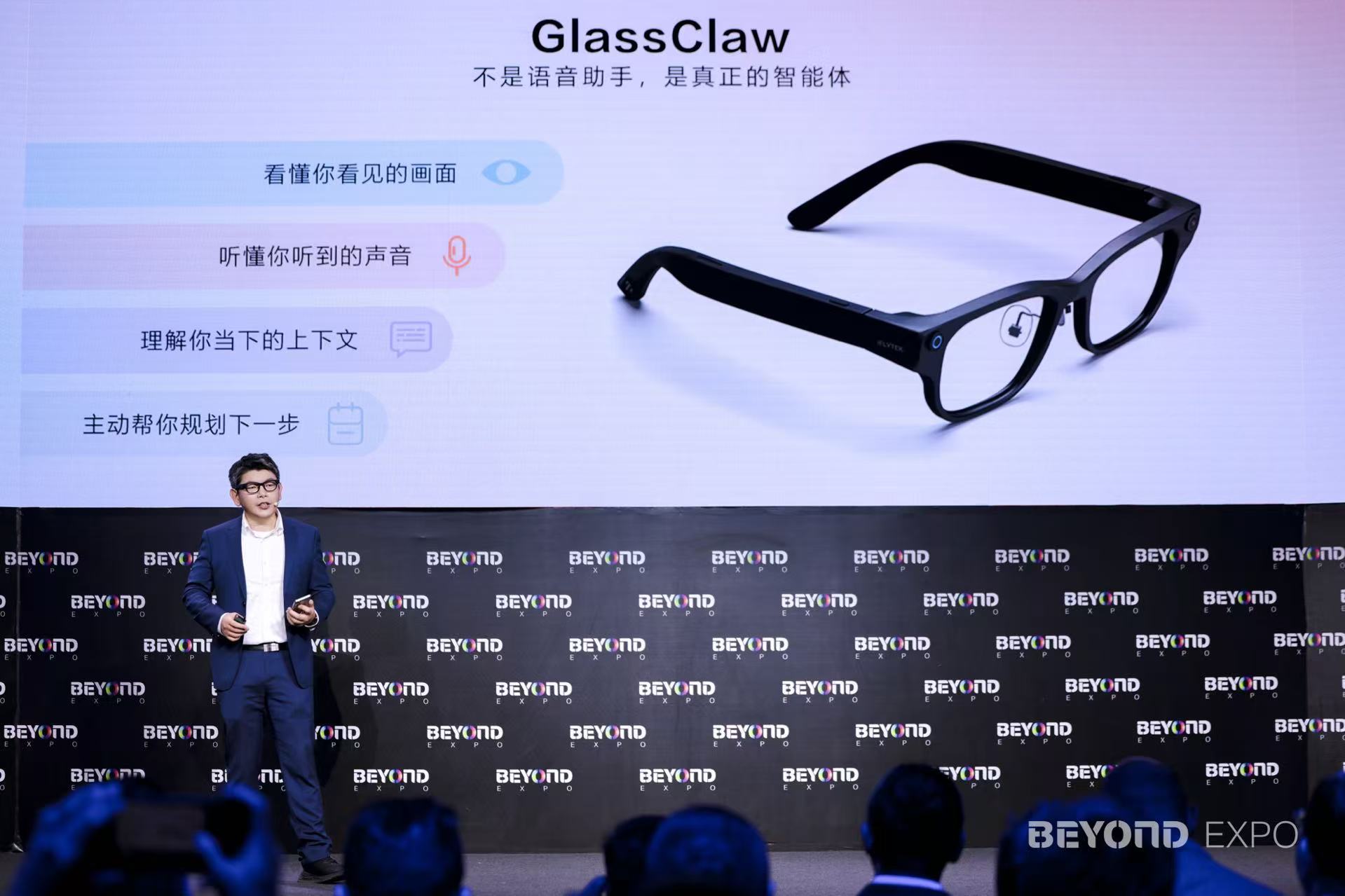
iFLYTEK also officially released a new AI glasses product during the exhibition, with a strategy emphasizing software-hardware integration but a narrower focus—targeting business office scenarios.
Lin Huijie, General Manager of iFLYTEK's Wearable Device Business Unit, explained in an interview why they chose the glasses form factor: "It is a natural first-person device, able to see what users see and hear what users hear, simulating real human work scenarios." He believes that the reason smart glasses haven't become a hit in the past is primarily because "there was no indispensable need that smartphones couldn't replace." AI gives glasses a new answer: an all-day AI assistant.
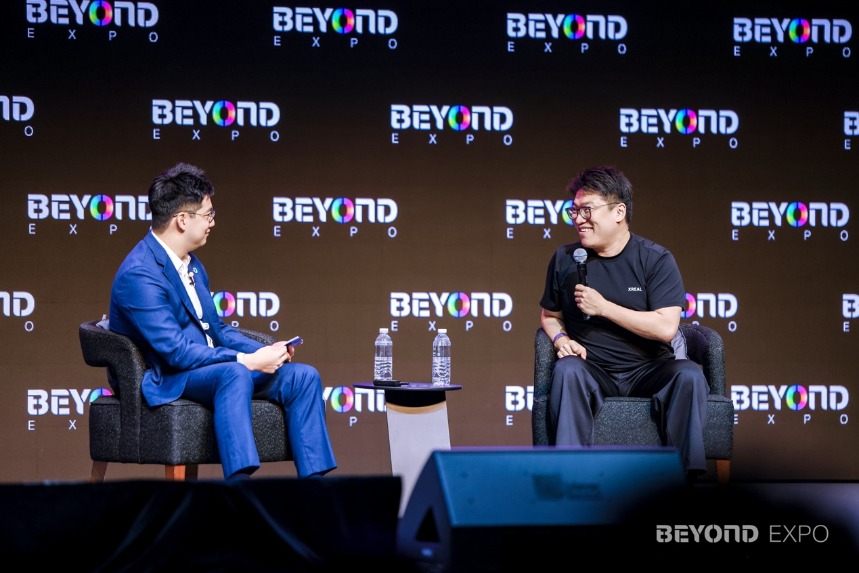
Regarding the overseas expansion of hardware products, this was also a hot topic at the expo. Xu Chi, founder and CEO of XREAL, a glasses company, shared his company's overseas experience in a fireside chat. He recounted a story of collaborating with Google—to demonstrate a demo for Google CEO Sundar Pichai, they sent an engineer to fly over on a weekend, solving the problem in two days, ultimately winning a deep collaboration that lasted over two years.
"True globalization is not just selling products abroad, but integrating culture, brand, and interests. It cannot be a zero-sum game; you must find local partners for reasonable profit sharing and collaboration to achieve 1+1>2. Now global media and giants (like Google) call us directly 'XREAL'—that is the greatest recognition of our brand internationalization."
(Article source: Cailianshe)


