
Brazil's Energy Mix Goes Green Even As Oil Production Climbs
- Brazil added 1.68 GW of solar, wind and thermal capacity in August alone, pushing 2026 additions to 4.85 GW and total installed capacity to 221 GW, 85% of it renewable.
- The World Bank approved a $968 million financing package for Brazil's Northeast while China's State Grid broke ground on a 1,468-km transmission line, the largest in the country's history.
- With Lula and Bolsonaro headed toward an October vote, business leaders are pressing both camps to lock in a green growth agenda regardless of who wins.
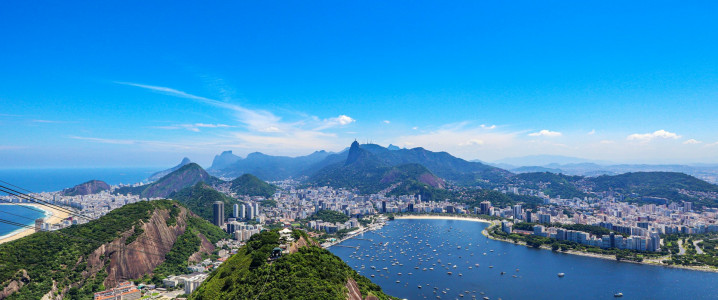
Brazil is continuing to expand its renewable energy capacity thanks to favourable national policies and support from foreign investors. The South American giant has developed an impressive green energy industry in recent years, expanding its oil and gas production to strengthen energy security and establish its reputation as a regional energy hub.
By 2025, Brazil had an impressively low-carbon energy mix, with around 50 per cent of its energy coming from renewable sources, including solar, wind, and bioenergy. Brazil has achieved this diversification by implementing long-term energy policies that have primarily focused on energy security. Its energy-related emissions accounted for less than 20 per cent of the country’s total greenhouse gas emissions in 2023, compared to a global average of around 75 per cent.
In August, Brazil added around 1.68 GW of solar, wind and thermal capacity to the grid, according to the Brazilian power sector watchdog Aneel. Twenty new facilities were connected to the grid in August, including 15 solar plants, three thermal power plants, and two wind parks. This brings total additions in 2026 to 4.85 GW to date, with solar power accounting for 3.5 GW of new capacity. Brazil now has 221 GW of total installed power generation capacity, almost 85 per cent of which was from renewable energy.
In May, the World Bank’s Board of Directors approved a new project to encourage investment in low-carbon industrial commodities, clean fuels, and enabling infrastructure in industrial and energy value chains in the Northeast region of Brazil. The World Bank announced a $500 million loan as part of a broader $968 million financing package to help Brazil develop the region's largely untapped renewable energy resources. The northeast of Brazil is one of the country’s poorest regions, and developing the clean energy industry is expected to create employment opportunities and grow the local economy.
The New Development Bank also provided financing for a large-scale wind project in the northeastern state of Paraíba. The 648-MW Serra da Palmeira Wind Complex was completed by CTG, the Brazilian subsidiary of China Three Gorges Corporation, in October 2025.
China and Brazil have deepened cooperation in renewable energy and cleantech development in recent years, with Chinese companies bringing cutting-edge technologies to Brazil to support sustainable development. The two countries' strategic priorities include green development, energy transition, and re-industrialisation. China’s State Grid Corporation recently broke ground on a 1,468-km ultra-high voltage power transmission project, marking the largest investment in an electricity transmission franchise project in Brazil’s history.
Ahead of the upcoming presidential elections in October, business groups are urging candidates to support green growth. The Brazilian Business Council for Sustainable Development (CEBDS), which represents 11 of the largest Brazilian business groups, addressed candidates in a 2026 Letter to Presidential Candidates, calling for greater focus, strategy, and governance to strengthen Brazil’s competitiveness and sustainable development.
During the CEBDS Sustainable Congress, the group discussed geopolitics and climate, investment amid uncertainty, water availability, power generation and food production. The summit also focused on how to turn Brazil’s sustainability agenda into an economic advantage.
Marina Grossi, president of CEBDS and a special envoy for the business sector to the 2025 COP30 climate conference, explained, “In this letter, we are trying to propose a project for the country. Something that will help us move forward rather than reduce us to selling commodities alone, but also climate solutions.”
The letter emphasises Brazil’s assets, including clean energy, productive soil, the planet’s largest biodiversity reserve, and decades of leadership in biofuels. In the letter, CEBDS states, “This nature is our greatest economic infrastructure, and the world is willing to pay for it. But no competitive advantage can sustain itself: it requires planning, policies that span governments, and a productive sector willing to turn natural wealth into lasting prosperity.”
The two frontrunners in the election are leftist President Luiz Inácio Lula da Silva and right-wing Senator Flávio Bolsonaro. Bolsonaro is strongly in favour of oil and gas expansion and has called for growing energy subsidies. However, despite being a climate denier, Bolsonaro recognises the broad support for green energy and is not excluding it from the agenda.
In December, Lula instructed ministries to prepare a resolution on energy transition within 60 days for the National Council for Energy Policy (CNPE) following the country’s hosting of COP30 in November. The aim is to reduce Brazil’s dependence on oil, coal, and natural gas and to outline financing mechanisms, including the creation of an Energy Transition Fund funded by revenue from the oil and gas sector. Lula has also shown support for oil and gas as part of the energy mix. In recent weeks, he vowed to protect Brazil’s oil and critical mineral resources from foreign control.
Strong national policies and high levels of foreign investment have helped the South American country diversify its energy mix and solidify its position as a regional energy hub in recent years. With its strong track record, Brazil is expected to continue expanding its renewable energy as well as its fossil fuel capacity regardless of who wins the October presidential election.
By Felicity Bradstock for Oilprice.com
More Top Reads From Oilprice.com


