
The ‘Canada Grocery and Essentials Benefit’ is being rolled out today to help face the rising cost of living for many Canadians. Maria Sarrouh reports.
Eligible Canadians have begun receiving their second payment under the new Canada Groceries and Essentials Benefit, but some say the extra money does little to ease the pressure of rising food and household costs.
The benefit, formerly known as the GST/HST credit, provides quarterly payments to lower-income Canadians based on factors including income, marital status and the number of children in a household.
A single person without children can receive up to $679 annually, while households with four or more children can receive up to $1,826.
CTVNews.ca asked readers if the benefit helped their families make ends meet. Through email responses, some said it was not enough to make a meaningful difference, while others said they do not qualify, despite facing financial pressure.
 A customer shops for produce at a FreshCo grocery store in Brampton, Ont., Friday, June 5, 2026. THE CANADIAN PRESS/Chris Young
‘Spit in the ocean’
For some seniors and people living on disability benefits, the extra money is welcome, but quickly disappears.
“This barely helps me at all,” Allen Mayes of Armstrong, B.C., wrote, adding that the maximum annual benefit for a single person amounts to only a handful of grocery trips for him.
The 73-year-old said he lives on both the Canada Pension Plan (CPP) and Old Age Security (OAS), and spends about $150 every two weeks on basic food.
“(The payment is) less than 20 per cent of my basic food for the year. That’s not a drop in the bucket — it’s spit in the ocean,” Mayes wrote. He said he relies on inexpensive staples such as beans, frozen peas and corn, rice and flour, and bakes his own bread to save money.
Guy Helwig, of Southampton, Ont., said the benefit helps “somewhat,” but argued that rising costs extend far beyond groceries.
Helwig, who said he is retired and living on a fixed income, pointed to higher rent, property taxes, water and sewer rates, as well as phone, cable and internet costs.
“People are drowning in higher bills!” he wrote.
 Shoppers enter a west-end Toronto Sobeys grocery store, Sunday, June 26, 2023. THE CANADIAN PRESS/Graeme Roy
‘Tired of never being heard’
Jodie McAuley of Vancouver Island said the amount she received is far too little to make a significant difference.
“$127 for groceries for a senior is just sad,” she wrote. “If you do the math, that works out to $1.41 a day between payments. A can of soup is more expensive.”
It’s a similar situation for Liz Carter.
“While I am appreciative of any extra money I get it really is just ‘a drop in the bucket,’” the native of Red Deer, Alta., wrote.
The 72-year-old said she has little food in her fridge and pantry, and has had to cut back on what she eats because of rising prices.
“I primarily live on canned light tuna and frozen grilled chicken strips,” she wrote.
Mike Van Damme, of Sarnia, Ont., said he receives about $1,200 a month through CPP.
He said people living on disability benefits are struggling to afford basic necessities and deserve more dignity.
“I never asked to be born with a genetic defect that affected my heart,” he wrote. “We all talk about affordability, but little is done, and people on disability are tired of never being heard.”
 A customer shops for processed meat products at a FreshCo grocery store in Brampton, Ont., Friday, June 5, 2026. THE CANADIAN PRESS/Chris Young
‘I feel the government left us out’
For some readers, geography and circumstance adds another layer to the problem.
Arlene Campbell, who is from Patuanak, Sask., said residents in her northern Saskatchewan community do not have access to large grocery chains such as Walmart or Superstore.
“We have to buy from Northern Store, and the price of freight is included in the prices, which (comes at an) extremely higher cost,” Campbell wrote.
She said a jug of milk can cost nearly $14, while a box of diapers can go for $64.
While Campbell appreciates the grocery rebate, she said it’s ”not much of a benefit.”
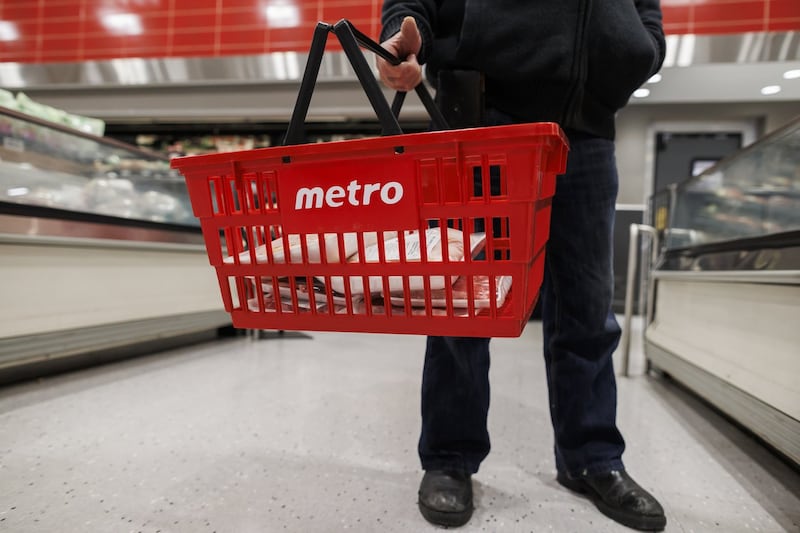 A customer holds their shopping basket at a Metro grocery store In Toronto on Friday, Feb. 2, 2024. THE CANADIAN PRESS/Cole Burston
Not everyone who responded to the callout receives the benefit.
Cindy Hitch, based out of Winnipeg, said she was laid off in 2025 after her employer went bankrupt and has been living on employment insurance.
She said she believes the benefit calculation, based on her previous income, has left people like her behind.
“I feel the government left us out,” Hitch wrote.
With files from CTV News’ Daniel Otis


