
CATL Chief Scientist Wu Kai: Sodium-ion batteries will achieve mass production this year
On May 30, 2026, at the 2026 Equipment Power Forum, Wu Kai, an academician of the Chinese Academy of Engineering and chief scientist of CATL, announced that CATL will mass-produce a series of sodium-ion battery products this year. Compared with lithium-ion batteries, sodium-ion batteries have abundant raw material resources and lower costs.
CATL officially released its sodium-ion power battery last year and passed the new national standard certification in early September, becoming the world's first sodium-ion battery to receive this certification.
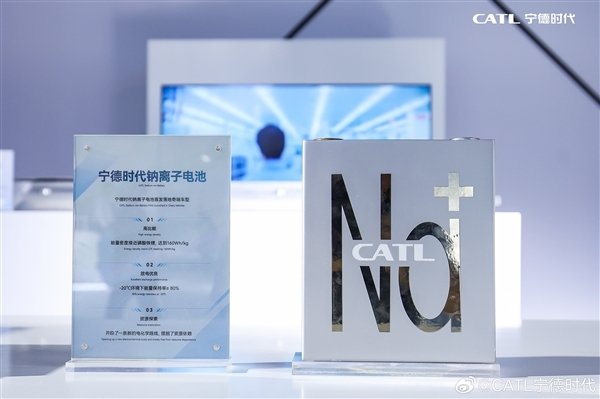
Sodium-ion batteries not only effectively reduce dependence on lithium resources, building a safer and lower-carbon new battery industry ecosystem, but also solve the low-temperature pain points in northern regions, promoting the popularization of new energy vehicles in northern and other high-latitude areas.
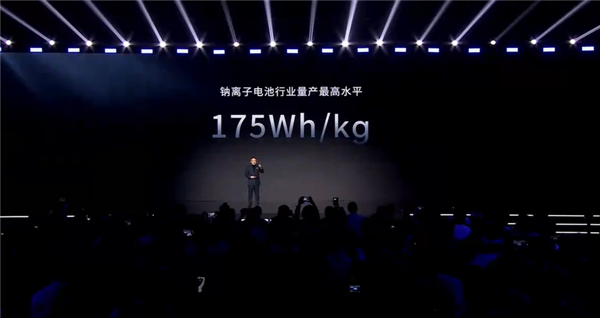
CATL's sodium-ion battery boasts the industry's highest energy density of 175 Wh/kg, with a hybrid pure electric range of over 200 kilometers and a pure electric range of over 500 kilometers. It supports 5C ultra-fast charging and has a cycle life of 10,000 times.
The safety of sodium-ion batteries far exceeds that of lithium batteries. They have undergone rigorous testing, including multi-sided extrusion, nail penetration, drill penetration, and battery sawing, all without catching fire or exploding.
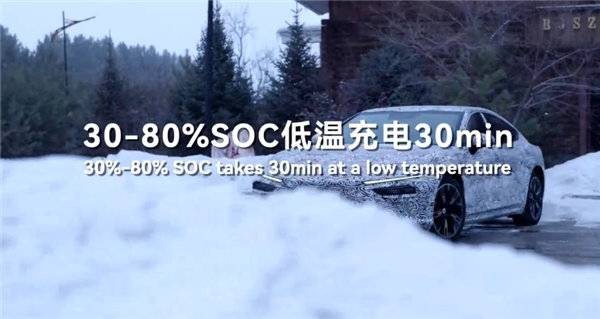
Most importantly, they are not afraid of low temperatures. In actual tests at -30°C, charging from 30% to 80% takes only 30 minutes, with 93% usable capacity. At 10% SOC (state of charge), the vehicle can still maintain a high speed of 120 km/h.
It is worth noting that in addition to sodium-ion batteries, Wu Kai also revealed that CATL's long-term focus will be on the development of lithium-air batteries, whose theoretical energy density is 5-10 times that of existing lithium batteries, making them the focus of next-generation battery technology competition.


