
Is China’s Secret Power Advantage About To Trigger An 89% Crash In U.S. AI Stock
By Simon Watkins - Sep 22, 2026, 5:00 PM CDT
- China’s AI industry enjoys a major power-cost advantage, with Chinese models reportedly delivering near-U.S. performance at a fraction of the cost, helped by a more integrated and efficient electricity grid.
- America’s AI boom faces a growing power bottleneck, as data-center demand surges while grid constraints, lengthy nuclear development and shortages of gas turbines make rapid capacity expansion difficult.
- High costs, heavy borrowing and private-credit exposure could trigger bankruptcies and a broader technology-sector selloff.
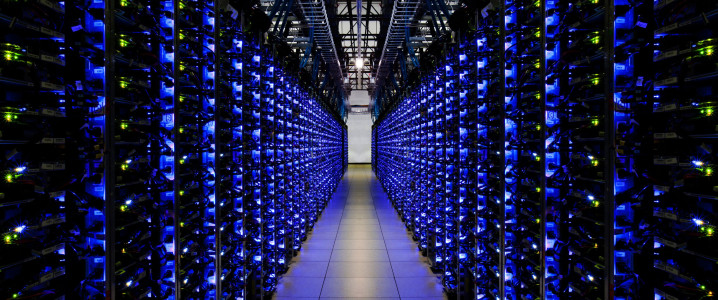
The current focus of the world’s governments, business and media when it comes to artificial intelligence (AI) is on the dangers it poses to jobs, democracy and even the future of humanity itself. For many of a certain generation, these fears crystallise in the cold but relentlessly courteous voice of HAL, the on-board AI in Stanley Kubrick’s 2001: A Space Odyssey. After a crew member questions HAL’s diagnosis of a faulty antenna, the system secretly lip-reads the astronauts, discovers their plan to disconnect it, and kills them one by one. Nobody who sees the film is likely to forget the chilling reply from HAL to last surviving crewman Dave Bowman’s order to “open the pod bay doors” so he can re-enter the spacecraft after being locked outside by HAL during a spacewalk: “I’m sorry, Dave. I’m afraid I can’t do that.” As it stands, though, potentially far more chilling for U.S. AI firms is the huge structural disadvantage that they have compared to their Chinese counterparts and the massive drop in their companies’ stock market valuations that this may soon catalyse.
“The key problem here is that the major Chinese AI players currently achieve around 90% of the performance of their U.S. competitors but at only about 10% of the cost,” Mehrdad Emadi, head of risk analysis and energy derivatives markets consultancy Betamatrix, in London, exclusively told OilPrice.com last week. “Up to half of U.S. AI firms’ costs is the electricity needed to drive the data centres, and this is only likely to increase from here,” he said. “But the much lower costs of their Chinese AI rivals are likely to stay where they are, and may even edge lower,” he underlined. “Meanwhile, the performance of China’s AI is likely to keep increasing to a point where it nears 100% of its U.S. rivals,” he added, “and that looks like a deadly convergence for American AI firms.” Underpinning this huge discrepancy in costs between U.S. and Chinese AI firms is the fundamental difference in the way the electricity power grids were designed and built in the first place, highlights Steve Keen, honorary professor at University College London and the economist who most cogently warned that the economic crisis that began in 2007 was imminent. “China benefits from its centralised power grid that was designed from the outset by engineers rather than the decentralised one in America designed by accountants and similar,” he exclusively told OilPrice.com. “The American grid may have been cheaper to install initially, but it can’t transmit energy as widely across the country as the Chinese system, and it loses much more power than the Chinese grid when it does so,” he underlined. Related: Saudi Arabia Restarts East-West Oil Pipeline
More specifically, China’s grid operates under a unified national strategy controlled by the State Grid Corporation, allowing power to move seamlessly across thousands of kilometres. By comparison, the U.S. grid is split into three isolated interconnections -- Eastern, Western, and Texas/ERCOT -- which makes moving power far more difficult and costly. To increase the amount of energy transmitted at any given time, operators must either increase current or voltage. In this context, China’s power grid is built on an extensive backbone of 800-1,100 kilovolt (kV) Ultra-High Voltage lines utilising Direct Current. This combination enables it to move up to 12 gigawatts (GW) of power -- the output of 10 nuclear power plants -- down a single transmission corridor over 3,000 kilometres with almost zero power loss. By contrast, the U.S. grid can get nowhere near this level of total power generation, or near-zero power loss over distance, as it relies on standard 345-500 kV trunk lines in just a High-Voltage Alternating Current set up. In sum, the U.S.’s fragmented, aging grid acts as a physical ceiling on how large and how fast American tech companies can scale their AI clusters, whereas none of these constraints apply to China’s system -- or, by extension, to its AI firms.
It has been widely conjectured that these surging power demands in the U.S. could be met by increased oil and gas flows, or supply from other sources. However, on the renewable energy side, solar and wind power still fail to provide the ‘always-on’ supply that AI data centres demand, given the intermittency of both sources. Nuclear power -- including small modular reactors (SMRs) -- has become a recent focus, with U.S. hyperscalers including Microsoft, Amazon, and Google eyeing tens of billions of dollars in investment in such projects. Critically, though, there is a massive time lag and potentially huge additional costs attached to both mainstream and SMR nuclear projects. Traditional nuclear projects in the U.S. have routinely suffered from multi-billion-dollar cost overruns and 15-year development timelines. SMRs, despite lower upfront costs, still target construction windows of up to seven years. Moreover, the need for regulatory approvals from agencies such as the U.S. Nuclear Regulatory Commission, combined with physical construction constraints, means the commercial SMR sector is unlikely to hit scale until the late 2030s. On the fossil fuel side, oil remains too valuable to burn for baseload grid power, leaving natural gas as the obvious main feedstock for the AI power grid going forward. “But the problem here,” said Emadi, “is that everyone’s after the same equipment at the same time to convert it into electricity for the grid, and there are very few suppliers who make what’s needed.” A prime example of this, he highlighted, is the gas turbine manufacturing market, which is dominated by the ‘Big Three’ oligopoly of the U.S.’s GE Vernova, Germany’s Siemens, and Japan’s Mitsubishi Heavy Industries. “Order backlogs are sold out, waiting times are up to seven years and growing, and prices are on track to triple,” he underlined.
None of these structural hindrances are likely to improve any time soon, with colossal increases in U.S. AI power demand forecast in the coming decade. According to Goldman Sachs Research, U.S. data centre capacity demand is forecast to climb from the current baseline of around 42 GW to a range of 118-134 GW by 2030, while long-term modelling from BloombergNEF projects a rise to around 194 GW by 2035. “With American companies producing high-quality AI, but at a much higher cost than Chinese companies which produce products of very comparable quality, the US firms have to start generating revenues to match, and to do this they need to boost their steady power supply enormously,” said Keen. “But this looks extremely difficult to do given the physical power constraints, so the potential for U.S. AI firms’ valuations to fall looks significant,” he added. “And what’s happening now in U.S. AI is typical of an industrial bubble in a capitalist economy, which always causes booms and busts, as happened for example in the U.S. railways bubble from the 1870s, which was high-tech at the time,” he told OilPrice.com. “Early-mover railway firms were flooded with interest and huge overinvestment occurred, but ultimately only a handful of those railways made profits, with most ending up losing money and being sold for a song in the slump that followed the boom,” he underlined.
It could be even worse in the case of a U.S. AI bubble, Emadi told OilPrice.com, because of the heavy involvement of ‘private credit’. “To get around the rules on riskier lending by banks that were put in place after the 2007/08 financial crisis, several big AI firms used their own huge cash reserves to invest in their AI projects, but they also borrowed money from non-bank lenders -- the private-credit sector -- to ramp up that leverage,” he said. “So we’re talking about hundreds of billions of debt attached to these American AI outfits, which have costs running at around five to ten times their revenues,” he added. “When the AI firms start to go bust, these private-credit lenders will have to sell other assets to try to compensate for their losses, and, given the size of the exposure, this is likely to start a cascade effect of selling, lower prices and more selling through the financial system, crashing valuations and catalysing bankruptcies,” he added. “This won’t be a market readjustment any more than being shot in the head is a physical readjustment, with my guess being that we’re going to see 35-50% of the capital valuation of the entire US AI sector disappear very fast,” he added. “That includes all but two or three of the big players going bankrupt, as they may get bailed out by the U.S. government because of their close involvement in the defence sector -- otherwise, I see most of the other AI companies that survive being left with a value of around 11 cents to the dollar,” he concluded.
By Simon Watkins for Oilprice.com
More Top Reads From Oilprice.com
- U.S. Threatens to Ground Iranian Airlines Worldwide
- Oil Prices Reverse Course as Traders Watch US-Iran Diplomacy
- Norway's Arctic Oil Pitch Falls Flat in Brussels
Download The Free Oilprice App Today


ADVERTISEMENT
Set us as your preferred Google source
FACEBOOK Twitter LINKEDIN REDDIT PRINT
Previous Post\ \ Global Energy Demand Set to Jump 60% by 2060 as Developing Nations Power Up

Simon Watkins
Simon Watkins is a former senior FX trader and salesman, financial journalist, and best-selling author. He was Head of Forex Institutional Sales and Trading for…
Related posts
Norway’s Liquids Output Rebounds by Nearly 100,000 Bpd—but Still Trails 2025 Saudi Pipeline Restart Fails to End Oil Market Tightness Why Utility Profits Could Be the Next Target
Leave a comment
First Name
Last Name
That email address is already in the database. Please login to your account to post your comment, or enter a different email address to continue with your comment & account creation.
Captcha
Comment
Please understand that, by submitting this form, you will be creating a free OilPrice.com account, and therefore agree to abide by our Terms of Use. Your details will be stored in our database and shared with our third party mailing list provider. You will be sent an email containing a link that will ask you to generate a new password - please follow the link to complete your OilPrice account activation.
We will save the information entered above in our website. Your comment will then await moderation from one of our team. If approved, your data will then be publically viewable on this article. Please confirm you understand and are happy with this and our privacy policy by ticking this box. You can withdraw your consent, or ask us to give you a copy of the information we have stored, at any time by contacting us.
ADVERTISEMENT
ADVERTISEMENT
Most Popular
 \ \ Chinese Solar Panels Drop to 12 Cents a Watt, Rooftop Installs Surge Worldwide
 \ \ Saudi Pipeline Outage Hits an Oil Market Running Out of Buffers
  \ \ Saudi Export Pivot Sends Brent Below $105
  \ \ Big Oil’s Production Keeps Soaring Despite Deep Spending Cuts
  \ \ Inside Putin’s $135 Billion Arctic Gamble That Could Save His Ukraine War



By signing up to our newsletter, you agree for your email address to be shared with our third party mail providers.
ADVERTISEMENT
ADVERTISEMENT
EXXON Mobil-0.35
Open57.81Trading Vol.6.96MPrevious Vol.241.7B
BUY 57.15
Sell 57.00


