East Africa’s Oil Rivalry Spurs Multi-Billion-Dollar Projects Across The Region
By Alex Kimani - Aug 27, 2026, 6:00 PM CDT
- Dangote plans a $17 billion, 700,000-bpd refinery in Kenya’s Lamu, potentially making the country a major refined-fuel hub for East Africa.
- Tanzania and Uganda have countered with a $20 billion Vitol-backed energy hub in Tanga, leveraging the EACOP pipeline to create an alternative regional supply corridor.
- The competing projects highlight intensifying East African energy rivalry, with Kenya, Tanzania and Uganda simultaneously battling for control of regional oil, transport and trade flows.
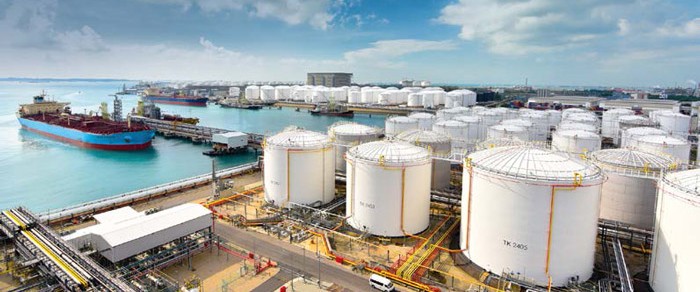
Last month, we reported that Nigerian billionaire and Africa’s richest man, Aliko Dangote, has agreed to build a $17 billion (Ksh2.2 trillion), 700,000-barrel-per-day refinery on Kenya’s Lamu Island that would process crude not only for Kenya but also its neighbors such as Uganda, Rwanda, Burundi, South Sudan and the DRC. The giant refinery--Africa’s second largest refinery behind only Nigeria’s Dangote refinery--would easily exceed East Africa’s current refined fuel demand of roughly 450,000 bpd, leaving room to supply markets elsewhere on the continent. While the proposed refinery is no doubt a big win for Kenya and the wider region, it has once again exposed deep-rooted historical mistrust and intense rivalry between the East African nations as they jostle for the region’s energy dominance.The idea to build the refinery was first floated in early 2026, with Dangote agreeing to lead the construction under the condition that Kenya, Tanzania and Uganda would reach an agreement on the location. The three countries first appeared to settle on Tanzania’s coastal post city of Tanga, before questions arose about the motive of Kenya’s President William Ruto and the real reason why he supported building such an important facility in a neighboring country instead of his own. After all, Kenya is the regional economic leader, with a more developed industrial base and infrastructure than its two neighbors. Incredibly, it later emerged that there were no proper consultations between the leaders of the three countries, with Tanzania’s President Samia Suluhu Hassan publicly rebuking Ruto for announcing the mega oil project in her country without consulting her government first.
Related: Energean in Exclusive Talks for $1 Billion BP Egypt Gas Deal
The deadlock was finally broken after Dangote himself picked Lamu as his preferred location. According to reports, Dangote’s team initially weighed Hoima, a rapidly developing city in the midwestern region of Uganda, as well as Kenya’s coastal city of Mombasa before settling on Lamu. Ruto’s government moved fast to cement the deal, pledging seed capital totalling Khs 21.5 billion (~S$166-million) and also inviting its neighbours to take stakes.
Likely unhappy with the turn of events, Tanzania and Uganda launched a counter-move by announcing a partnership with global energy trader Vitol Bahrain to develop a $20 billion regional energy hub in Tanga, just weeks after Kenya secured the Dangote project. The deal was signed in Dar es Salaam by the Uganda National Oil Company (UNOC), the Tanzania Petroleum Development Corporation (TPDC) and Vitol Bahrain. The project will utilize the nearly complete East African Crude Oil Pipeline (EACOP, with Tanga used for petroleum storage and blending. The pipeline will offer landlocked nations such as Uganda, Rwanda, Burundi and the DRC an alternative fuel supply corridor, avoiding heavy reliance on Kenya's Port of Mombasa or the proposed refinery in Lamu.
Interestingly, Uganda is looking to further hedge its bets by supporting both the Lamu and Tanga initiatives, while also pushing forward with its own UAE-backed $4 billion oil refinery in Hoima with a 60,000 bpd capacity in a bid to secure domestic self-sufficiency by 2030.
The latest face-off by the three countries mirrors the collapse of the 2014 Uganda-Kenya pipeline deal.
Originally, Uganda and Kenya planned a joint pipeline to Lamu, but Kampala abandoned the route in 2016 after concluding that Tanzania offered a cheaper and more secure alternative. Uganda's assessment cited the higher cost and difficulty of acquiring land in Kenya, while Tanga was already an operational port compared with the then-undeveloped Lamu alternative. Total, which favored the Tanzanian route, subsequently became the largest shareholder in EACOP. The French major now owns 62% of the 1,443-km heated pipeline linking Uganda's Lake Albert oilfields with Tanzania's Tanga port.
The spate of parallel, and even duplicative, energy projects recently announced by the three countries raises serious questions about the viability of the East African Community (EAC) and its ultimate goal of regional integration.
Kenya and Tanzania are on a collision course once again, with Tanzania rapidly expanding the Central Corridor and its new electrified Standard Gauge Railway (SGR). Uganda has historically routed the vast majority of its trade through Kenya's Port of Mombasa; however, Tanzania recently signed major cross-border SGR agreements with Uganda to divert that traffic to Dar es Salaam.
Kenya is now pushing to complete its Malaba link by 2027 to keep Uganda anchored to the Northern Corridor. The country recently broke ground on the long-delayed Phases 2B and 2C of its SGR extension, which will take the railway from Naivasha through Kisumu to Malaba on the Ugandan border.
By Alex Kimani for Oilprice.com
More Top Reads From Oilprice.com
- Aramco Finds a New Way to Keep Saudi Crude Flowing to China
- MIT Uses AI to Challenge a Century-Old Process for Mass Ammonia Production
- Qatar and Kuwait Restore 70% of Pre-War Oil Exports Through Hormuz
Download The Free Oilprice App Today


ADVERTISEMENT
Set us as your preferred Google source
FACEBOOK Twitter LINKEDIN REDDIT PRINT
Previous Post\ \ Aramco Finds a New Way to Keep Saudi Crude Flowing to China

Alex Kimani
Alex Kimani is a veteran finance writer, investor, engineer and researcher for Safehaven.com.
Related posts
Egypt’s LNG Comeback Is Set to Start in Cyprus Europe Heads Into Winter With Gas Storage at a Two-Decade Low Strait of Hormuz Traffic Ticks Higher Amid New Diplomatic Push
Leave a comment
First Name
Last Name
That email address is already in the database. Please login to your account to post your comment, or enter a different email address to continue with your comment & account creation.
Captcha
Comment
Please understand that, by submitting this form, you will be creating a free OilPrice.com account, and therefore agree to abide by our Terms of Use. Your details will be stored in our database and shared with our third party mailing list provider. You will be sent an email containing a link that will ask you to generate a new password - please follow the link to complete your OilPrice account activation.
We will save the information entered above in our website. Your comment will then await moderation from one of our team. If approved, your data will then be publically viewable on this article. Please confirm you understand and are happy with this and our privacy policy by ticking this box. You can withdraw your consent, or ask us to give you a copy of the information we have stored, at any time by contacting us.
ADVERTISEMENT
ADVERTISEMENT
Most Popular
 \ \ U.S. Refiners Face New Crude Squeeze as Canada Cuts Oil Sands Output
 \ \ Oil Prices Fall as Iran Negotiation Hopes Return
  \ \ Aramco Finds a New Way to Keep Saudi Crude Flowing to China
  \ \ The Biggest Victims Of Trump’s Economic D-Day On Iran
  \ \ The U.S. Power Play in Iraq That Moscow and Beijing Didn’t See Coming