Ebola Outbreak: Alarm Over Number of Medical Worker Deaths
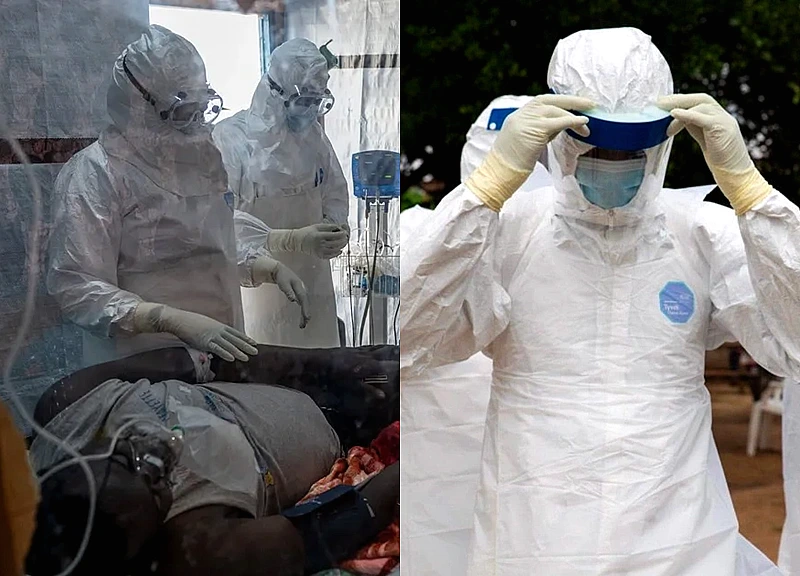
The latest statistics show that more than 60 health workers in the DRC have been infected with the Ebola virus in the current outbreak, with 34 deaths.
Health workers at an Ebola treatment center in Rwampara, DRC. Photo: THX/TTXVN
This figure highlights the particularly serious risks that health workers face while treating patients and controlling the disease.
According to a Vietnam News Agency correspondent in Africa, given the situation and the continuing complexity of the Ebola outbreak, continental leaders and international partners have pledged to mobilize $910 million to strengthen the response to the Bundibugyo strain Ebola outbreak in the DRC and Uganda.
The Africa Centres for Disease Control and Prevention said the $910 million financial support package includes $80 million contributed by African Union (AU) member states. The funds will be used to accelerate emergency response activities, strengthen epidemiological surveillance systems, enhance early case detection capacity, and improve preparedness in affected countries and those at high risk.
The commitment was announced at the AU High-Level Summit on Ebola, chaired by Burundian President Evariste Ndayishimiye in his capacity as AU Chairperson. The summit brought together leaders from many African countries, along with representatives of the United Nations (UN), regional organizations, and international development partners to mobilize political, financial, and technical resources for the fight against the epidemic. Speaking at the summit, AU Commission Chairperson Mahmoud Ali Youssouf stressed the need to strengthen response strategies at both national and regional levels to prevent the risk of disease spread. He called on countries to enhance cross-border coordination, improve surveillance capacity, strengthen preparedness, and effectively implement disease control measures.
According to the World Health Organization (WHO), Ebola is a dangerous infectious disease with a fatality rate of up to 50% in previous outbreaks. The Bundibugyo strain was first identified in Uganda in 2007, and currently no vaccine has been licensed for widespread use specifically for this virus strain. Therefore, early case detection, contact tracing, and infection control remain key measures in the response.
The AU affirmed that it will continue to work closely with governments, regional organizations, and international partners to build effective public health response mechanisms, ensuring that no member state is left behind in the fight against the disease. AU officials believe the current Ebola outbreak once again demonstrates the importance of investing in building resilient health systems with rapid response capacity for public health emergencies. The $910 million commitment is expected to help control the disease, protect vulnerable populations, and strengthen the long-term health security foundation for Africa.
Nguyen An (TTXVN)


