
EU Gas Crunch Forces Rethink of Methane Rules
By Irina Slav - Sep 30, 2026, 6:00 PM CDT
- The EU is considering delaying its methane rules for gas imports by a year, easing pressure on major LNG suppliers including the U.S. and Qatar.
- Europe’s gas crunch is worsening ahead of winter, with Qatari LNG disrupted, Russian supplies disappearing and Norway already maximizing pipeline exports.
- Delaying the rules may protect LNG supplies but won’t solve Europe’s affordability problem, as spot gas prices return to 2022–23 levels while storage buffers remain thinner.
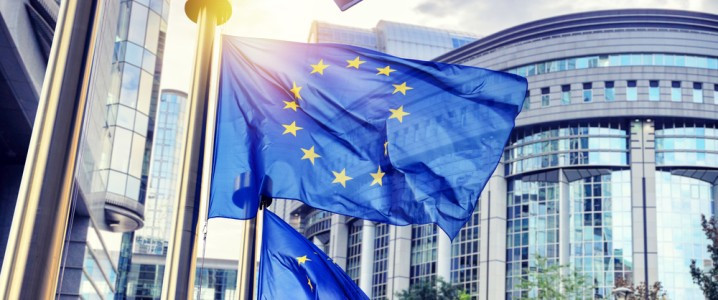
The European Commission has signaled it would delay the entry into effect of its controversial methane regulation amid a persistent gas crunch resulting from the wars in Ukraine and the Middle East. That may not be enough to offset the effects of that crunch—because the regulation is not yet in effect and Europeans are already struggling.
“I have instructed my services to look into the possibilities of postponing the import part of the legislation with one year,” Energy Commissioner Fan Jorgensen told Bloomberg this week. “And this would give the market actors time to make sure that they can indeed implement these new rules without it hurting our security of supply and prices.”
In fact, the main “actors” on the European Union’s gas import market have already protested the methane regulation, which earlier this year prompted the first delay in its implementation. That delay took the form of a no-penalty regime for the first year of the regulation to give importers time to comply, which the two biggest LNG suppliers to the EU said they have no intention of doing.
Both the United States and Qatar have repeatedly spoken out against the methane regulation that would require any company that sells liquefied natural gas to an EU entity to provide information about the methane footprint of its commodity from the well to the tanker.
U.S. Energy Secretary Chris Wright said at the end of last year that the regulation was impossible to implement and described it as “a critical non-tariff trade barrier that imposes an undue burden on U.S. exporters and our trade relationship.” The U.S. demanded an exemption from the regulation until 2035, but the EU’s energy commissioner took a tough stance at the time, saying the regulation will remain in place for all—at least for the time being. Because energy security does matter more than net-zero plans. Related: U.S. Oil and Gas Production Climbs Despite Extreme Oil Price Volatility
Qatar directly—and repeatedly—threatened to suspend sales to the EU if the Commission goes ahead with the regulation. As it turned out, it was forced to suspend sales to the EU, leaving the United States as the EU’s biggest LNG supplier. And the U.S. is still very much against the methane regulation.
Delaying the entry into effect of the methane regulation could ensure a steady flow of American LNG, but it will not solve the EU’s price problem—and the EU has a serious price problem, as acknowledged by Jorgensen in recent remarks.
“I want to stress that the Commission is listening to Member States?and to companies, to their call for more flexibility,” Jorgensen said at a news conference this week. “I heard you and indeed there is a number of?things we are looking at to see if we can help more. Methane is one of them. But we are also looking into what we could do to support the availability and affordability of transport fuels.”
The willingness to reduce the financial burden on households and businesses is a positive sign, but the declaration is lacking any specific details. As winter approaches and demand for heating begins to grow as it does every year, the gas supply question is only going to become more pressing—and prices are going to move even higher than they are now. QatarEnergy just extended its force majeure on Ras Laffan for another month, signaling that the resumption of normal LNG flows out of the Persian Gulf is not going to happen soon. Russian gas in any form is about to be banned from January. Norway is pumping as much pipeline gas to the EU as it can. Other suppliers only provide a fraction of imports.
So, it appears that the delay in the methane regulation will address U.S. concerns about LNG trade and ensure a continued flow of liquefied gas to EU member states during the peak demand months of winter. But, again, it will not be doing anything about the affordability of that gas. While there are some long-term supply deals between U.S. producers and European buyers, most LNG is traded on the spot market, and prices there are alarming.
Gas prices on the spot market are currently running at levels last seen in 2022-2023—and supply buffers are much thinner than they were for Europe four years ago. For one thing, gas in storage is lower than the average for this time of the year, although it is steadily rising. For another, back in 2022-23, the EU was still getting Russian gas via Ukraine. Now, pipeline flows are completely cut off. The question the bloc is facing is how long it can rely almost entirely on the United States for its liquefied gas imports, or, to put it more accurately, how long it can afford to rely on U.S. liquefied gas.
By Irina Slav for Oilprice.com
More Top Reads From Oilprice.com
- LNG Canada to Double Export Capacity After Shell Approves Phase 2
- Saudi Arabia Restarts Red Sea Crude Oil Loadings
- India Looks to Boost Exploration as Hormuz Crisis Threatens Supply

Download The Free Oilprice App Today


ADVERTISEMENT
Set us as your preferred Google source
FACEBOOK Twitter LINKEDIN REDDIT PRINT
Previous Post\ \ Europe’s Gas Forecasts Are Not an Energy Strategy

Irina Slav
What I Cover Irina Slav has been writing about global energy markets since 2007, covering the oil and gas industry, energy security, commodities, and the…
Related posts
Venezuela’s Oil Revival Accelerates as Foreign Companies Return Africa’s Massive Cement Expansion Could Drive An Energy Boom Guyana’s Oil Riches Are Transforming Its Economy at Breakneck Speed
Leave a comment
First Name
Last Name
That email address is already in the database. Please login to your account to post your comment, or enter a different email address to continue with your comment & account creation.
Captcha
Comment
Please understand that, by submitting this form, you will be creating a free OilPrice.com account, and therefore agree to abide by our Terms of Use. Your details will be stored in our database and shared with our third party mailing list provider. You will be sent an email containing a link that will ask you to generate a new password - please follow the link to complete your OilPrice account activation.
We will save the information entered above in our website. Your comment will then await moderation from one of our team. If approved, your data will then be publically viewable on this article. Please confirm you understand and are happy with this and our privacy policy by ticking this box. You can withdraw your consent, or ask us to give you a copy of the information we have stored, at any time by contacting us.
ADVERTISEMENT
ADVERTISEMENT
Most Popular
 \ \ Why WTI Is Suddenly Trading $12 Below Brent
 \ \ Why Are Diesel Prices So High?
  \ \ Iran Talks Take the Heat Out of the Oil Rally
  \ \ World's Tallest Dam Project Gets New Life With Fresh World Bank Funding
  \ \ 5 Energy Stocks Positioned for a Prolonged Iran War



By signing up to our newsletter, you agree for your email address to be shared with our third party mail providers.
ADVERTISEMENT
ADVERTISEMENT
EXXON Mobil-0.35
Open57.81Trading Vol.6.96MPrevious Vol.241.7B
BUY 57.15
Sell 57.00
reCAPTCHA
Recaptcha requires verification.
protected by reCAPTCHA


