
Europe’s Russia Sanctions Have a Major Blind Spot
By Cyril Widdershoven - Aug 28, 2026, 3:00 PM CDT
- The UK and EU have dramatically expanded sanctions on Russia, but critics argue their impact is undermined by European companies that continue to maintain profitable Russian operations.
- TotalEnergies and other European-linked businesses retain economic exposure to Russia, although such activity does not by itself constitute a sanctions violation.
- The next phase of sanctions should target this regulatory blind spot, with greater scrutiny of European companies, subsidiaries and investments still connected to the Russian economy.
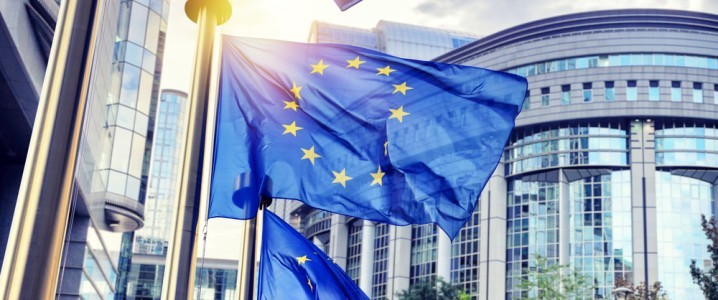
Over the last two years, the EU and UK have emerged as leading actors in imposing sanctions on Russia. But people like Maria Demertzis, Professor at the European University Institute in Italy, have raised questions around the effectiveness of the sanctions campaign, as European institutions continue to operate profitable subsidiaries in the country with little scrutiny. UK and EU regulators should broaden their sanctions campaign by increasing scrutiny of European businesses that remain economically exposed to Russia.
The new UK Foreign Secretary, Ed Miliband, announced his first Russia sanctions package, targeting six Russian banks, six shadow fleet tankers and four Russian companies importing materials believed to support Russia’s war in Ukraine, including tantalum and niobium. Separately, in response to recent Russian attacks on Ukraine’s economic infrastructure, the EU sanctioned five individuals linked to Russia’s military-industrial complex.
The announcement means the UK government has now sanctioned more than 3,400 individuals, entities, and ships under the Russia sanctions regime since 2022, bringing the number of designations to 500 this year alone.
Leaving is not impossible
While Russia has made it difficult for European institutions to leave in an effort to protect its economy, regulatory pressure and exit roadmaps exist. The European Central Bank has been increasing its pressure on Eurozone lenders to reduce their Russian exposure or leave the country. The new EU sanctions package – the bloc’s 21st – introduces extensive transaction bans and asset freezes targeting Russian financial institutions, energy actors, crypto platforms, and entities linked to Russia’s military.
However, some companies appear to have deferred these roadmaps in search of profits.
TotalEnergies, the French energy company and oil supermajor, has kept its stakes in Yamal, Russia’s biggest LNG plant, but deconsolidated the holdings, meaning the money no longer appears in the company’s official consolidated reporting. Its CEO, Patrick Pouyanne, said the company earns about $400 million a year from selling liquefied natural gas from Russia’s Yamal LNG plant. He added that other income comes from dividends on TotalEnergies’ 20% ownership stake in Yamal LNG and its 19.4% stake in Yamal's parent company, Novatek. In 2024, Pouyanne said dividends from Novatek represented about $600 million per year but were stuck abroad. Related: Energean in Exclusive Talks for $1 Billion BP Egypt Gas Deal
In July 2026, TotalEnergies announced it would exit its stake in the Arctic LNG 2 plant in Russia, after Russian authorities approved the transfer of the company’s 10% stake to Nordline, a subsidiary of the plant's majority owner Novatek. However, it remains unclear whether TotalEnergies is expected to be compensated for its stake, and at what valuation.
TotalEnergies is not an isolated example. Similar policy questions can arise in the UK where investors have exposure to companies that continue to maintain operations in Russia. Such exposure is not, by itself, evidence of a sanctions violation. It does, however, raise legitimate questions about due diligence, governance and the extent to which European capital remains connected to the Russian economy despite the broader political objective of economic disengagement.
One example is Njord Partners, the London-based special situations investment manager, which has been an institutional investor in RETN, the international network service provider, since 2017. RETN operates an international telecommunications network and retains a presence in the Russian market through its Russian subsidiary, JSC RetnNet. There is no suggestion in this article that Njord Partners, RETN or JSC RetnNet has breached UK or EU sanctions merely by maintaining this investment or operating presence. The relevant issue is instead the degree of economic exposure and the regulatory scrutiny applied to companies whose subsidiaries continue to conduct business in Russia.
According to publicly available information, JSC RetnNet has had commercial relationships or agreements involving Russian organisations including GUP TEK, the St Petersburg fuel and energy utility; PJSC Rostelecom, Russia’s major integrated digital services and telecommunications company; Rosbank; and the Kurchatov Institute. Some of these organisations, or individuals associated with them, have been subject to sanctions or other restrictive measures in certain jurisdictions.
That distinction is important. The existence of a commercial relationship with an organisation that is sanctioned in one or more jurisdictions does not, on its own, establish that a particular transaction was prohibited or that sanctions were breached. The legality of any transaction depends on factors including the applicable jurisdiction, the precise sanctions designation, the nature and timing of the services provided, ownership and control tests, licensing arrangements and the date on which relevant restrictions came into force.
Rosbank, for example, has been designated under US sanctions, while restrictions applicable to Russian financial institutions differ across the US, UK and EU regimes. Likewise, the Kurchatov Institute has been subject to US export-control restrictions. Mikhail Kovalchuk, the institute’s president, and his brother Yury Kovalchuk have also been subject to sanctions in several jurisdictions. These designations increase the compliance sensitivity surrounding dealings with such organisations, but they should not be treated as evidence that unrelated investors or service providers have themselves violated sanctions.
The more relevant question for European policymakers is therefore whether the current regulatory framework provides sufficient visibility into the Russian activities of subsidiaries ultimately connected to European investors. Investors may be several corporate layers removed from individual contracts entered into by an operating subsidiary, but continuing exposure to Russia can nevertheless create sanctions-compliance, governance and reputational risks that require active oversight.
In RETN’s case, the continued operation of a Russian subsidiary illustrates a broader challenge facing the European sanctions regime: European ownership or investment can coexist with continuing Russian commercial activity without necessarily violating sanctions law. That may be legally permissible, but it raises a separate policy question about whether such continuing economic links are consistent with the strategic objective of reducing European commercial exposure to Russia.
Public records and media reporting also indicate that Njord Partners has engaged APCO, the international communications and public-affairs consultancy. APCO has separately faced media scrutiny concerning work undertaken for the lobbying organisation Labour Together. Those matters are distinct from RETN and its Russian activities, and there is no publicly established basis for concluding that Njord’s engagement of APCO was related to Russia, RETN or sanctions concerns. It would therefore be inappropriate to infer such a motive from the appointment alone.
What can legitimately be scrutinised is the wider governance question. As sanctions regimes become more extensive and complex, European investors with portfolio companies maintaining Russian subsidiaries face increasing pressure to demonstrate that effective compliance, counterparty screening and oversight systems are in place. That scrutiny should focus on verifiable transactions, ownership structures and applicable sanctions rules rather than assumptions about intent or wrongdoing.
The next phase of sanctions
Over the past few years, the UK and the EU have emerged as clear leaders in sanctioning Russia and its entities. However, a lack of scrutiny of European companies operating in Russia has raised questions about the overall effectiveness of the sanctions campaign.
Fresh sanctions signal sustained pressure on Russia, but their impact will be limited if European subsidiaries continue to maintain profitable business operations tied to Russian exposure.
The next phase of economic restrictions should go beyond sanctioning Russian entities and require EU and UK regulators to apply greater scrutiny to European businesses that choose to remain economically exposed to Russia.
By Cyril Widdershoven for Oilprice.com
More Top Reads From Oilprice.com
- Aramco Finds a New Way to Keep Saudi Crude Flowing to China
- MIT Uses AI to Challenge a Century-Old Process for Mass Ammonia Production
- Qatar and Kuwait Restore 70% of Pre-War Oil Exports Through Hormuz
Download The Free Oilprice App Today


ADVERTISEMENT
Set us as your preferred Google source
FACEBOOK Twitter LINKEDIN REDDIT PRINT
Previous Post\ \ The AI Boom Could Triple Data Center Water Use by 2030
Cyril Widdershoven
Cyril Widdershoven is a senior maritime, energy, and geopolitical analyst and Senior Advisor at Blue Water Strategy, specialising in the strategic intersection of shipping, ports,…
Related posts
U.S. Oil Rig Count Falls by 5 as Gas Rigs Rise Oil Shrugs Off Trump’s ‘Toughest Sanctions in History’ Hormuz Shipping Remains Subdued Despite Apparent Reopening
Leave a comment
First Name
Last Name
That email address is already in the database. Please login to your account to post your comment, or enter a different email address to continue with your comment & account creation.
Captcha
Comment
Please understand that, by submitting this form, you will be creating a free OilPrice.com account, and therefore agree to abide by our Terms of Use. Your details will be stored in our database and shared with our third party mailing list provider. You will be sent an email containing a link that will ask you to generate a new password - please follow the link to complete your OilPrice account activation.
We will save the information entered above in our website. Your comment will then await moderation from one of our team. If approved, your data will then be publically viewable on this article. Please confirm you understand and are happy with this and our privacy policy by ticking this box. You can withdraw your consent, or ask us to give you a copy of the information we have stored, at any time by contacting us.
ADVERTISEMENT
ADVERTISEMENT
Most Popular
 \ \ U.S. Refiners Face New Crude Squeeze as Canada Cuts Oil Sands Output
 \ \ Oil Prices Fall as Iran Negotiation Hopes Return
  \ \ Aramco Finds a New Way to Keep Saudi Crude Flowing to China
  \ \ The Biggest Victims Of Trump’s Economic D-Day On Iran
  \ \ The U.S. Power Play in Iraq That Moscow and Beijing Didn’t See Coming



By signing up to our newsletter, you agree for your email address to be shared with our third party mail providers.
ADVERTISEMENT
ADVERTISEMENT
EXXON Mobil-0.35
Open57.81Trading Vol.6.96MPrevious Vol.241.7B
BUY 57.15
Sell 57.00


