Breaking News:
CNOOC Posts Record Profit as China Pumps More Oil at Home
Europe Dodges a Rhine Crisis for the Worst Possible Reason
Europe is avoiding a deeper…
Super El Niño Threatens Food, Water and Trade Worldwide
NOAA says this year's El…
Energy investors are raving about this new resource
"It's most important 8 minute read of my week…"

Irina Slav
What I Cover Irina Slav has been writing about global energy markets since 2007, covering the oil and gas industry, energy security, commodities, and the…
Share
Set us as your preferred Google source
Premium Content
- India Builds Clean Power Faster Than It Can Use It
- Oil Bulls Take Control as Iran Deal Collapses and Hormuz Stays Restricted
- Israel Bombs Syrian Airbase to Block Turkish Military Expansion
- Oil Traders Reprice Hormuz Risk as Demand Outlook Deteriorates
Global Oil Security Looks Shakier as Conflicts Hit 45 Million Bpd of Supply
By Irina Slav - Aug 26, 2026, 7:00 PM CDT
- Nearly half of global oil supply is produced in conflict-affected countries, with the Middle East disruption alone removing an estimated 5–7 million bpd from the market.
- The bigger vulnerability is increasingly refined fuels, as Middle Eastern disruptions and Ukrainian attacks on Russian refineries have tightened diesel and gasoline supplies while global refining capacity has fallen sharply.
- The crisis is increasing dependence on U.S., Canadian and Venezuelan supply, but Canadian oil-sands maintenance and limited Venezuelan production growth could further tighten the market and intensify inflationary pressures.
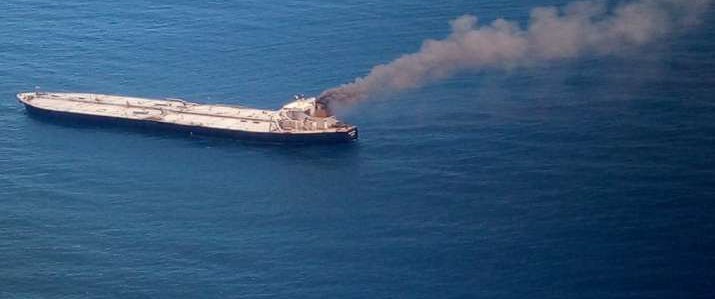
Almost half of the world’s oil supply is produced in regions currently engaged in hot conflicts, Reuters reported this week. The situation raises questions about long-term oil supply security and the limits to diversification.
The Middle East, of course, is the most obvious and most disruptive example. While oil prices on speculative markets have remained capped by trader optimism, the physical supply of the vital energy commodity has been severely compromised, leading to rationing and emergency releases from storage across the world.
Meanwhile, Ukraine is pursuing a campaign of bombing Russian refineries with drones in a bid to persuade Moscow to make concessions regarding their conflict. So far, this has not happened, but the drone attacks have resulted in fuel shortages that have sent a ripple effect beyond the Russian borders because the country was the world’s second-largest fuel exporter after the United States.
The Gulf states, by the way, were also, together, large exporters of refined fuels, which is why many analysts are now warning that the crisis in fuels is the one that needs to be addressed, not the situation in crude oil. Addressing it, however, would be quite difficult because the world’s refining capacity has shrunk considerably over the past decade or so, specifically in Europe, which is now struggling with the consequences of those developments, with diesel prices 70% higher than they were in February due to the continent’s dependence on imported fuels. Related: Natural Gas, Not Oil, Is Key Inflation Concern in Europe
Over the past couple of months, the Middle Eastern conflict has also expanded, as it tends to happen in the region, with another major oil chokepoint under threat from attacks by the Yemeni Houthis. Indeed, attacks have already taken place, forcing shippers to re-route to alternative channels, such as the Suez Canal. This means longer journeys for tankers, which adds costs to the final price of the cargo, on top of the war premium already crushing demand in poorer countries.
The latest reports from the Middle East once again pushed oil prices lower, saying that Iran and Oman were discussing joint management of the Strait of Hormuz. The discussions were perceived as a sign the waterway could be reopened soon, despite Iran’s threat to not let a drop of oil out of the Persian Gulf if the U.S. went forward with its latest idea of pressuring Iran economically, with more sanctions.
Developments in Russia and Ukraine are no more optimistic. Ukrainian forces continue striking refineries on a daily basis, and while repairs have already brought back several facilities online, repairs take time, during which time fuel supply is constrained—and the ban on gasoline and diesel exports is still very much in place.
All these events have increased the world’s reliance on U.S. crude and refined fuels, with the latter dependent on heavy crude supply from Canada and Venezuela. Now, this heavy crude supply may move lower.
In September, Canadian crude oil production may drop by 300,000 barrels daily due to maintenance activities in the oil sands, Rystad Energy said this week. Usually, whenever such a seasonal disruption occurs, it gets offset with crude from storage. Unfortunately, crude in storage is also lower than usual—the lowest in 12 months, per the report. And maintenance cannot be skipped.
Meanwhile, Venezuela’s oil exports are falling—moderately but enough to cause concern in those of a wary nature due to the reason for the fall. The July daily average stood at 1.16 million barrels, down from 1.2 million barrels in June. The reason, as reported by Reuters, was lower withdrawals from storage. This means that Venezuela was not exporting more crude because it was producing more but because it was withdrawing it from inventories. As these decline, so would exports until PDVSA and its new/old partners from the United States and Europe manage to speed up the production expansion.
According to Reuters, the countries involved in all these conflicts—and that includes Venezuela—last year produced 43% of the world’s oil, or 45 million barrels daily. Now, supply from the Middle East is down by between 5 and 7 million barrels daily, according to various analyst estimates, and global refining capacity is down by 10% because of the wars in the Middle East and Ukraine.
The effects are already trickling in. Inflation is rising everywhere, and in the United States it contributed to yet another increase in debt to an all-time high of $40 trillion. Elsewhere, the effects of the energy crisis are fueling a race for securing alternative oil—and other energy—supply. The race has so far produced ideas for several pipelines, a renewed appetite for solar power, and higher EV sales in Europe, which may be struggling financially but will always have money for EV subsidies.
How long the current state of affairs will continue is hard to say. The war that the U.S. and Israel launched against Iran on February 28 was supposed to last a few weeks. But then, Iran was not supposed to shut down the Strait of Hormuz. However long the current disruption lasts, the world will inevitably adjust. The problem is that this adjustment will be painful.
By Irina Slav for Oilprice.com
More Top Reads From Oilprice.com
- Treasury Expands Iran Sanctions Without Targeting Major Chinese Banks
- Europe Dodges a Rhine Crisis for the Worst Possible Reason
- Oil Nears $100 as Trump’s ‘Economic D-Day’ Raises the Stakes
Download The Free Oilprice App Today


ADVERTISEMENT
Set us as your preferred Google source
FACEBOOK Twitter LINKEDIN REDDIT PRINT
Previous Post\ MIT Uses AI to Challenge a Century-Old Process for Mass Ammonia Production
Irina Slav
What I Cover Irina Slav has been writing about global energy markets since 2007, covering the oil and gas industry, energy security, commodities, and the…
Related posts
MIT Uses AI to Challenge a Century-Old Process for Mass Ammonia Production Octopus Boss Warns UK Is Too Exposed to Global Gas Prices Aramco Finds a New Way to Keep Saudi Crude Flowing to China
Leave a comment
First Name
Last Name
That email address is already in the database. Please login to your account to post your comment, or enter a different email address to continue with your comment & account creation.
Captcha
Comment
Please understand that, by submitting this form, you will be creating a free OilPrice.com account, and therefore agree to abide by our Terms of Use. Your details will be stored in our database and shared with our third party mailing list provider. You will be sent an email containing a link that will ask you to generate a new password - please follow the link to complete your OilPrice account activation.
We will save the information entered above in our website. Your comment will then await moderation from one of our team. If approved, your data will then be publically viewable on this article. Please confirm you understand and are happy with this and our privacy policy by ticking this box. You can withdraw your consent, or ask us to give you a copy of the information we have stored, at any time by contacting us.
ADVERTISEMENT
ADVERTISEMENT
Most Popular
 \
U.S. Refiners Face New Crude Squeeze as Canada Cuts Oil Sands Output
\
U.S. Refiners Face New Crude Squeeze as Canada Cuts Oil Sands Output
 \
Oil Prices Fall as Iran Negotiation Hopes Return
\
Oil Prices Fall as Iran Negotiation Hopes Return  \
The Biggest Victims Of Trump’s Economic D-Day On Iran
\
The Biggest Victims Of Trump’s Economic D-Day On Iran  \
Oil Nears $100 as Trump’s ‘Economic D-Day’ Raises the Stakes
\
Oil Nears $100 as Trump’s ‘Economic D-Day’ Raises the Stakes  \
How Solar Panel Prices Fell 90 Percent In 15 Years
\
How Solar Panel Prices Fell 90 Percent In 15 Years