
Premium Content
Hormuz Crisis to Push Global Coal Demand to Record High
By Felicity Bradstock - Sep 20, 2026, 2:00 PM CDT
- Global coal demand is forecast to rise 1.2% to a record 8.94 billion tonnes in 2026, with Chinese demand reaching about 5 billion tonnes and Indian demand 1.353 billion tonnes.
- Higher gas prices caused by reduced LNG flows through Hormuz are encouraging gas-to-coal switching, while strong El Niño conditions are adding cooling demand and reducing hydropower availability.
- The United States is an exception: the IEA expects U.S. coal demand to decline about 7% in 2026, despite policy support for the sector.
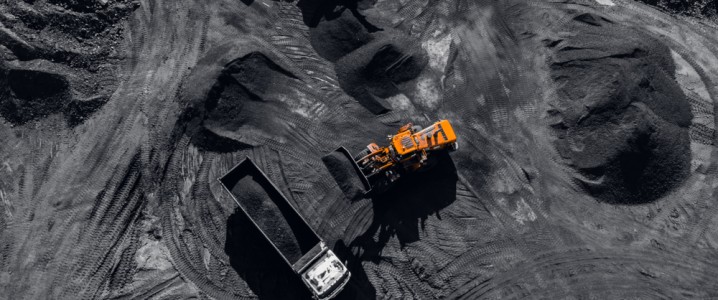
The International Energy Agency expects coal demand to increase this year in response to ongoing oil and gas trade constraints stemming from the closure of the Strait of Hormuz. Several countries have been forced to turn back to coal to fill the gap, as oil inventories are depleted and countries gradually expand their renewable energy capacity.
In its mid-year update, the IEA predicted that coal use would likely increase in some regions of the world owing to higher natural gas prices in 2026. The conflict in the Middle East and ongoing restrictions on trade via the Strait of Hormuz maritime trade corridor have driven up prices in recent months. This has led to severe global energy disruptions, pushing oil and gas prices higher.
The massive reduction in LNG shipments through the Strait of Hormuz has led some countries to face energy shortages, requiring them to turn to other energy sources. Japan, India, Bangladesh, the Philippines, South Korea, Thailand, Taiwan, China, and some European countries have been forced to increase their coal use to fill the gap. In addition, some countries are not only turning to coal for power; China’s coal consumption for chemical product production has also increased in recent months due to high oil prices.
Coal consumption may increase further in some regions of the world in the coming months if a particularly strong El Niño weather pattern occurs, as predicted. Higher-than-normal temperatures and lower hydropower output could drive up power demand across Asia, in large markets such as India and Vietnam.
Global coal production matched a record high in 2025 but is expected to decrease slightly year over year in 2026. Despite that, the IEA expects demand for the energy commodity to rise by 1.2 per cent in 2026, bringing the world’s consumption to a record 8.94 billion metric tonnes. Coal demand by the world’s two biggest coal consumers, China and India, is expected to rise by 1 per cent and 4.2 per cent respectively, to 5 billion tonnes and 1.353 billion tonnes.
The outlook for 2027 is murkier given the unpredictability of trade in the Strait of Hormuz. If LNG flows recover next year, it could drive natural gas prices down, spurring a shift in gas and coal use. However, global demand will likely increase if energy trade remains restricted.
“Although shipping disruptions in the Strait of Hormuz do not directly affect coal markets” and virtually no coal shipments pass through the Strait of Hormuz, “tighter natural gas supply has pushed up prices, prompting some electricity systems to switch from gas to coal,” the IEA stated.
News of increased coal use is concerning, given that the United Nations (UN) has, for the first time, acknowledged that the world is set to overshoot its target of limiting global warming to 1.5°C above pre-industrial levels. As part of efforts to support a global green transition and uphold climate pledges, diplomats from almost every country agreed to “phase down” global coal consumption at the 2021 COP26 climate summit in Glasgow.
However, since the signing of the agreement, several countries have continued to rely on coal burning to meet rising electricity demand. While many countries are investing heavily in accelerating the development of their renewable energy sectors, it is expected to take several years to eliminate the need for fossil fuels for power in most countries.
In March, Italy announced plans to postpone the shutdown of its coal-fired power plants for all of 13 years. Germany has also announced it is considering restarting some of its coal plants to meet the country’s energy demand. In March, Chancellor Friedrich Merz stated, “We must supply this country with electricity. I am not prepared to jeopardise the core of our industry simply because we have adopted phase-out plans that have become unrealistic.”
Somewhat surprisingly, given President Trump’s aim to revive the ageing coal sector, coal consumption in the United States is expected to fall by around 7 per cent this year, following an unexpected jump last year. The United States has been largely sheltered from the global gas disruption thanks to its abundant, cheap domestic natural gas. Vast quantities of U.S. solar and wind energy have also come online this year, following years of accelerated development, further reducing the need for coal.
Nevertheless, the United States made a significant contribution to the increase in global emissions in 2025. According to the Energy Institute, global energy-related carbon dioxide emissions rose by 1.1 per cent to 35.806 billion tonnes, with the United States accounting for about 13.3 per cent of the increase in direct energy-related CO2 emissions. Under a broader measure that also includes methane and flaring emissions, the United States accounted for roughly a third of the global increase.
This demonstrates just how detrimental an increase in coal consumption can be for global emissions, with coal-related emissions expected to climb significantly this year in line with higher consumption.
By Felicity Bradstock for Oilprice.com
More Top Reads From Oilprice.com
- China’s Fuel Exports Surge as Global Diesel Shortage Deepens
- China Pushes Coal Miners to Lift Supply as Prices Climb
- Germany Weighs Market Incentives to Boost Record Low Gas Storage Level
Download The Free Oilprice App Today


ADVERTISEMENT
Set us as your preferred Google source
FACEBOOK Twitter LINKEDIN REDDIT PRINT
Previous Post\ \ Coal Remains The Undisputed King Of Global Power

Felicity Bradstock
Felicity Bradstock is a writer and journalist based in Mexico City. She writes for energy websites and covers several other industries, as well as writing…
Related posts
Big Oil’s Production Keeps Soaring Despite Deep Spending Cuts Global Shipping Costs Explode as Hormuz Disruptions Hit Key Trade Routes Energy Giants Are Betting Billions on a World of Longer Oil Routes
Leave a comment
First Name
Last Name
That email address is already in the database. Please login to your account to post your comment, or enter a different email address to continue with your comment & account creation.
Captcha
Comment
Please understand that, by submitting this form, you will be creating a free OilPrice.com account, and therefore agree to abide by our Terms of Use. Your details will be stored in our database and shared with our third party mailing list provider. You will be sent an email containing a link that will ask you to generate a new password - please follow the link to complete your OilPrice account activation.
We will save the information entered above in our website. Your comment will then await moderation from one of our team. If approved, your data will then be publically viewable on this article. Please confirm you understand and are happy with this and our privacy policy by ticking this box. You can withdraw your consent, or ask us to give you a copy of the information we have stored, at any time by contacting us.
ADVERTISEMENT
ADVERTISEMENT
Most Popular
 Chinese Solar Panels Drop to 12 Cents a Watt, Rooftop Installs Surge Worldwide
 Saudi Pipeline Outage Hits an Oil Market Running Out of Buffers
  Saudi Export Pivot Sends Brent Below $105
  Inside Putin’s $135 Billion Arctic Gamble That Could Save His Ukraine War
  China’s Growing Iran Trade Is Moving Overland Through Central Asia

ADVERTISEMENT
ADVERTISEMENT
EXXON Mobil-0.35
Open57.81Trading Vol.6.96MPrevious Vol.241.7B
BUY 57.15
Sell 57.00


