
Hyundai to export Thai BEVs to Australia
Shipments to begin in fourth quarter
PUBLISHED : 13 Jul 2026 at 05:55
NEWSPAPER SECTION: Business
WRITER: Lamonphet Apisitniran
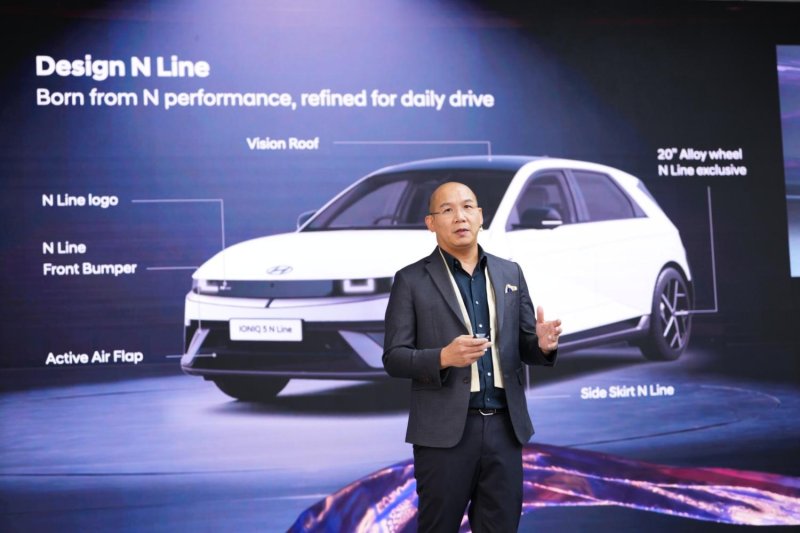
Hyundai Mobility Thailand, a subsidiary of South Korea's Hyundai Motor Group, has announced plans to export battery electric vehicles (BEVs) produced at its Thai manufacturing plant to Australia starting in the final quarter of 2026.
The move underscores Thailand's growing role in the global EV supply chain and highlights Australia as a key market in the company's expansion.
Managing director Wallop Chalermvongsavej said Hyundai is studying suitable models and reviewing Australia's strict import regulations, including the New Vehicle Efficiency Standard (NVES).
The NVES sets limits on the average carbon dioxide emissions of new cars, sport utility vehicles and light commercial vehicles.
Australia also requires automakers to secure import approval before shipping vehicles, making compliance a critical part of Hyundai's export strategy.
Hyundai's Thai plant, which has an annual production capacity of 5,000 units, is supported by a battery manufacturing facility.
Together, they represent a 1-billion-baht investment, backed by incentives from the Board of Investment under the EV3.5 scheme.
Running from 2024 to 2027, the scheme offers tax cuts and subsidies to automakers in exchange for investment in BEV assembly plants.
The scheme also requires companies to maintain a production-to-import ratio, with automakers producing two BEVs locally for every one imported between 2024 and 2025, rising to three-to-one by 2027.
Hyundai recently rolled out the locally produced Ioniq 5 BEV as its first model in Thailand, aiming to produce around 100 units per month.
The company plans to offset 800 imported vehicles this year to meet the EV3.5 scheme's requirements, Mr Wallop said.
At Hyundai's Thai plant, 46% of EV component costs are sourced locally, exceeding the government's 40% minimum requirement.
Hyundai targets sales of 2,800 Ioniq 5 units this year, up from 2,300 last year, and plans to expand its service network to 28 showrooms nationwide.
Looking ahead, Mr Wallop expressed optimism about the Thai economy in the second half of 2026, citing government stimulus measures, foreign capital inflows and resilient corporate earnings.
The Stock Exchange of Thailand index recently exceeded 1,600 points, up from 1,300 points last year, lifting consumer confidence in the premium car segment, he noted.


