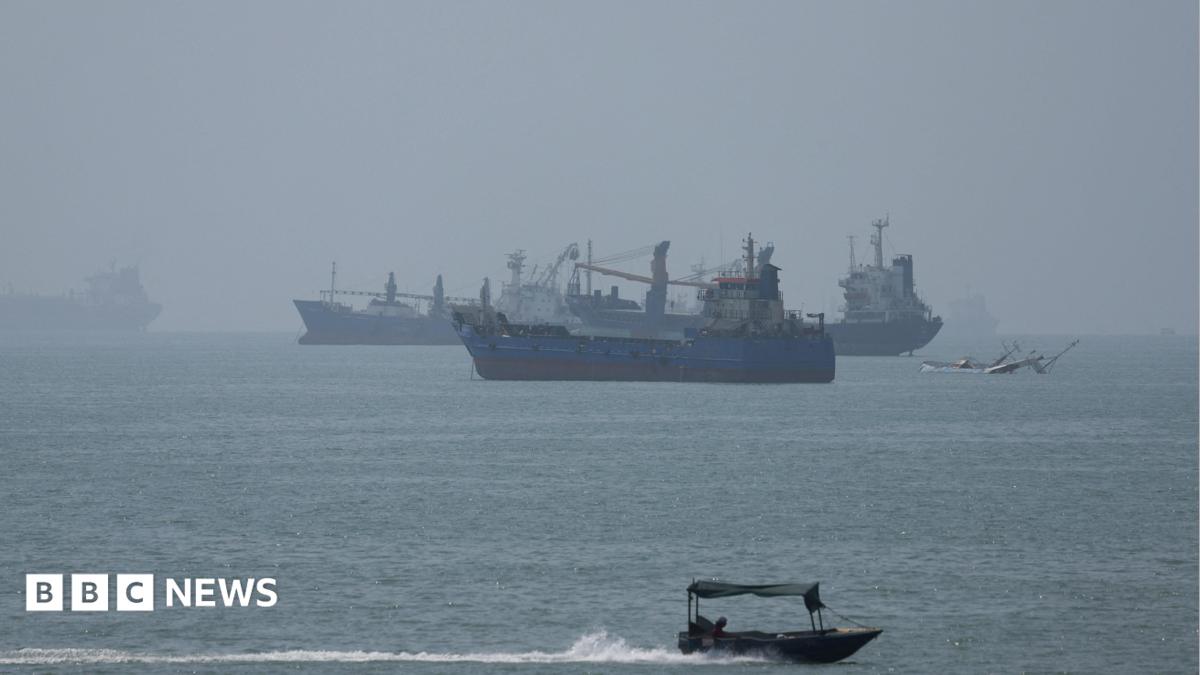
The severe disruption of oil and gas flows out of the Persian Gulf resulting from the war between the U.S. and Israel and Iran, has saddled energy-importing nations with soaring bills, supply uncertainty, and a murky outlook. However, there has been a silver lining: a rush to build alternative conduits for bringing oil and gas out of the Middle East.
The global total energy import bill swelled by $330 billion over the six months between March and August, Finnish climate outlet Centre for Energy Research and Clean Air reported earlier this month. This would not have been the case had the Strait of Hormuz remained open, the outlet noted in its report, highlighting the world’s reliance on an energy export corridor vulnerable to adverse geopolitical events and their fallout.
Because of the closure of Hormuz, Persian Gulf oil producers had to idle wells and find ways to slip their stored oil out of the Gulf on tankers with their transponders switched off. Yet they also started working on alternative routes that bypassed the Strait of Hormuz altogether.
Saudi Arabia demonstrated foresight with its East-West pipeline that it used to reroute its export flows from the Persian Gulf to the Red Sea in the first weeks of the war, ramping up to some 7 million barrels of crude daily along the pipe that had previously handled much lower volumes. The only major constraint in that rerouting was the capacity of the loading facilities at Yanbu Port.
Later, of course, Saudi Arabia had to discover that the Red Sea is not safe because of the presence of the Yemeni Houthis in the Bab el-Mandeb strait and their affiliation with Iran. So, the Saudis had to reroute again, this time to the Suez Canal, which has an even more constrained tanker passage capacity. In other words, alternative routes are not perfect, but it is a good thing to have them. Related: Norway Wants Europe’s Energy Market, Without Sharing Its Trade-Offs
Meanwhile, Saudi Arabia’s neighbor and former OPEC fellow member, the United Arab Emirates, is planning to double the capacity of the pipeline it has to Fujairah—a port city that sits just outside the Strait of Hormuz. ADNOC, the state oil and gas major, plans to build a new project, the West-East 1 Pipeline, which is expected to become operational next year and double the UAE energy giant’s export capacity through the Emirate of Fujairah to meet global demand for energy supplies, from 1.8 million barrels daily to 3.6 million barrels daily.
Big Oil is already in on it. TotalEnergies said it would take part in the ADNOC pipeline expansion project—and another pipeline project in Iraq. The idea is to build a pipeline through Syria to the latter’s Mediterranean coast and ship Iraqi crude from there.
The U.S. has voiced its support for the project; however, per a Reuters report from earlier this month, the pipeline would cost at least $15 billion to build and take at least four years. This is not fast enough for Iraq. So, it is in talks with the new Syrian government to repair an old pipeline between the two countries that has not been used in 20 years. That, according to the heads of Syria’s state oil company, would take three years at most. Iraq is also talking to Turkey to expand oil flows via the Kirkuk-Ceyhan pipeline to get more oil out.
Kuwait is talking to the UAE and Saudi Arabia to expand the regional pipeline network so it can get its oil from Fujairah and Saudi Arabia’s Red Sea ports as an alternative to Hormuz. Kuwait faces an 8% GDP squeeze this year because of the war. Qatar is also set to book an economic shrinkage as its LNG exports are 100% dependent on the Strait of Hormuz being open for business. Saudi Arabia and the UAE have approached Japan for financial support for the pipeline network expansion, and Japan has agreed to take part. No wonder, seeing as the country was dependent on almost all of its oil imports from the Middle East and suffered a nasty shock when Iran shut down the Strait of Hormuz.
Meanwhile, there is also talk about investments in port infrastructure, Reuters reported last week, citing unnamed sources. “If two years ago sports was the big buzz thing, I think for the time being, next year or two, they're going to say ports, ports, ports,” one of these sources told the publication. According to that source, ports have become a “mission-critical priority” for the governments of the Gulf states as they tackle the adverse economic consequences of the war that paralyzed tanker traffic in Hormuz.
The latest news out of the Persian Gulf should motivate local governments to double down on the alternative oil and gas routes. The United States struck Iran again on Sunday, hitting rocket launchers inside the Strait of Hormuz, while Iran retaliated with strikes on U.S. bases in Jordan. Clearly, the crisis is not going to be over soon. Alternative routes will take time, but they will reshape the risk profile of the Middle East.
By Irina Slav for Oilprice.com
More Top Reads From Oilprice.com
- Venezuela Helped Build OPEC. Now It May Help Break It Apart
- Qatar Extends Force Majeure as Hormuz Crisis Still Blocks LNG Traffic
- MIT Uses AI to Challenge a Century-Old Process for Mass Ammonia Production
Download The Free Oilprice App Today
Download Oilprice.com on Apple Download Oilprice.com on Android
ADVERTISEMENT
Set us as your preferred Google source
FACEBOOK Twitter LINKEDIN REDDIT PRINT
Previous Post\n\nNorway Wants Europe’s Energy Market, Without Sharing Its Trade-Offs Next Post\n\nWhy More Venezuelan Oil Won’t Solve America’s Gasoline Problem
Irina Slav
What I Cover Irina Slav has been writing about global energy markets since 2007, covering the oil and gas industry, energy security, commodities, and the…
Related posts
Why More Venezuelan Oil Won’t Solve America’s Gasoline Problem Norway Wants Europe’s Energy Market, Without Sharing Its Trade-Offs Russian Oil Is No Longer India’s Easy Bargain
Leave a comment
First Name
Last Name
That email address is already in the database. Please login to your account to post your comment, or enter a different email address to continue with your comment & account creation.
Captcha
Comment
Please understand that, by submitting this form, you will be creating a free OilPrice.com account, and therefore agree to abide by our Terms of Use. Your details will be stored in our database and shared with our third party mailing list provider. You will be sent an email containing a link that will ask you to generate a new password - please follow the link to complete your OilPrice account activation.
We will save the information entered above in our website. Your comment will then await moderation from one of our team. If approved, your data will then be publically viewable on this article. Please confirm you understand and are happy with this and our privacy policy by ticking this box. You can withdraw your consent, or ask us to give you a copy of the information we have stored, at any time by contacting us.
ADVERTISEMENT
ADVERTISEMENT
Most Popular
U.S. Refiners Face New Crude Squeeze as Canada Cuts Oil Sands Output
Solar Has Crossed a Critical Economic Tipping Point Oil Prices Fall as Iran Negotiation Hopes Return Aramco Finds a New Way to Keep Saudi Crude Flowing to China The U.S. Power Play in Iraq That Moscow and Beijing Didn’t See Coming



By signing up to our newsletter, you agree for your email address to be shared with our third party mail providers.
ADVERTISEMENT
ADVERTISEMENT
EXXON Mobil-0.35
Open57.81Trading Vol.6.96MPrevious Vol.241.7B
BUY 57.15
Sell 57.00