
Are you a book lover?
If you are, I suspect you already do this: when you travel abroad, you find yourself walking into a local bookstore.
I do it everywhere, not only in Japan but also abroad. My shelves hold some Chinese and Russian books even though I cannot read a word of them. A bookstore is one of the best places to understand the local culture: what people there are curious about, what they worry about, what they love.
But lately I’ve become obsessed with another kind of book place: local libraries.
I know that reading books is a trend among young people all over the world, and here in Japan, a big trend is emerging from libraries.
The book that changed my point of view for libraries
I recently read a Japanese book called 『 都市のような図書館をつくる』—Building a library like a city. Unfortunately, it hasn’t been translated into English yet, but it captures precisely what libraries in Japan are trying to become a core of local community.

Until recently, oh, maybe still now… libraries have been boring and uncool place for most Japanese people.
That changed in 2013, when Tsutaya—a famous Japanese bookstore chain, known for its popular Daikanyama store in Tokyo— opened an innovative public library in Takeo, a small city in Kyushu area.
Tsutaya was the first place in Japan to put a Starbucks inside a bookstore in Japan, turning shops into a place where people linger. They did the same in Takeo’s public library: a Starbucks inside. In addition, they put a bookstore inside the library, so visitors could not only borrow books but also buy them. The bookstore sells some stationery and goods too, so the library made even people who had never been interested in books want to visit.
When the library became famous, visitors started arriving not just from the neighborhood bur from far away. Then, the city has changed little by little. Residents found themselves around books more often, and communities started forming there. It turned out that a library could reshape an entire town, and unique libraries began appearing all over Japan, one after another.
The most important point is: a library is a public place unlike a bookstore.
That is exactly why all kinds of people can gather there casually, without needing to buy anything. Now, libraries are becoming each region’s hub of knowledge and people.
A library with 100,000 visitors in a town of only 9,000 people
The other day I visited the library of Nankan, a small town in Kumamoto, in Kyushu—far from Tokyo, Osaka, its population just 9,000.
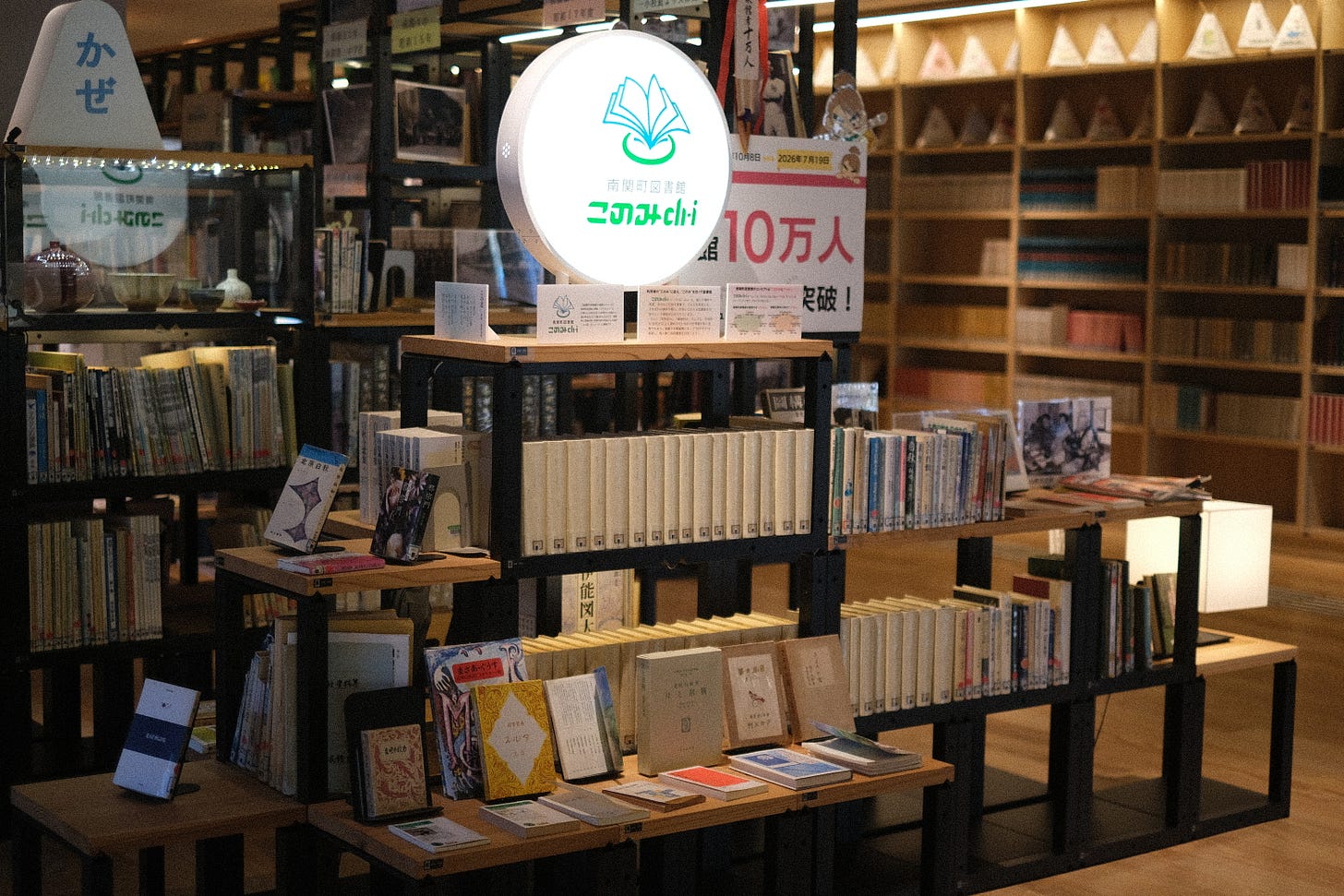
Although it’s such a small town, its library, renovated last year, was extraordinary. At the entrance, the first shelves you meet hold local historical materials and books about the town’s notable figures. This library welcomes you by sharing about what Nankan is.
I have long wished for a culture in which travelers’ first destination in a new city become the local library to get to know the area deeply, and here it was, already built.
After you enjoy the Nankan shelves, as you walk deeper, the shelves widen outward: books about Kumamoto prefecture, then books about Japanese culture. This layout was designed deliberately—from the small town of Nankan, toward the wider world, step by step.
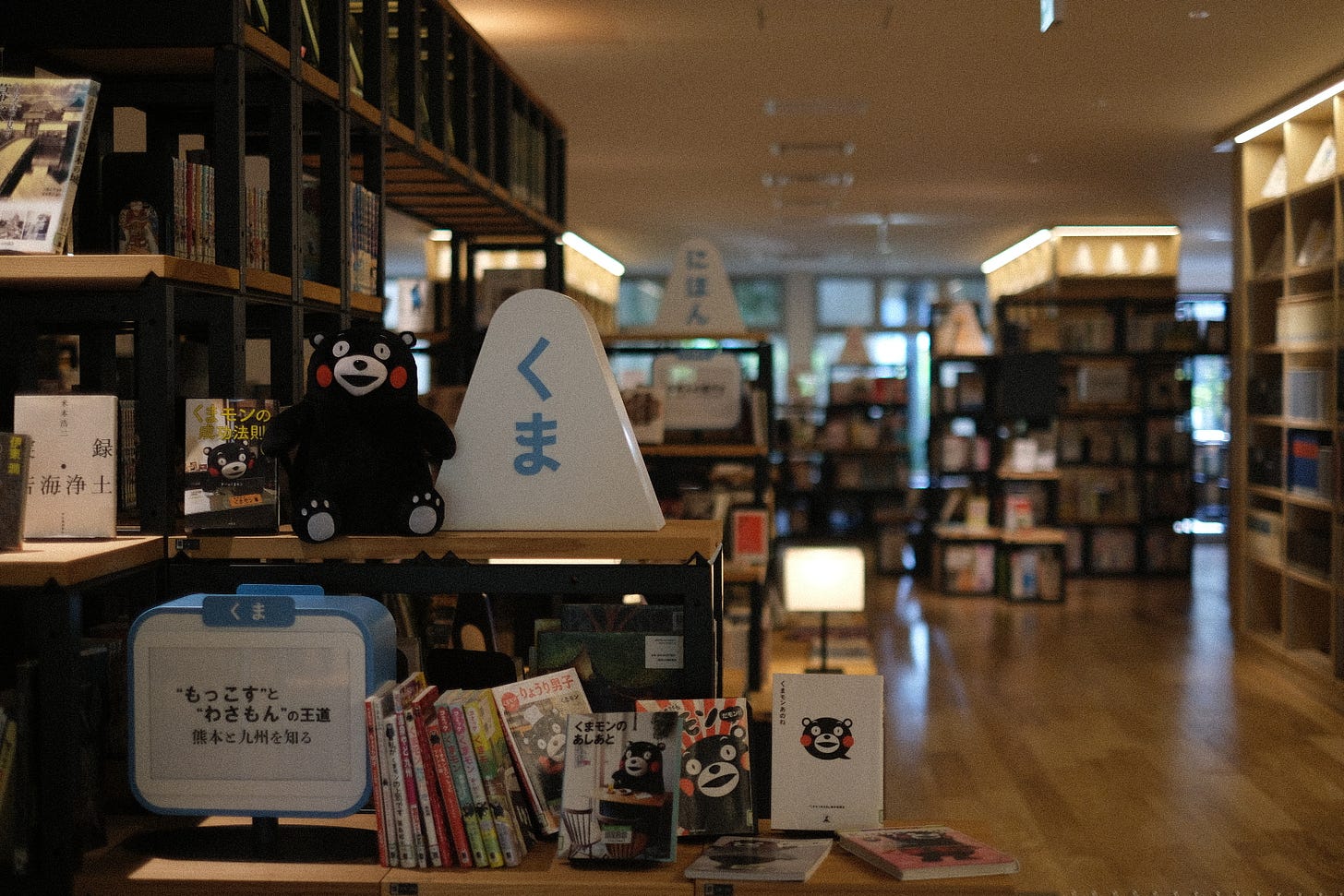
Most Japanese libraries arrange their books by standard library classification, optimized for searchability. But this library is small, and precisely because of that, it refuses to be “correct.” Its shelves are designed instead for unexpected encounters with books you weren’t looking for.
I also found a lot of interesting books I’d never seen there, so I’d like to visit again and stay for days just to read good books.
Good libraries are built on soft power
The library that make the news in Japan are usually the ones with striking architecture. But a beautiful building, I’ve come to believe, means little without substance inside.
I felt this most clearly in Yahiko, a small shrine town in Niigata. It opened recently with modest building which has an event space and café on the ground floor, reading and study rooms above.
You can read its detail on my blog: Good Libraries Are Built by Soft Power

It is a small and ordinary library in terms of architecture, but what stopped me was its book selection. I felt that every shelf carried the trace of someone’s judgment — not bestseller lists, not novelty, but a quiet editorial intelligence deciding what the people of this town might need to encounter. Standing there, I realized that what makes a library good is not the building at all. It is the invisible work: who chooses the books, how the space is tended, whether the local people keep visiting regularly
Soft power, not concrete.
A great building can be bought. A great shelf has to be grown.
The most interesting Japan lives in small local places
This is what I keep learning, town after town: the depth of Japan is not concentrated in Tokyo’s famous spots. It hides in small local places like Naknan and Yahiko.
These places are not easy for travelers to research, especially for foreigners. They never show up in web searches or AI recommendations; they are places you learn about only through personal connections, from someone who knows. And that is part of what keeps them genuine.
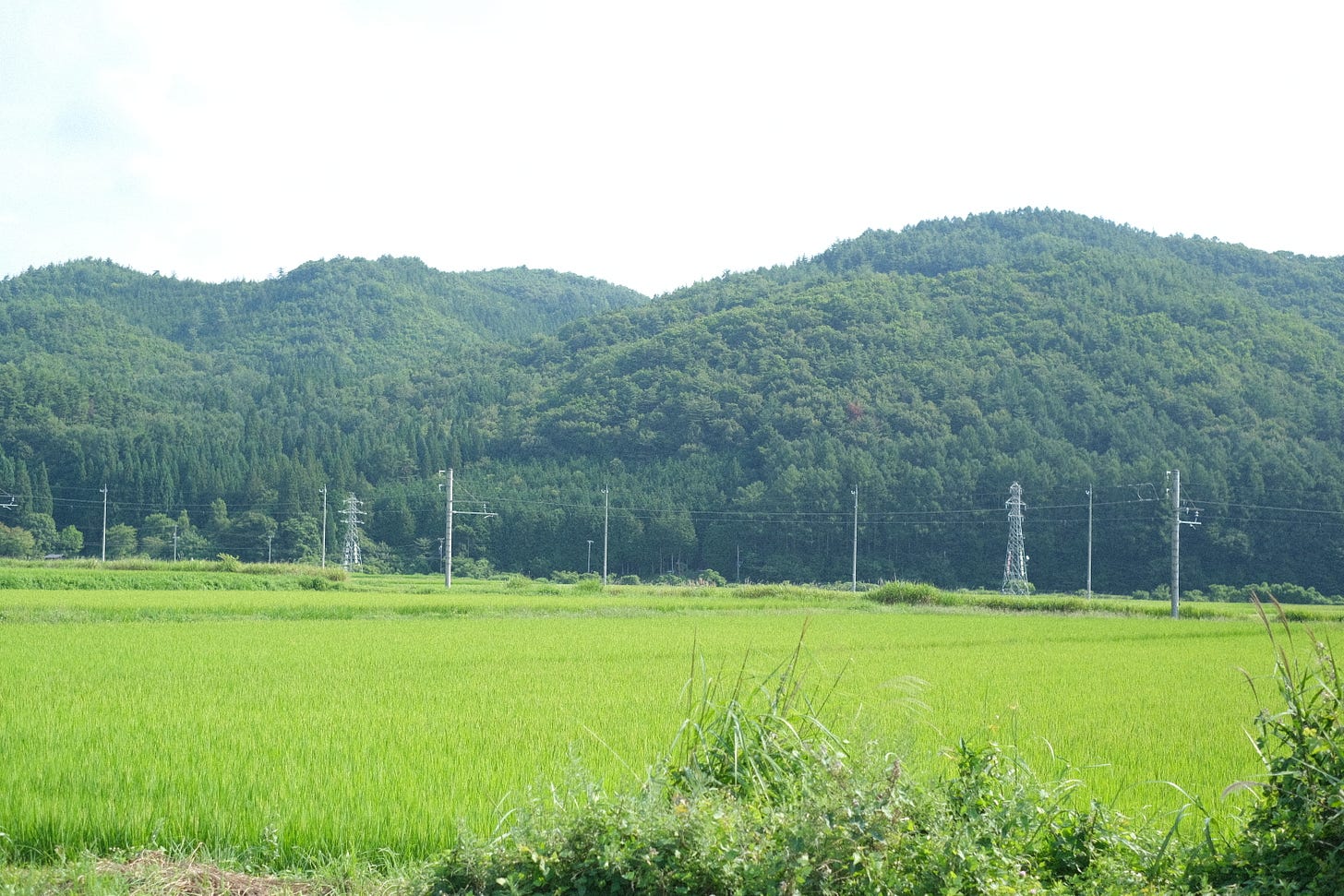
Someday I want to guide people who truly respect Japanese culture to places like these — to travel not to the Japan that was built for visitors, but to the Japan that stayed home. If you’d like to join me on that journey, even just on the page for now, subscribe and travel with me, letter by letter.
Discussion about this post
Comments
Restacks
Thank you for this delightful read! Places like these are why I love to meander in smaller streets instead of big touristy spots (not just in Japan). You always stumble upon something new and learn so much more about the culture!
Thanks for your post! It is great to know a bit more about the concept and context of these libraries. Earlier this year I visited Ōzushima and on my way back I stopped by the Tsutaya Shunan City Tokuyama Station Library. It is directly connected to the JR Station, and had bookstore and Starbucks just like the other branches you mentioned. It certainly seemed highly trafficked and that they made good use of every inch of the space.


