Big Oil Is Betting Billions On Nuclear Fusion By Alex Kimani - Aug 25, 2026, 7:00 PM CDT
- Fusion is shifting from research toward commercialization, with private investment hitting a record $4.48 billion in 2025 and commercial plants targeted for the 2030s and 2040s.
- Eni is making one of Big Oil’s biggest fusion bets, backing Commonwealth Fusion Systems, committing $1+ billion to its future electricity and developing critical tritium fuel-cycle technology.
- Chevron, Equinor, Shell and Cenovus are also investing heavily, spreading bets across competing fusion technologies that could eventually transform global power generation.
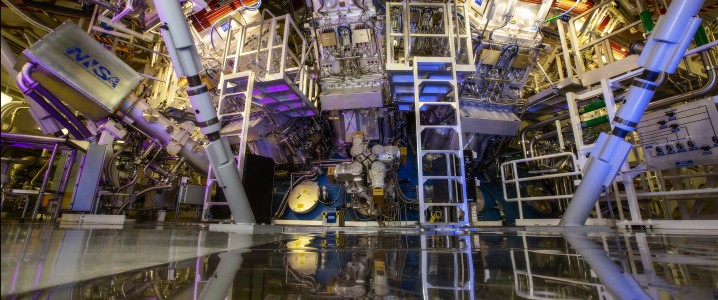
After decades confined largely to laboratories, nuclear fusion is beginning to attract the kind of money and industrial planning normally reserved for technologies expected to make it onto the grid. Global private investment in fusion hit a record $4.48 billion in 2025, up 69% from a year earlier, while some of the world’s largest energy companies are moving beyond simply backing fusion startups.
Italian energy giant Eni S.p.A. (NYSE:E) now plans to deploy a commercial fusion power plant in Europe by the early 2040s or sooner, building on its investment in Commonwealth Fusion Systems and a more than $1 billion agreement to buy electricity from the startup’s first commercial U.S. plant. Eni is also looking beyond power generation, using decades of experience processing hydrocarbons and hydrogen to build a business around the fuel systems future fusion plants will need to operate.
“ Competition is growing in the fusion industry after the technology and expectations had changed significantly in the past 5-6 years,” Francesca Ferrazza Eni's head of magnetic fusion initiatives, told the Financial Times in an interview. “ It was always considered research. Now we are considering it as an industry.”
Commonwealth Fusion Systems raised another $1 billion in July, bringing its total funding to $4 billion as it targets the early 2030s for its first commercial power plant. The planned 400-MW ARC facility in Virginia became the first fusion project to apply for interconnection with PJM earlier this year, while Google has agreed to buy 200 MW of its output. Eni has committed more than $1 billion to buying electricity from the plant.
Eni also wants to build a business supplying the fuel systems necessary to keep commercial fusion reactors running. The company plans to use its experience processing hydrocarbons and hydrogen to recover, purify and recycle deuterium and tritium, the two hydrogen isotopes used as fuel by many fusion reactor designs. To that end, Eni has formed a JV with the UK Atomic Energy Authority to develop and sell those services globally, giving the Italian company a potential source of fusion revenue beyond owning plants or selling electricity.
Tritium is much harder to extract than deuterium. Deuterium is stable and abundant enough to be extracted from seawater, where roughly one in every 6,700 hydrogen atoms is deuterium. Tritium is radioactive, has a half-life of just 12.3 years and exists naturally only in tiny quantities. A 1-GW deuterium-tritium fusion plant could consume roughly 55 kilograms of tritium per year, far beyond what could be supplied from naturally occurring sources.
That means commercial reactors will need to produce much of their own tritium and continuously recover and recycle unused fuel. In turn, that requires closed-loop systems capable of extracting tritium from reactor breeding blankets and exhaust, purifying it and feeding it back into the reactor. Eni is developing a large-scale tritium fuel-cycle facility at the UKAEA Culham Campus in Oxfordshire to test those processes under conditions designed to replicate future fusion plants. The facility is scheduled for completion in 2028.
Fusion’s Other Big Oil Backers
Equinor, Chevron, Shell and Cenovus have spent years building positions across the fusion industry, backing competing reactor technologies before any of them have produced commercial electricity.
Equinor Ventures first invested in Commonwealth Fusion Systems in 2020 and increased its stake the following year as part of CFS’s $1.8 billion Series B round, which Equinor described at the time as its largest venture investment.
Chevron has spread its investments across multiple fusion technologies. Chevron Technology Ventures has backed both TAE Technologies and Zap Energy, and participated alongside Google in TAE’s $150 million funding round in 2025, taking the startup’s total equity funding above $1.3 billion. TAE plans to build an initial 50-MW fusion power plant before scaling up to subsequent plants with 350 MW to 500 MW of capacity.
Shell Ventures joined Chevron and other investors in Zap Energy’s $130 million Series D round in 2024. Zap is pursuing a different route to fusion than CFS, using sheared-flow stabilization rather than large superconducting magnets to control plasma. The funding is supporting development of its next generation of fusion devices and the engineering systems needed to turn them into a commercial power plant.
Cenovus made one of Big Oil’s earliest bets on the sector, investing $4 million in Canada’s General Fusion in 2011 and participating in later funding rounds. General Fusion has since moved toward the public markets, agreeing in January to merge with a special-purpose acquisition company in a deal valuing it at roughly $1 billion and targeting a Nasdaq listing under the ticker GFUZ. The company is targeting its first commercial power plant for the mid-2030s.
By Alex Kimani for Oilprice.com
More Top Reads From Oilprice.com
- Treasury Expands Iran Sanctions Without Targeting Major Chinese Banks
- Europe Dodges a Rhine Crisis for the Worst Possible Reason
- Oil Nears $100 as Trump’s ‘Economic D-Day’ Raises the Stakes
Download The Free Oilprice App Today


ADVERTISEMENT
Set us as your preferred Google source
FACEBOOK Twitter LINKEDIN REDDIT PRINT
Previous Post\ \ The Race to Power AI Is Reviving America's Nuclear Ambitions

Alex Kimani
Alex Kimani is a veteran finance writer, investor, engineer and researcher for Safehaven.com.
Related posts
The Race to Power AI Is Reviving America's Nuclear Ambitions Europe’s Biogas Plants Could Become Fertilizer Factories Low Rivers, High Stakes: Europe's Nuclear Cooling Crisis
Leave a comment
First Name
Last Name
That email address is already in the database. Please login to your account to post your comment, or enter a different email address to continue with your comment & account creation.
Captcha
Comment
Please understand that, by submitting this form, you will be creating a free OilPrice.com account, and therefore agree to abide by our Terms of Use. Your details will be stored in our database and shared with our third party mailing list provider. You will be sent an email containing a link that will ask you to generate a new password - please follow the link to complete your OilPrice account activation.
We will save the information entered above in our website. Your comment will then await moderation from one of our team. If approved, your data will then be publically viewable on this article. Please confirm you understand and are happy with this and our privacy policy by ticking this box. You can withdraw your consent, or ask us to give you a copy of the information we have stored, at any time by contacting us.
ADVERTISEMENT
ADVERTISEMENT
Most Popular
 \ \ U.S. Refiners Face New Crude Squeeze as Canada Cuts Oil Sands Output
 \ \ Oil Prices Fall as Iran Negotiation Hopes Return
  \ \ Copper Backwardation Collapses After 20,000 Tons Hit LME Warehouses
  \ \ Hope Fades, Traders Brace for Extended Oil, LNG Squeeze
  \ \ The Biggest Victims Of Trump’s Economic D-Day On Iran