
Stranded Middle East LNG Supply Upends Gas Markets
- Middle Eastern LNG exports remain crippled, with flows through the Strait of Hormuz still more than 75% below pre-war levels.
- Europe faces a costly winter, with gas storage just 73% full and LNG prices elevated amid prolonged Qatari supply disruptions.
- South Asian LNG demand is collapsing, with Wood Mackenzie forecasting a 6-million-tonne decline this year as soaring prices squeeze buyers.
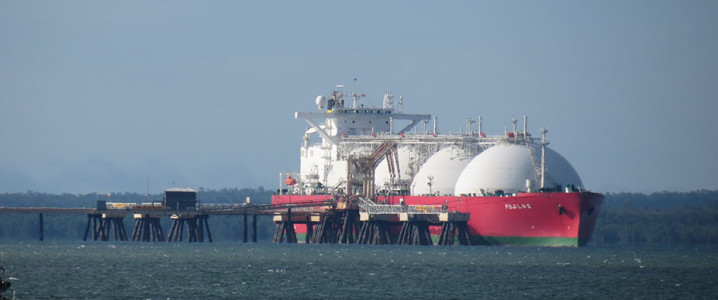
The LNG supply out of the Middle East has not recovered in any meaningful way seven and a half months after the Iran war choked oil and gas shipments through the Strait of Hormuz.
Since March, some occasional LNG cargoes have managed to squeeze through the chokepoint where a fifth of global liquefied Natural Gas supplies passed before the war. The rare shipments are not making much of a difference in the global gas market, which suddenly found itself without a fifth of daily LNG supplies and whose second-largest producer, Qatar, is now barely moving carriers through the Strait of Hormuz.
The implications are far-reaching. Asia’s spot LNG prices and Europe’s benchmark Natural Gas prices soared to 2023 highs. Price-sensitive buyers in Asia felt the supply squeeze, while concerns in Europe are growing ahead of the winter as gas volumes in storage sites are at their lowest level for this time of year since at least 2011. Policymakers and authorities say that Europe doesn’t face immediate gas shortages, but warn that until the Hormuz crisis lasts, prices are set to remain much higher than in the past two years.
Not An Easy Supply Fix
On the supply side, Qatar’s LNG exports are nowhere near the pace and level of recovery seen in the crude oil exports from the Middle East.
Most LNG carriers are traveling in dark mode through Hormuz, making tracking trickier than ever and further complicating estimates about flows and global supply balances.
Qatari and UAE cargoes have managed to transit the Strait of Hormuz in recent weeks, but volumes are too low to move the needle of the global LNG balance.
LNG traffic at the Strait of Hormuz appears to be ticking up despite increased threats to shipments in the chokepoint in recent days and the escalation on the Saudi-Houthi front. However, LNG flows remain over 75% below the levels seen before the Iran war.
Unlike oil, it is much more difficult to shuttle-ship LNG through Hormuz and then reload the gas via a ship-to-ship (STS) transfer as Persian Gulf producers have been doing in recent months to ship oil to customers. Related: China’s $3 Billion Qatar LNG Deal Raises an Awkward Question
Unlike oil, LNG exporters cannot transport volumes via pipelines, Saad Sherida Al-Kaabi, President and CEO of QatarEnergy and Qatar’s Minister of State for Energy Affairs, said last month.
“The problem is that LNG, our main export commodity, cannot be transported by pipelines. We will have to transport it by pipelines as gas and then liquify it at receiving terminals wherever that may be,” Al-Kaabi said at the Qatar Economic Forum Special Edition in New York in September.
“This means we are building redundant facilities to the ones we are already building in Qatar as part of the North Field expansion project. This makes no economic sense,” the minister explained, and added, “We have decided not to use pipelines as an alternative based on commercial and technical criteria.”
Referring to resuming LNG production and exports, “Qatar is ready to resume normal operations within a few weeks of the reopening of the Strait of Hormuz,” the official noted.
However, the strikes on Ras Laffan in March damaged two trains at the world’s biggest liquefaction complex. It will take three years for repairs to complete on the two damaged LNG trains, QatarEnergy’s top official said.
The Qatari state-owned energy giant last month extended the force majeure on LNG deliveries to Asia and Europe by another month through the end of November, as LNG cargo traffic through the Strait of Hormuz remains largely blocked.
Global Gas Crunch
As a result of the lack of Qatari gas, Asian LNG demand is declining amid high prices, while Europe is paying up for supply but European storage sites are only 73% full this week, compared to over 86% for this time last year and the past five years.
Even if the Strait of Hormuz were to open unconditionally to free traffic today, Qatar’s gas will need a few weeks to resume production and shipments, and neither Europe nor Asia would see a flood of cargoes in time for the beginning of the winter heating season.
Despite low storage levels, Europe’s gas system is now more diversified and flexible and able to meet demand during winter compared to 2021-2022, the European Commission said last week.
“The EU is now better prepared thanks to increased gas supply diversification, higher LNG import capacity, and reduced gas demand,” according to the latest assessment by the Gas Coordination Group, which advises the European Commission on coordinating security-of-supply measures in the event of an EU or regional emergency.
However, concerns remain about the high prices which will feed through the energy bills for households and industries, further eroding Europe’s competitiveness compared to industries based in the U.S. or China, for example.
Meanwhile, LNG demand in key South Asian buyers – Pakistan, Bangladesh, and India – is crumbling due to the high exposure to Qatari term supply and the sky-high prices in the months since Qatar’s cargoes mostly disappeared from the market.
Before the Iran war, South Asia’s LNG demand was expected to grow by 2.7 million tonnes (Mt), or by 7%, this year. But it is now expected to crumble by around 6 Mt and “the outlook beyond 2026 has been materially downgraded,” Wood Mackenzie’s latest analysis showed this week.
By Tsvetana Paraskova for Oilprice.com
More Top Reads From Oilprice.com


