
Chen Liwu leads Intel transformation with pragmatism, Chinese management culture reshapes organization
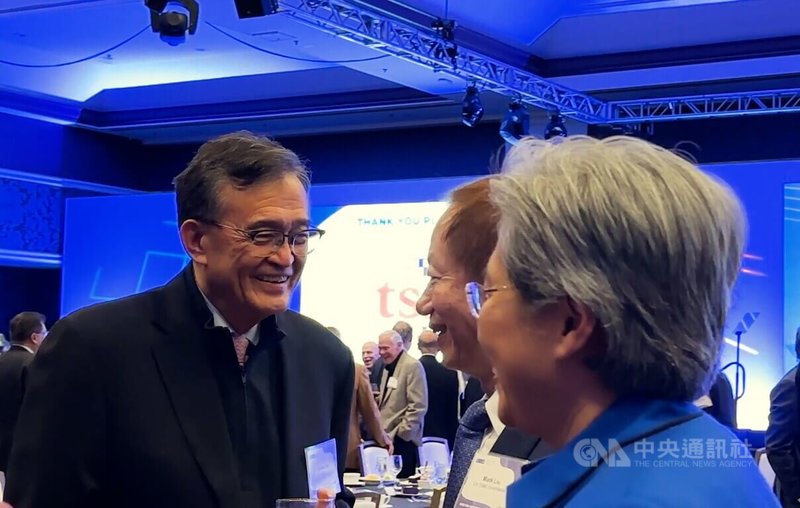
(Central News Agency reporter Zhang Xinyu, San Francisco, 31st) Intel CEO Chen Liwu arrived in Taiwan and is one of the tech giants at COMPUTEX. Unlike some tech leaders with a distinct aura, he is known in the industry for being low-key and pragmatic. Since taking office 14 months ago, Intel's stock price has accumulated a gain of over 340%. In the eyes of employees, he does not easily overpromise and reshapes the organizational culture with the discipline of a Chinese-style enterprise.
The Taipei International Computer Show (COMPUTEX) will kick off on the 2nd, with Intel CEO Chen Liwu visiting Taiwan in person to deliver a keynote speech. In the era of AI agents, increasing demand for inference is bringing the role of CPUs back into focus. For Intel, which has long excelled in CPUs but lost momentum in the AI wave, this is an important opportunity to return to the stage.
For Chen Liwu, this year's COMPUTEX is also a key occasion to showcase the "next computing generation vision" to the Taiwan supply chain after taking over Intel in March last year. His speech and his interaction with the Taiwan supply chain, especially TSMC, are highly anticipated.
Unlike former Intel CEO Pat Gelsinger's style of aggressive investment and active innovation, Malaysia-born Chen Liwu is known in Silicon Valley for being low-key and pragmatic. In a July letter to employees after taking office, he acknowledged that Intel had "invested too much, too early, without enough demand to support it" in the past few years.
He emphasized that "future capacity expansion must be aligned with customer demand."
Internal employees told reporters that Chen Liwu's approach is closer to TSMC's customer-oriented culture.
Internal discipline and efficiency, not letting outsiders know his cards
"He also brought some Chinese corporate culture into the company," employees said. Chen Liwu not only often talks about being humble, but he is also introverted and relatively conservative. "He will first refine his own hand... even if he has a good hand, he will only say that progress is on track, not boast, and will not fully reveal his cards."
What employees feel most is the change in management style. His first move was to cancel the work-from-home policy, requiring employees to come to the office four days a week. Those who fail to meet the requirement could be fired, "even the most outstanding employees are no exception."
Reuters reported that Chen Liwu flattened the leadership structure, allowing core businesses such as data centers, AI, and PC chips to report directly to him. In an internal memo, he pointed out that bureaucratic processes and organizational complexity were slowing innovation.
Employees said that the management layers between ordinary engineers and Chen Liwu have been reduced by at least two layers compared to the past. Cross-department coordination is now faster. "As soon as a problem arises, someone will immediately seek help from other departments," allowing the team to solve problems within a certain time frame.
As Chen Liwu attempted to reshape Intel's organizational culture, questions from Washington briefly surfaced.
In August last year, U.S. President Donald Trump accused him of conflicts of interest due to his business ties with China and called for his resignation. However, after their meeting, the situation quickly reversed, with the U.S. government pledging billions of dollars in investment and acquiring nearly 10% of the company's equity.
Chen Liwu later sent an internal letter to reassure employees, emphasizing that the U.S. government "has deep confidence in Intel."
Trump's move was also seen as a signal to the business community: Intel remains an irreplaceable part of the U.S. semiconductor strategy.
Winning government and customer trust, foundry service business expands
Regarding the Intel 18A process bet by the Gelsinger era, Chen Liwu continued to push forward after taking over.
In January this year, during the Consumer Electronics Show (CES), Intel launched the Core Ultra Series 3 processor, codenamed Panther Lake. Intel stated that this is the first product using the 18A process, and the series chips have entered mass production.
Reuters reported in May that Tesla plans to use Intel's 14A process to produce chips in the TeraFab project. The Wall Street Journal later indicated that Intel has reached a preliminary foundry agreement with Apple to produce chips for some Apple devices.
An informed source speaking anonymously said, "Intel's foundry service business volume has become very large... and is expanding."
Historically, Intel's competitive and cooperative relationships with TSMC and NVIDIA have been delicate. Chen Liwu, with his deep experience and extensive industry connections, has shown sophistication and tact.
On November 20 last year, the Semiconductor Industry Association (SIA) held the Robert N. Noyce Award dinner in Silicon Valley. At this important honor event, the venue was filled with corporate executives and industry representatives. Chen Liwu mingled with the crowd, warmly chatting with industry figures.
Seeing former TSMC chairman Morris Chang, Chen Liwu took the initiative to shake hands. They patted each other on the shoulder and chatted for a while, showing natural interaction between acquaintances. That evening, Chen Liwu sat at the same VIP table as TSMC Chairman Mark Liu. On stage, semiconductor industry leaders were not only excited that the industry had once again become a core focus, but also discussed how to cooperate to overcome challenges in the macro environment.
Intel's transformation and challenges still have a way to go. The foundry business Intel Foundry still reported losses in the first quarter. Key questions the market is watching include: whether the 18A process can achieve stable volume production, whether yield rates can continue to improve, whether external customers can move from trial runs to long-term orders, and whether the supply chain and capacity can keep up with the expansion of advanced processes.
Chen Liwu has arrived in Taiwan. This semiconductor industry veteran knows that for Intel to return to the core stage, strategic support from U.S. manufacturing alone is not enough; it must deepen cooperation with the Taiwan supply chain. (Editor: Tian Ruihua) 1150601


