
New York’s $75 Billion Climate Liability Law Faces an Uncertain Future
- New York’s Climate Change Superfund program sought a combined $75 billion from qualifying fossil fuel producers and refiners to fund climate-adaptation infrastructure.
- On August 31, 2026, Chief Judge Brenda Sannes ruled that the law was preempted by federal law, including the Clean Air Act, and could not be enforced.
- The legal battle is continuing: on September 14, New York and the challengers jointly requested entry of final judgment in a procedural move that would allow an immediate appeal to the Second Circuit.
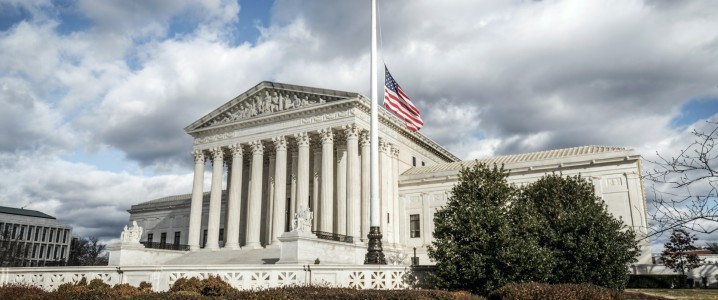
In 2024, New York Governor Kathy Hochul signed a law requiring large fossil fuel polluters to pay up to $75 billion in damages. However, after two years, a federal judge has ruled that the law conflicts with federal law and cannot proceed. The law that Hochul signed in December 2024 would have required companies that contribute heavily to fossil fuel pollution to pay to repair damage caused by extreme weather events, which have become increasingly common as global warming intensifies.
The law focuses on pollution produced by the combustion of fossil fuels. A study published in 2025 in the journal Nature linked more than 200 severe heat waves directly to carbon pollution from the world’s largest fossil fuel producers.
The legislation, known as the Climate Change Superfund Act, mandated that firms responsible for most of the accumulation of carbon emissions between 2000 and 2024 would pay around $3 billion a year for 25 years. The legislation was based on the original Superfund law, established in 1980, which requires companies to pay for toxic waste cleanup activities following incidents such as oil and chemical spills.
Upon signing the law, Hochul stated, “With nearly every record rainfall, heat wave, and coastal storm, New Yorkers are increasingly burdened with billions of dollars in health, safety, and environmental consequences due to polluters that have historically harmed our environment.”
The aim of the law was to reduce the burden on taxpayers by addressing the challenges that big corporations, particularly oil and gas companies, have played a major role in creating, with these companies producing over 1 billion tons of greenhouse gas emissions globally over the 24-year period. The funds would contribute to restoring and protecting coastal wetlands; upgrading roads and bridges; improving stormwater drainage systems; elevating and retrofitting structures; and investing in recovery efforts from natural disasters.
However, last month, a federal judge ruled that the New York law conflicted with federal law and therefore could not take effect. The chief judge of the US District Court for the Northern District of New York, Brenda Sannes, ruled that the state could not enforce its “climate superfund” law in a 63-page decision deeming the law “unusual and sweeping”. Sannes cited the Second Circuit’s 2021 decision in City of New York v. Chevron, a case in which New York sued oil companies seeking climate-change damages, as precedent.
Cassidy DiPaola, communications director for organisation Make Polluters Pay, stressed, “This decision rests on contested precedent from a fundamentally different case, and Attorney General Tish James must appeal immediately.”
Meanwhile, State Senator Liz Krueger, a sponsor of the law, said the ruling was “unfortunate” and emphasised that Judge Sannes had not recognised a distinction between a claim like New York City’s and “a state legislature exercising its constitutional powers to raise revenues and protect its citizens.” Krueger added that she had expected “many rounds of legal wrangling” before the law could take effect.
However, several Republican states and business organisations have criticised the “climate superfund” law over the last two years, arguing that people benefited from the use of fossil fuels during the period in question, during which time renewable alternatives were not readily available. The U.S. Justice Department also argued in support of the lawsuit against the New York law last month, filing its own litigation against it in the Southern District of New York; a suit that is still pending.
JB McCuskey, the attorney general of West Virginia, whose office led the challenge against the New York law, stated, “This is a major victory in the fight against liberal states, trying to balance their budgets on the backs of our hard-working men and women in the coal, oil and gas industries.”
Hochul has not yet said whether New York state plans to appeal the decision. However, Ken Lovett, the senior communications adviser on energy and environment for Governor Hochul, said, “Taxpayers shouldn’t have to foot the bill for damages caused by polluters.” Lovett added, “We are reviewing the decision to determine possible next steps.”
Vermont is the only other state to have passed a climate superfund law, and it is now facing a similar lawsuit. While some other states have explored the introduction of a similar fund, no other state has yet announced a formal payment scheme against major emitters. The New York law was originally proposed following years of still-unresolved litigation by state and local governments against fossil fuel companies seeking damages. Many of the suits argue that the firms covered up what they knew about the dangers of global warming for decades.
The New York “Superfund” Law will not take effect any time soon, given the recent ruling, and it remains uncertain whether the state government will appeal the decision. Meanwhile, the results of the ongoing legal challenge to a similar law in Vermont could determine whether other states introduce similar legislation.
By Felicity Bradstock for Oilprice.com
More Top Reads From Oilprice.com
- China Pushes Coal Miners to Lift Supply as Prices Climb
- Oil Prices Head for Weekly Loss as Saudi Export Fears Ease
- Germany Weighs Market Incentives to Boost Record Low Gas Storage Level
Download The Free Oilprice App Today


ADVERTISEMENT
Set us as your preferred Google source
FACEBOOK Twitter LINKEDIN REDDIT PRINT
Previous Post\ \\nEnergy Giants Are Betting Billions on a World of Longer Oil Routes

Felicity Bradstock
Felicity Bradstock is a writer and journalist based in Mexico City. She writes for energy websites and covers several other industries, as well as writing…
Related posts
Global Shipping Costs Explode as Hormuz Disruptions Hit Key Trade Routes Energy Giants Are Betting Billions on a World of Longer Oil Routes Europe Outbids Asia for LNG as Prices Surge 150%
Leave a comment
First Name
Last Name
That email address is already in the database. Please login to your account to post your comment, or enter a different email address to continue with your comment & account creation.
Captcha
Comment
Please understand that, by submitting this form, you will be creating a free OilPrice.com account, and therefore agree to abide by our Terms of Use. Your details will be stored in our database and shared with our third party mailing list provider. You will be sent an email containing a link that will ask you to generate a new password - please follow the link to complete your OilPrice account activation.
We will save the information entered above in our website. Your comment will then await moderation from one of our team. If approved, your data will then be publically viewable on this article. Please confirm you understand and are happy with this and our privacy policy by ticking this box. You can withdraw your consent, or ask us to give you a copy of the information we have stored, at any time by contacting us.
ADVERTISEMENT
ADVERTISEMENT
Most Popular
 \
\
Chinese Solar Panels Drop to 12 Cents a Watt, Rooftop Installs Surge Worldwide
\
\
Chinese Solar Panels Drop to 12 Cents a Watt, Rooftop Installs Surge Worldwide
 \
\
Saudi Pipeline Outage Hits an Oil Market Running Out of Buffers
\
\
Saudi Pipeline Outage Hits an Oil Market Running Out of Buffers  \
\
Saudi Export Pivot Sends Brent Below $105
\
\
Saudi Export Pivot Sends Brent Below $105  \
\
Oil Prices Surge as Middle East Attacks Continue and Diplomacy Stumbles
\
\
Oil Prices Surge as Middle East Attacks Continue and Diplomacy Stumbles  \
\
Inside Putin’s $135 Billion Arctic Gamble That Could Save His Ukraine War
\
\
Inside Putin’s $135 Billion Arctic Gamble That Could Save His Ukraine War

ADVERTISEMENT
ADVERTISEMENT
EXXON Mobil-0.35
Open57.81Trading Vol.6.96MPrevious Vol.241.7B
BUY 57.15
Sell 57.00


