
North Sea Oil Producers Push Burnham to Scrap Windfall Tax
By Felicity Bradstock - Oct 11, 2026, 10:00 AM CDT
- Offshore Energies UK says replacing the Energy Profits Levy with a price-triggered levy in January and approving Rosebank and Jackdaw could unlock 111 projects and £50 billion in investment.
- Research for Global Witness finds the industry’s proposed levy would raise £8.6 billion less than the current tax by 2030 at $100 oil, and nothing at all at $70.
- EDF Energy boss Simone Rossi calls approving the two fields a “no-brainer,” while Uplift and Imperial College researchers argue new drilling won’t lower bills or improve energy security.
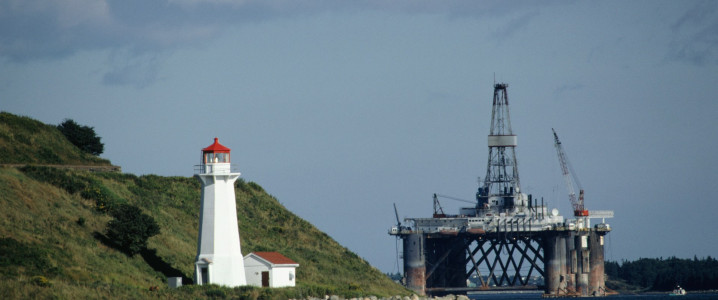
Since coming into office, the Labour Party has heavily taxed oil and gas companies operating in the U.K. North Sea and restricted the development of new fossil fuel projects. However, there is still potential for two major projects to be developed if approved by the country’s new Prime Minister, Andy Burnham. While environmentalists and climate groups are deeply concerned about the harm new fossil fuel projects would cause, several oil executives believe new exploration could contribute significantly to the economy.
A recent industry report suggests that the U.K. could meet around half of its oil and gas needs without imports if the government provided more support to the sector. Offshore Energies UK (OEUK) emphasised the need to amend the existing windfall tax and approved the controversial Rosebank and Jackdaw projects – which have been challenged in the Scottish courts on environmental grounds – to unlock 111 projects and attract £50 billion in investment.
North Sea oil and gas production has fallen in recent years as the government has introduced strict limits on new drilling. The country’s domestic supplies are now expected to meet just one-third of U.K. demand until 2050. The OEUK said in its report that increasing domestic production could help offset the need for fossil fuel imports. The firm also calls for the existing Energy Profits Levy (EPL), which is in place until 2030, to be abandoned next January, saying it has stifled investment in recent years. Instead, it recommends introducing an Oil and Gas Revenue Levy (OGRL) that is triggered only when prices spike.
The windfall tax has raised about £12 billion to date, and campaigners are now warning of what a change to the taxation scheme could mean. Research for the NGO Global Witness showed that if oil prices remained at around $100 a barrel, the OGRL would raise £8.6 billion less than the current windfall tax by 2030. Meanwhile, if oil prices fell to $70 a barrel, the OGRL would reportedly bring in no funds, compared with the £4.6 billion that could be raised under the EPL, according to the analysis.

The environmental organisation Uplift said the OEUK report is a “fantasy” and stressed that Burnham should not listen to “self-interested demands” of oil companies. The group stressed that the North Sea is an “ultra-mature” basin with very little reserves left. Uplift Director Tessa Khan added, “The U.K. has burned most of its gas and what’s left is mostly oil, the vast majority of which is exported and sold on international markets. New drilling will do nothing to bring down bills and little for energy security.”
Simone Rossi, the head of EDF Energy, which produces about a fifth of the U.K.’s low-carbon electricity, has also voiced her support for increased North Sea production, calling new oil and gas projects a “no-brainer” that pose “no contradiction” to the net-zero agenda. Rossi called for the government to greenlight Rosebank and Jackdaw as well as to accelerate support for heat pumps and electric vehicles.
Rossi said the new projects in the North Sea would support job creation and increase government tax receipts, which could be used to help consumers pay for their rising energy bills. He also suggested that locally produced fossil fuels have lower emissions than imported fuels because they do not need to be transported over long distances. “It will take decades to wean off from that dependency,” Rossi said in an interview with the BBC. “So, while this is happening, we should use the resources that we’ve got rather than importing them from afar. For me, it’s really a no-brainer. It is not in contradiction.”
U.K. Prime Minister Andy Burnham has yet to make a decision on Rosebank and Jackdaw, both of which are owned by a joint venture between Equinor and Shell known as Adura. However, during the Makerfield by-election in June, Burnham said he was “open-minded” about new North Sea oil licences. More recently, Burnham promised to take a “ pragmatic approach” to the North Sea.
However, many in the energy industry, as well as environmental groups, remain sceptical over whether new drilling operations would produce high levels of oil and gas and reduce consumer energy bills, as suggested. A recent analysis suggests that approving Rosebank and Jackdaw would not reduce U.K. bills or improve energy security, as its benefits would be outweighed by long-term economic damage.
Luke Hatton, at Imperial College London, who conducted the analysis, explained, “The numbers presented here show there’s going to be a very strong destruction of [economic] value above and beyond what Rosebank and Jackdaw could generate for the U.K.” Hatton added, “The alternative is to really double down on clean energy technologies.”
While the oil and gas industry continues to push for North Sea drilling, supported by a change to the U.K. windfall tax scheme, many environmentalists and energy experts believe that new drilling would not only exacerbate climate change but also fail to contribute meaningfully to the economy or help drive down consumer energy bills.
By Felicity Bradstock for Oilprice.com
More Top Reads Fr om Oilprice.com
- The Iran War Is Fueling a Boom in Clean Energy
- States Bet on Virtual Power Plants to Cut Grid Costs
- Southeast Asia Needs More Power, But Its Weak Grid Could Be a Problem
Download The Free Oilprice App Today


ADVERTISEMENT
Set us as your preferred Google source
FACEBOOK Twitter LINKEDIN REDDIT PRINT
Previous Post\ \ Emergency Oil Releases Risk Draining the World’s Last Supply Cushion

Felicity Bradstock
Felicity Bradstock is a writer and journalist based in Mexico City. She writes for energy websites and covers several other industries, as well as writing…
Related posts
Tanker Rates Soar to Record as Oil Crisis Becomes Shipping Crisis Emergency Oil Releases Risk Draining the World’s Last Supply Cushion U.S. Oil Drilling Continues to Inch Upward
Leave a comment
First Name
Last Name
That email address is already in the database. Please login to your account to post your comment, or enter a different email address to continue with your comment & account creation.
Captcha
Comment
Please understand that, by submitting this form, you will be creating a free OilPrice.com account, and therefore agree to abide by our Terms of Use. Your details will be stored in our database and shared with our third party mailing list provider. You will be sent an email containing a link that will ask you to generate a new password - please follow the link to complete your OilPrice account activation.
We will save the information entered above in our website. Your comment will then await moderation from one of our team. If approved, your data will then be publically viewable on this article. Please confirm you understand and are happy with this and our privacy policy by ticking this box. You can withdraw your consent, or ask us to give you a copy of the information we have stored, at any time by contacting us.
ADVERTISEMENT
ADVERTISEMENT
Most Popular
 \ \ Fuel Price Shock Pushes Global Gas Car Sales Below 50% for First Time
 \ \ Europe’s Diesel Woes Just Got Even Worse
  \ \ Standard Chartered Says Hormuz Oil Flows Are Far From Normal
  \ \ Kpler Suspects Gulf Producers Are Paying Iran for Safe Passage
  \ \ Is the West’s 100-Year Venezuela Oil Bet About To Backfire?

reCAPTCHA
Recaptcha requires verification.
protected by reCAPTCHA


