
Norway Wants Europe’s Energy Market, Without Sharing Its Trade-Offs
By Leon Stille - Aug 31, 2026, 3:00 PM CDT
- Norway is not breaking with European energy integration: it still depends on Europe as its dominant petroleum customer and benefits substantially from two-way electricity trading.
- Rejecting the exaggerated idea that Norway can balance the entire European grid is reasonable; presenting occasional imports and higher domestic prices as evidence that interconnection failed is not.
- The Barents Sea debate should be decided on climate, cost and long-term demand—not packaged together with electricity-market frustrations as a struggle for sovereignty against Brussels.
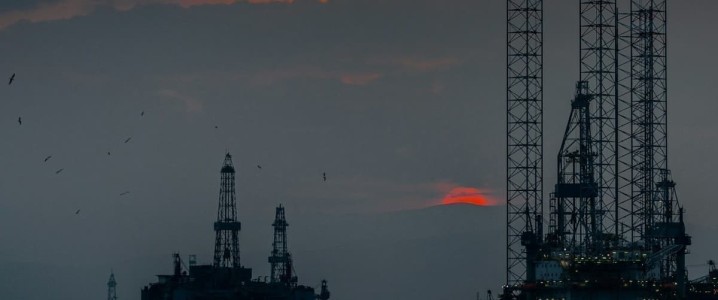
Norway is supposedly breaking with Brussels. Energy Minister Terje Aasland says the country will continue exploring for oil and gas in the Barents Sea despite European Union support for an Arctic drilling moratorium. He has also dismissed the old ambition for Norway to become Europe’s “green battery” as a flawed idea.
Placed together, the statements create a compelling political story: a sovereign energy producer finally resisting European climate restrictions and refusing to sacrifice its reservoirs for an unreliable continental power system.
The reality is less dramatic, and more revealing. Norway is not withdrawing from European energy integration. It wants to continue selling Europe enormous quantities of oil, gas and electricity while limiting the domestic political costs that come with participating in an interconnected market.
That is understandable politics. It is not a coherent critique of European energy cooperation.
Norway Is Not Breaking With Brussels
Norway is not an EU member, and decisions over petroleum extraction on the Norwegian continental shelf remain a matter of Norwegian sovereignty. Oslo is therefore legally free to reject the EU’s proposed Arctic moratorium.
But calling this a break with Brussels exaggerates both the EU proposal and Norway’s response. The moratorium appears in the EU’s Arctic policy and is being reconsidered as part of an updated strategy. It is a political position, not an EU drilling ban directly imposed on Norway. Aasland’s real challenge to Brussels was commercial: Norway will develop the resources, and Europe can decide whether it wants to buy them.
That is not disengagement. It is a negotiation between seller and customer. Norway has considerable leverage. Since Russia’s invasion of Ukraine, it has become Europe’s largest gas supplier, meeting around 30% of combined EU and British demand. The Norwegian government expects NOK 686 billion in net petroleum cash flow in 2026.
Europe benefited from reliable Norwegian supply when Russian volumes disappeared. Norway benefited spectacularly from European demand and elevated prices. Interdependence worked exactly as expected. Related: Oil Prices Surge as U.S. and Iran Exchange Strikes
The real Barents question is whether fields that may take a decade or more to develop will remain commercially and politically attractive as Europe reduces fossil-fuel consumption. Oil can be sold globally and Barents gas could leave through the Melkøya LNG facility. But alternative buyers do not automatically guarantee that expensive Arctic projects will beat lower-cost supply elsewhere.
Norway has every right to take that risk. It should not portray European concern over long-lived Arctic assets as an attack on sovereignty.
The “Green Battery” Was Always a Metaphor
Aasland is correct about one thing: Norway cannot balance the European power system by itself. Norwegian hydropower is exceptionally flexible, with around 85 TWh of reservoir storage. Operators can reduce generation when European wind and solar output is abundant, import cheap electricity and conserve water. They can then increase hydropower production and export when neighboring markets are tighter and prices higher.
That is valuable. It does not transform Norway into a battery large enough to absorb every European surplus and fill every shortage.
But no serious European energy strategy requires Norway to do that alone. The common electricity market combines Norwegian hydro with Swedish nuclear and hydro, Danish wind, continental solar, batteries, demand response, thermal generation and cross-border connections. Every country contributes part of the balancing portfolio.
The EU also requires its own member states to decarbonize and expand domestic clean energy; it is not outsourcing the transition to Norwegian reservoirs. Cross-border trade facilitates that process because sharing resources is cheaper and more secure than forcing every country to build enough capacity for its worst possible hour. The metaphor may have been oversized. The underlying economic function remains entirely valid.
Electricity Trade Works in Both Directions
Norwegian opposition to interconnection intensified when new links to Germany and Britain exposed southern Norway more directly to high continental prices. Households understandably disliked watching domestic electricity prices rise while hydropower producers and grid operators earned more from exports.
Those distributional effects are real and should not be dismissed. Interconnectors can raise prices in an exporting region, particularly when the neighboring market is experiencing a crisis. Governments may need to return congestion revenues, improve retail protection or address internal grid bottlenecks.
But higher prices for some consumers do not mean the connections created no value. Norway produced around 162 TWh of electricity in 2025 and consumed 139.2 TWh. According to Statnett, it exported approximately 34 TWh and imported 11.5 TWh. The country was therefore a major net exporter while still buying power during hours when imports made economic sense. That last point is often presented as a weakness. It is actually the purpose of trade.
Norway should import when wind, solar or thermal generation abroad is cheaper than releasing additional water from its reservoirs. It should export when flexible hydropower is more valuable elsewhere. As Norway’s own energy regulator explains, interconnection improves security of supply, allows more efficient use of water and avoids building costly domestic overcapacity solely for dry years.
A market that only permits profitable exports is not a common market. It is privileged access to foreign customers.
Norway’s Future Shortage Is Primarily Domestic
The most legitimate reason for Norwegian caution is not Brussels. It is Norway’s own rising electricity demand. Industry, transport, offshore platforms and new low-carbon projects all want more power. At the same time, new wind development and transmission lines face strong domestic resistance. Norway’s surplus is therefore expected to narrow.
The Norwegian Water Resources and Energy Directorate projects the normal-year power balance falling from around 22 TWh in 2023 to roughly 7 TWh in 2030, before recovering as new generation arrives after 2030. Some individual years may show net imports because hydropower output varies with rainfall and snowmelt.
That is not something interconnectors caused. It is the result of demand growing faster than domestic supply.
Restricting exchange may suppress prices temporarily during wet surplus years, but it will not create electricity for new factories or protect Norway during a dry winter. The harder choices remain domestic: build more renewable generation, strengthen the internal grid, moderate new demand or accept more frequent imports. Blaming European market integration delays that discussion.
Energy Sovereignty Does Not Mean Trading Only When Convenient
Norway is entitled to reject new interconnectors if their expected domestic benefits no longer justify their costs. It is entitled to develop Arctic petroleum within its laws. And Norwegian consumers deserve protection from extreme price shocks.
But these are separate policy choices, not evidence of a single liberation from Brussels.
Europe offers Norway its most important energy market, shared infrastructure, access to cheap electricity in surplus hours and insurance when hydrology turns unfavorable. Norway offers Europe reliable gas, flexible hydropower and valuable cross-border capacity. Both sides gain, and both sides occasionally face uncomfortable prices or constraints.
That is what an integrated market is.
Norway does not have to be Europe’s battery. But it cannot credibly demand to remain Europe’s petrol station and electricity trader only when the meter runs in its favor.


