
Breaking News: Where Is OPEC+? Riyadh and Moscow’s Silence Is Becoming Deafening
By Cyril Widdershoven - Sep 21, 2026, 3:00 PM CDT
- OPEC+ is losing its grip on oil markets, with wars, sanctions, infrastructure attacks and shipping constraints increasingly determining prices rather than production quotas.
- Internal strains are growing, as quota disputes, market-share pressures and diverging Saudi-Russian interests weaken the alliance’s ability to coordinate supply effectively.
- OPEC+ remains powerful but increasingly reactive, and restoring credibility will require transparent production baselines, stronger compliance and greater attention to energy infrastructure and export security.
“The roar of the engines does not herald true dominance, but the absolute silence that precedes the strike."
“Let your plans be dark and impenetrable as night, and when you move, fall like a thunderbolt."
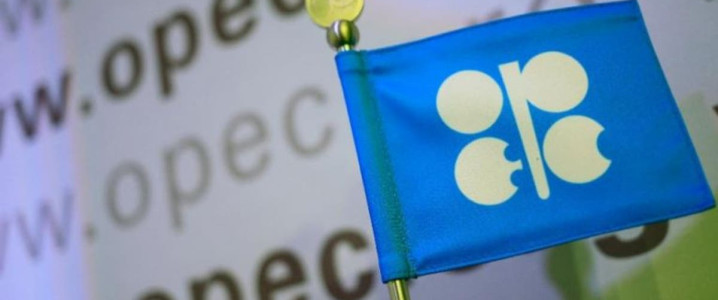
The last decades of silence from the world’s leading oil group, OPEC, or its derivative, OPEC+, were always linked to the above-mentioned military strategic statements. However, that is no longer the case: an OPEC+ meeting now moves oil prices before ministers even enter the room. A carefully placed Saudi comment, a Russian signal, or a leaked production proposal can add several dollars to Brent. Traders watched Vienna, Riyadh and Moscow because the producer alliance appeared capable of removing barrels, restoring them and, last but not least, presenting a united political front.
This market power has not disappeared but has become badly diluted. OPEC+ still controls enormous reserves, substantial production and most of the world’s immediately available spare capacity. However, at present, the market increasingly resembles an institution reacting to events rather than shaping them. Its public language remains confident, but its internal structure is becoming narrower. Its quota system is more contentious, while its capability to translate announced production policy into actual market control has severely weakened.
The silence from Riyadh and Moscow is therefore not reassuring. It is worrying, especially for those who rely on stable markets, as it may undermine their confidence in the alliance's effectiveness.
It takes only four years to see a huge contrast. When Russia invaded Ukraine (2022), the world waited for OPEC+ to respond. As an Arab News report (1 March 2022) put it, the mood was captured perfectly. All eyes were on the next OPEC+ meeting: Brent had moved above $105 per barrel, sanctions threatened Russian exports, and the alliance was debating whether to maintain its scheduled 400,000-barrel-per-day increase. This was critical, as it was clear that even in a geopolitical crisis involving one of its two principal powers, OPEC+ remained the recognized center of oil-market decision-making.
At present, we see a different story. The present crisis is arguably more threatening to physical Middle Eastern supply, yet OPEC+ appears less commanding. There is no collective leadership shown by the group, even with a war around Iran, impaired flows through the Strait of Hormuz, attacks on Saudi energy infrastructure, reduced Red Sea security, disruption to Russian production and exports, and extreme pressure on tanker availability. Throughout the crisis, markets have seen only short virtual meetings, technical communiqués, and repeated commitments to “market stability” and “full conformity.”
On September 6, seven countries, Saudi Arabia, Russia, Iraq, Kuwait, Kazakhstan, Algeria and Oman, decided to keep to their September production requirements for October. Their next meeting is scheduled for October 4. The message, but also the lack of clear assessments and political analysis, is revealing. OPEC+ is confronting one of the most dangerous combinations of geopolitical, maritime and infrastructure risks in its history, but its visible response has been administrative continuity.
There are still no signs that Riyadh and Moscow have stopped coordinating. Analysts still expect quiet bilateral contact to be extensive. For the market, this, however, is something totally different. Oil-market power depends partly on perception, signaling and credibility. When Riyadh and Moscow do not articulate a joint assessment during a supply crisis, silence becomes a market signal in itself. To most parties, it suggests strategic disagreement, reduced operational freedom, or an unwillingness to make commitments that events may quickly render obsolete.
The first fracture is institutional: a smaller core group now makes the most consequential production decisions. This shift may make the audience feel cautious about the alliance's unity and future influence.
It is also clear that the UAE's departure in May was more than the loss of one member. It demonstrated that a large producer with expanding capacity could conclude that freedom outside OPEC+ was worth more than influence within it. Iraq is also pushing for a higher quota reflecting increased capacity, while Venezuela, largely under pressure from the Trump Administration, has reportedly considered its own future in the organization. It is very good to realize that the battle over 2027 production baselines will not be a technical discussion. The 2027 figures will decide which countries are permitted to monetize investment, and which must continue subsidizing collective price management through restraint. This will likely lead to difficult negotiations.
The second fracture ongoing at present is between quota policy and physical reality. OPEC+ spent much of 2026 raising production requirements, while unwinding the 1.65 million bpd layer of voluntary cuts introduced in 2023. On paper, this represents a deliberate return of supply and an attempt to defend market share. However, in reality, actual output has lagged because wars, sanctions, damaged infrastructure, and export constraints have prevented several producers from delivering their allocated increases.
Because credibility is devastated, the audience should feel the urgency of restoring trust, as market power now depends on physical supply and operational transparency, not just announcements.
The current crisis has made that transition brutally clear. Oil availability at the wellhead is no longer the only issue. Export routes have become decisive. Hormuz traffic has fallen far below pre-war norms; Saudi Arabia has been forced to redirect volumes after attacks on the East–West pipeline; Yanbu loadings have been interrupted; ship-to-ship transfers around Fujairah and Oman are under strain; and tanker capacity is becoming a supply constraint in its own right. A nominal production increase inside the Gulf means little if the additional barrel cannot safely, economically, and predictably reach a refinery.
OPEC+ was designed to manage production, not to command chokepoints, protect tankers, repair pipelines, or guarantee marine insurance. OPEC+’s barrels still exist; it cannot manage the security system through which those barrels move. Maritime disruption has partially displaced production policy as the principal price-setting mechanism.
The third weakness is the increasingly uncomfortable Saudi–Russian bargain. Riyadh traditionally sought price stability, spare-capacity credibility and sufficient revenue to finance domestic transformation. Moscow at the same time clearly needs, and even more at present, export income, geopolitical leverage and room to redirect sanctioned barrels through opaque trading and shipping networks. Riyadh’s and Moscow’s interests overlapped when coordinated cuts supported prices without seriously threatening either producer’s market position.
Today they don’t anymore. Russia faces war-related damage, sanctions, logistics constraints, and pressure on refining and exports. Moscow’s production decisions cannot be separated from military financing and sanctions evasion. The Kingdom faces direct threats to its energy infrastructure while needing to protect both oil income and its reputation as the world’s most reliable supplier. It is increasingly clear that Riyadh cannot indefinitely make shoulder cuts while other producers overproduce, under-report, or fail to compensate. Moscow, however, cannot easily accept additional restrictions, as fewer barrels mean less income.
The alliance consequently risks becoming a marriage in which neither party wants a divorce, but neither can enforce the original agreement.
OPEC+ also faces a market-share challenge it helped to create. Years of supply restraint supported competing production from the United States, Brazil, Guyana, Canada and other non-OPEC sources. Every existing or future voluntary cut protects prices but surrenders physical space to rivals. The subsequent attempt to reclaim market share by restoring production has arrived just as geopolitical events prevent several members from supplying what they promised. OPEC+ is now caught between two losing options: cut production and concede more market share or raise quotas and expose its inability to deliver.
Where does OPEC+ go from here? It has three possible paths. It can remain a loose political umbrella, issuing increasingly irrelevant quota statements. It can shrink operational decision-making around Saudi Arabia and a handful of capable producers, effectively acknowledging that most members are spectators. Or it can rebuild credibility through transparent baselines, independently verifiable production, enforceable compensation mechanisms and a broader security discussion covering export corridors and infrastructure resilience.
The third path is the only one capable of restoring authority, but it is also the hardest. It would force members to admit their real capacity, expose chronic non-compliance and accept that production security now includes pipelines, ports, storage, tankers, insurance and naval protection. At the same time, it would require Riyadh and Moscow to explain whether their strategic partnership still extends beyond avoiding an open rupture.
OPEC is not dead; OPEC+ is not powerless. At present, Saudi spare capacity remains critical, while Moscow’s supply remains systemically important. Coordinated action still could move the market. From a power perspective, however, it is clear that power not exercised coherently only deteriorates. At present, OPEC+, the organization that once moved markets, is now waiting to see what wars, sanctions, infrastructure attacks, and shipping constraints will allow it to do.
OPEC+ faces no danger of sudden collapse. It will survive institutionally while becoming strategically hollow. The organization still meets, publishes, and talks about stability. However, it no longer sets the market terms. Riyadh and Moscow may believe that silence preserves flexibility. At this stage, however, their silence increasingly looks like uncertainty. Oil markets punish uncertainty long before organizations acknowledge weakness.
By Cyril Widdershoven for Oilprice.com
More Top Reads From Oilprice.com
- Europe’s Fuel Crisis Spreads From Diesel to Jet Fuel
- Saudi Arabia Reroutes Oil Exports as Houthi Strikes Target Yanbu
- Hungary Asks U.S. to Waive Tariffs Over Russian Oil Purchases
Download The Free Oilprice App Today


ADVERTISEMENT
Set us as your preferred Google source
FACEBOOK Twitter LINKEDIN REDDIT PRINT
Previous Post\ \ The Secret Houthi-U.S. Deal That Could Push Saudi Arabia Back to Beijing

Cyril Widdershoven
Cyril Widdershoven is a senior maritime, energy, and geopolitical analyst and Senior Advisor at Blue Water Strategy, specialising in the strategic intersection of shipping, ports,…
Related posts
The Secret Houthi-U.S. Deal That Could Push Saudi Arabia Back to Beijing Record Diesel Prices Raise Fears of Local Fuel Shortages Rising Energy Costs Threaten UK Growth Despite 1.3% Expansion
Leave a comment
First Name
Last Name
That email address is already in the database. Please login to your account to post your comment, or enter a different email address to continue with your comment & account creation.
Captcha
Comment
Please understand that, by submitting this form, you will be creating a free OilPrice.com account, and therefore agree to abide by our Terms of Use. Your details will be stored in our database and shared with our third party mailing list provider. You will be sent an email containing a link that will ask you to generate a new password - please follow the link to complete your OilPrice account activation.
We will save the information entered above in our website. Your comment will then await moderation from one of our team. If approved, your data will then be publically viewable on this article. Please confirm you understand and are happy with this and our privacy policy by ticking this box. You can withdraw your consent, or ask us to give you a copy of the information we have stored, at any time by contacting us.
ADVERTISEMENT
ADVERTISEMENT
Most Popular
 \ \ Chinese Solar Panels Drop to 12 Cents a Watt, Rooftop Installs Surge Worldwide
 \ \ Saudi Pipeline Outage Hits an Oil Market Running Out of Buffers
  \ \ Saudi Export Pivot Sends Brent Below $105
  \ \ Big Oil’s Production Keeps Soaring Despite Deep Spending Cuts
  \ \ Inside Putin’s $135 Billion Arctic Gamble That Could Save His Ukraine War



By signing up to our newsletter, you agree for your email address to be shared with our third party mail providers.
ADVERTISEMENT
ADVERTISEMENT
EXXON Mobil-0.35
Open57.81Trading Vol.6.96MPrevious Vol.241.7B
BUY 57.15
Sell 57.00


