
01:18:54:48
The first StrictlyVC of 2026 hits SF on April 30. Tickets are going fast. Register now.
Get Disrupt Early Bird savings of up to $410 by May 29, 11:59 p.m. PT. Register now.
Close
 Image Credits: Oura
Share on FacebookShare on XShare on LinkedInShare on RedditShare over EmailCopy Share Link
Oura unveils its Ring 5 with a thinner, lighter design starting at $399
5:00 AM PDT · May 28, 2026
Share on FacebookShare on XShare on LinkedInShare on RedditShare over EmailCopy Share Link
Oura on Thursday unveiled the fifth generation of its popular smart ring, starting at $399. The Ring 5, which Oura describes as the world’s smallest smart ring, arrives just a year and a half after the company launched the Ring 4 and seven months after the Ring 4 Ceramic. The Ring 5 is 40% smaller than its predecessor and comes with more accurate sensing and enhanced battery life.
The Ring 5 is launching alongside new software updates that include blood pressure signals, live activity tracking, on-demand care, and other features that will also roll out to the Oura Ring Gen3 and later.
The new smart ring is available for pre-order starting today and will start shipping on June 4. It’s available in sizes 6 to 13 and comes in six finishes, including a redesigned Gold with a truer gold tone, an updated Deep Rose with a copper-like look, plus Silver, Brushed Silver, Black, and Stealth. The Black and Silver retail for $399, while the rest cost $499. For comparison, the Ring 4 started at $349.
Maz Brumand, VP of Product at Oura, told TechCrunch that the company reduced the ring’s width by about two millimeters and its thickness by roughly 30%. Brumand noted that Oura members had been asking the company to make a ring that was smaller and thinner, prompting the shift toward a slimmer design. Oura achieved the new size by redesigning the mechanical, electrical, optical, battery, and sensing architectures, Brumand explained.
 Image Credits: Oura
The new ring is designed to be desirable to a broader audience, especially people who have found smart rings too bulky in the past. Oura says the latest model is designed to look and feel like any other ring.
While Oura could previously get away with a bulkier design as the dominant player in the smart ring market, new products from subscription-free rivals like RingConn and Ultrahuman have increased the pressure to innovate. Increased competition also likely explains why Oura is launching a new ring just a year and a half after the Ring 4, compared with the roughly three-year gap between the Ring 3 and Ring 4. It’s also worth noting that the announcement of the Ring 5 arrives a day before RingConn’s Gen 3 is set to start shipping.
In terms of the enhanced battery life, the Ring 5 can last between six to nine days, compared to the five to eight days on the Ring 4.
Oura also says it has reengineered its sensors for better skin contact and added more powerful LEDs in an effort to increase accuracy across a wider range of finger sizes and skin tones.
Software updates
As for the software updates, Oura is launching “Health Radar,” which is designed to monitor key biometric signals in the background to surface patterns members should pay attention to. Health Radar is launching with two foundational capabilities: Blood Pressure Signals and Nighttime Breathing.
Oura says it will continuously detect shifts and patterns that may indicate cardiovascular strain, alerting members when their biometrics suggest signs of increasing blood pressure. With Blood Pressure Signals, Oura tracks blood pressure patterns during sleep when the body’s cardiovascular patterns are most stable, since blood pressure should naturally dip overnight. When it doesn’t, it can signal potential cardiovascular risk that daytime readings may miss, Oura notes.
 Image Credits: Oura
Members will also be able to log actual blood pressure readings from cuffs directly in the Oura app.
With Nighttime Breathing, Oura wants to give users a better understanding of how sleep and breathing patterns may impact their health. Members will get a 30-day rolling view of sleep-related breathing patterns and disturbances, expanding on the nightly breathing regularity insights they already receive.
Oura is also moving beyond insights into offering actual care. The company is partnering with Counsel Health, an on-demand platform that combines AI with licensed physicians to bring care directly into the Oura app. Members will be able to ask health questions, receive personalized medical advice, and connect with licensed physicians in the U.S. To access this, members will have to pay an additional fee on top of the standard $5.99 monthly subscription, though Oura did not say how much the added service will cost.
Members in the U.S. will also be able to import diagnosed conditions, medications, lab results, and allergies into the app to get a fuller picture of their health. While some may be understandably wary of uploading their health data to the app, the company promises it’s taking a privacy-first approach to the records.
 Image Credits: Oura
Additionally, Oura is adding a new live activity tracking experience that lets members start a workout and view key metrics in real time on their phone, such as pace and distance during activities like running and cycling. The company also updated its “Automatic Activity Detection” to be more accurate for low-motion activities, like pilates. Members can also connect third-party heart rate monitors to see their heart rate in real time.
Oura is also adding GLP-1 insights that will give members a longitudinal view of their medication journey and track weight and body changes in one place.
For the first, time, Oura is also attempting to study brain health. Eligible members will be able to enroll in a Brain Health Study that seeks to match short in-app tasks with long-term physiological trends. Oura believes it will eventually be able to map how daily choices and recovery impact mental sharpness and long-term brain health.
Topics
Gadgets, Hardware, oura, oura ring 5, smart ring, wearables
When you purchase through links in our articles, we may earn a small commission. This doesn’t affect our editorial independence.
Share on FacebookShare on XShare on LinkedInShare on RedditShare over EmailCopy Share Link

Aisha Malik
Consumer News Reporter
Aisha Malik on TwitterAisha Malik on BlueskyAisha Malik on Linkedin
Aisha is a consumer news reporter at TechCrunch. Prior to joining the publication in 2021, she was a telecom reporter at MobileSyrup. Aisha holds an honours bachelor’s degree from University of Toronto and a master’s degree in journalism from Western University.
You can contact or verify outreach from Aisha by emailing aisha@techcrunch.com or via encrypted message at aisha_malik.01 on Signal.

May 27
Athens, Greece
StrictlyVC Athens is up next. Hear unfiltered insights straight from Europe’s tech leaders and connect with the people shaping what’s ahead. Lock in your spot before it’s gone.
Most Popular
-
Meta launches Instagram, Facebook, and WhatsApp subscriptions, with more to come, including AI plans
-
Tech CEOs are apparently suffering from AI psychosis
-
Starship’s path to reusability looks murky after SpaceX’s S-1
-
6 kitchen gadgets that make adulting feel easier
-
I tried Amazon’s Bee wearable and am both intrigued and slightly creeped out
-
You can no longer Google the word ‘disregard’
-
Six search engines worth trying now that Google isn’t really Google anymore
Keep reading
 Image Credits: Vertu
Share on FacebookShare on XShare on LinkedInShare on RedditShare over EmailCopy Share Link
Vertu wants CEOs to run companies from an AI foldable starting at $6,880
12:00 AM PDT · May 28, 2026
Luxury smartphone brand Vertu on Thursday unveiled a foldable phone powered by an AI agent that connects with enterprise software and coordinates workflows. The company is targeting executives who manage business operations and communications on the move.
Called the Alphafold, the foldable smartphone starts at $6,880 for the calfskin version. Higher-end models feature bespoke finishes including alligator leather, 18K gold, and natural diamond accents, along with customized detailing. This continues Vertu’s long-standing strategy of positioning its phones as luxury status symbols aimed at affluent buyers. The company told TechCrunch that its highest-end standard model is currently priced at $46,800, with further customization options available.
The launch marks Vertu’s latest attempt to reinvent itself for the AI era after struggling to remain relevant in the modern smartphone market. The Hong Kong-headquartered company, once known for luxury handsets and concierge services popular among wealthy buyers before the rise of the iPhone, has changed ownership multiple times over the years as mainstream smartphone makers came to dominate the industry. Nonetheless, Vertu is betting the Alphafold can help reinvent the brand for the AI era by combining luxury hardware with enterprise-focused AI capabilities.
Vertu’s Alphafold comes with Hermes Agent, built on top of the open-source Hermes project by Nous Research. The agent can connect to enterprise systems like ERP and CRM, and coordinate tasks such as approvals, scheduling, sales tracking, travel planning, and operational reporting through natural-language prompts. However, the company said that its Phone-to-ERP and VPS deployments would be customized for each customer depending on their existing enterprise systems, with pricing varying accordingly.
 Image Credits: Vertu
The Alphafold, Vertu said, can route requests across multiple AI models including OpenAI’s GPT, Anthropic’s Claude, Google’s Gemini, and selected open-source models, while also integrating with more than 80 apps and dozens of native phone functions for cross-platform workflows.
Existing AI features on smartphones from major manufacturers remain focused largely on consumer tools such as image editing and voice assistance, Vertu CEO Molly Ma said. This leaves room for more advanced AI-agent workflows tied to enterprise systems. She also pointed to earlier AI-agent smartphone experiments in China that gained popularity before facing challenges over data privacy and cloud-based data collection.
The Alphafold, Ma said, aims to address those concerns through a privacy-focused architecture featuring a proprietary A5 security chip. This silicon is designed to isolate authentication keys, biometric credentials, and sensitive enterprise information from the main operating system, the company said. It added that commercially sensitive data can be processed locally on the device, while prompts sent to external AI models are redacted or tokenized before leaving the phone.
While Vertu has emphasized the device’s privacy and security architecture, including on-device processing and data redaction features, the company said the system has not yet undergone third-party security audits or independent certification. However, Vertu told TechCrunch that independent audits and certification remain on its security roadmap “as an explicit next-stage commitment,” adding that it would “communicate the progress and the results publicly” once the product matures further.
The Alphafold is powered by Qualcomm’s Snapdragon 8 Gen 4 processor and features an 8.05-inch foldable display alongside a 6.53-inch outer screen, a 6,500mAh battery, and satellite communication capabilities. The device also includes a triple rear camera setup with 50-megapixel primary and ultrawide cameras, as well as a 5-megapixel telephoto lens. Vertu said the phone’s hinge uses metal, titanium, and carbon-fiber components and is rated for up to 650,000 folds.
The Alphafold is not Vertu’s first attempt to combine AI with foldable devices. The company last year introduced Agent Q, a clamshell-style foldable smartphone focused on AI-driven automation and productivity features.
However, Ma told TechCrunch that Alphafold represents a significant step forward from Agent Q, arguing that AI-agent technology has matured rapidly over the past year, with improvements in memory, automation and app integration.
Foldable smartphones remain a niche segment globally despite years of investment by major manufacturers including Samsung and Huawei. As many as 20 million foldable smartphones were shipped globally in 2025, accounting for less than 2% of total smartphone shipments, according to IDC data shared with TechCrunch. The research firm said foldables sold at an average price of about $1,300 last year — roughly three times the price of non-foldable smartphones.
Kiranjeet Kaur, associate research director for mobile phones research at IDC, said foldables could eventually benefit from AI-agent workflows because their larger displays are better suited for multitasking and productivity-oriented experiences. She, however, added that enterprise AI adoption on smartphones still lags behind computers, and that most enterprise smartphone decisions continue to be driven by ecosystem integration and device management support rather than AI capabilities.
The first 115-unit batch of Vertu’s Alphafold begins shipping this week across major markets including the U.S.
Topics
AI, Asia, Gadgets, Hardware, Hermes Agent, United States, Vertu, Vertu Alphafold
When you purchase through links in our articles, we may earn a small commission. This doesn’t affect our editorial independence.
Share on FacebookShare on XShare on LinkedInShare on RedditShare over EmailCopy Share Link

Jagmeet Singh
Reporter
Jagmeet Singh on TwitterJagmeet Singh on BlueskyJagmeet Singh on MastodonJagmeet Singh on Linkedin
Jagmeet covers startups, tech policy-related updates, and all other major tech-centric developments from India for TechCrunch. He previously worked as a principal correspondent at NDTV.
You can contact or verify outreach from Jagmeet by emailing mail@journalistjagmeet.com.
Newsletters
Subscribe for the industry’s biggest tech news
TechCrunch Daily News
Every weekday and Sunday, you can get the best of TechCrunch’s coverage. Add TechCrunch Daily News to your subscription choices
Startups Weekly
Startups are the core of TechCrunch, so get our best coverage delivered weekly. Add Startups Weekly to your subscription choices
TechCrunch Week in Review
Get the best of our coverage, delivered to your inbox every Saturday. Add TechCrunch Week in Review to your subscription choices
TechCrunch Mobility
TechCrunch Mobility is your destination for transportation news and insight. Add TechCrunch Mobility to your subscription choices
No newsletters selected.
Subscribe
By submitting your email, you agree to our Terms and Privacy Notice.
Keep reading
 Image Credits: SOPA Images / Contributor / Getty Images
Share on FacebookShare on XShare on LinkedInShare on RedditShare over EmailCopy Share Link
Google engineer charged with insider trading after making $1.2M on Polymarket
5:45 PM PDT · May 27, 2026
The U.S. Justice Department charged Google software engineer Michele Spagnuolo with insider trading, alleging the employee made $1.2 million trading on Polymarket based on confidential business information.
Spagnuolo, who used the name “AlphaRaccoon” on Polymarket, has worked at Google for over 12 years, according to information on LinkedIn.
“As alleged, Spagnuolo violated the duties he owed to his employer and used Google’s confidential business information to make more than $1.2 million in trading profits on Polymarket,” Jay Clayton, the United States Attorney for the Southern District of New York, said in a press release. “Insider trading compromises the integrity of our markets, and the American people want this greed-driven conduct investigated and prosecuted.”
Prediction markets like Polymarket, Kalshi, and others allow users to bet on pretty much anything. Insider trading is not allowed on these platforms because it’s illegal, but some users still commit the offense. The Justice Department recently charged a U.S. Army soldier for allegedly using his insider knowledge of the U.S. military operation to capture Venezuelan president Nicolás Maduro to make $400,000 on Polymarket.
According to the complaint, Spagnuolo risked over $2.7 million on wagers related to Google’s 2025 Year in Search, a marketing campaign in which Google reveals the world’s most popular searches of the year. Spagnuolo allegedly accessed confidential, internal Google Search data about the most-searched celebrities to inform his bets.
“Polymarket worked closely with the U.S. Attorney’s Office for the Southern District of New York and the CFTC, and is the only prediction platform to date whose cooperation has led to insider trading charges in the United States,” a Polymarket spokesperson told TechCrunch. “Blockchain trading is transparent, traceable, and bad actors leave footprints. We are committed to maintaining accurate, fair, and transparent markets as well as enforcing our rules and working with our regulators and law enforcement.”
A Google spokesperson told TechCrunch the company is working with law enforcement on its investigation.
“The employee accessed our marketing material using a tool available to all employees, but using such confidential information to place bets is a serious breach of our policies,” Google said in an emailed statement, “We’ve placed the employee on leave and will take the appropriate action.”
Topics
doj, Google, Government & Policy, Polymarket
When you purchase through links in our articles, we may earn a small commission. This doesn’t affect our editorial independence.
Share on FacebookShare on XShare on LinkedInShare on RedditShare over EmailCopy Share Link

Amanda Silberling
Senior Writer
Amanda Silberling on TwitterAmanda Silberling on BlueskyAmanda Silberling on Linkedin
Amanda Silberling is a senior writer at TechCrunch covering the intersection of technology and culture. She has also written for publications like Polygon, MTV, the Kenyon Review, NPR, and Business Insider. She is the co-host of Wow If True, a podcast about internet culture, with science fiction author Isabel J. Kim. Prior to joining TechCrunch, she worked as a grassroots organizer, museum educator, and film festival coordinator. She holds a B.A. in English from the University of Pennsylvania and served as a Princeton in Asia Fellow in Laos.
You can contact or verify outreach from Amanda by emailing amanda@techcrunch.com or via encrypted message at @amanda.100 on Signal.
Latest in Government & Policy

Google engineer charged with insider trading after making $1.2M on Polymarket
11 hours ago

TechCrunch Disrupt 2026 Early Bird ticket savings end in 3 days
22 hours ago

China is increasingly keeping its best AI talent to itself
22 hours ago
Keep reading
 Image Credits: Google, edited by TechCrunch
Share on FacebookShare on XShare on LinkedInShare on RedditShare over EmailCopy Share Link
Why Google’s AI can’t spell Google (or anything else)
5:17 PM PDT · May 27, 2026
How many Ps are in Google? According to Google, there are two.
There’s also is also “exactly 1 ‘r’ in the word ‘poop’,” Google’s AI Overview says, as well as two ‘d’s in the word journalism, yet spelled it: j-o-u-r-n-a-d-i-s-m. Google did at least identify that there is one P in the last name of the U.S. president, but spelled it as t-r-p-u-m.
You didn’t need to be a prophet to predict that Google’s AI-forward Search overhaul was going to go over poorly. We’ve done this before. The first time Google added AI Overviews to Search, the feature ended up citing satirical posts from The Onion and Reddit, advising people to eat rocks and put glue on their pizza.
This time around, as Google doubles down on its commitment to make generative AI the centerpiece of its 29-year-old flagship product, it’s not surprising to see it stumble.
Google is revamping its entire search engine to this btw pic.twitter.com/PIR4llFhiV
— mersomas (@mersomas) May 27, 2026
“Counting within words has been a known challenge for LLMs, and we’re working to fix this particular issue,” Google told TechCrunch in an emailed statement.
These basic spelling errors may seem familiar. LLMs, the kind of artificial intelligence that powers chatbots and other text-generators, are not built to understand spelling. It’s been a running joke for years that whenever a company unveils a new AI model, you should ask it how many ‘r’s are in the word strawberry. These AI models — which can code an app in seconds, or solve problems that have stumped mathematicians for decades — are about as good as a kindergartener at spelling.
Google’s AI overview woes reach beyond silly spelling mistakes though. Google already patched an issue from last week in which searching the word “ disregard” would yield what looked like a dictionary definition of the word, only the definition was shown as, “Understood. Let me know whenever you have a new prompt or question!” But these spelling errors have remained amusing because they’re so difficult to quash.
As researchers have previously explained when we’ve asked about these spelling conundrums, AI doesn’t perceive sentences as units of language made up of words and letters. Many LLMs are built on transformers models, which break down text into tokens, which can be full words, syllables, or letters, depending on the model. Instead of “reading” like a human would, the AI converts the text into numerical representations of itself, which are then contextualized to help the AI come up with a logical response.
 Image Credits: TechCrunch
“LLMs are based on this transformer architecture, which notably is not actually reading text. What happens when you input a prompt is that it’s translated into an encoding,” Matthew Guzdial, an AI researcher and assistant professor at the University of Alberta, told TechCrunch. “When it sees the word ‘the,’ it has this one encoding of what ‘the’ means, but it does not know about ‘T,’ ‘H,’ ‘E.’”
The token-based architecture that powers LLMs like Google’s AI overview is inherently limiting, and researchers haven’t been optimistic that they can solve the spelling problem.
“It’s kind of hard to get around the question of what exactly a ‘word’ should be for a language model, and even if we got human experts to agree on a perfect token vocabulary, models would probably still find it useful to ‘chunk’ things even further,” Sheridan Feucht, a PhD student studying large language model interpretability at Northeastern University, told TechCrunch. “My guess would be that there’s no such thing as a perfect tokenizer due to this kind of fuzziness.”
This isn’t necessarily an urgent problem on researchers’ minds, since the utility of LLMs doesn’t come in their capacity to spell. But these blatant failures help us remember that AI is not perfect, even if it may sometimes seem like an all-knowing power beyond our comprehension. We cannot blindly trust AI outputs without double-checking their accuracy.
Topics
When you purchase through links in our articles, we may earn a small commission. This doesn’t affect our editorial independence.
Share on FacebookShare on XShare on LinkedInShare on RedditShare over EmailCopy Share Link
Amanda Silberling
Senior Writer
Amanda Silberling on TwitterAmanda Silberling on BlueskyAmanda Silberling on Linkedin
Amanda Silberling is a senior writer at TechCrunch covering the intersection of technology and culture. She has also written for publications like Polygon, MTV, the Kenyon Review, NPR, and Business Insider. She is the co-host of Wow If True, a podcast about internet culture, with science fiction author Isabel J. Kim. Prior to joining TechCrunch, she worked as a grassroots organizer, museum educator, and film festival coordinator. She holds a B.A. in English from the University of Pennsylvania and served as a Princeton in Asia Fellow in Laos.
You can contact or verify outreach from Amanda by emailing amanda@techcrunch.com or via encrypted message at @amanda.100 on Signal.
May 27
Athens, Greece
StrictlyVC Athens is up next. Hear unfiltered insights straight from Europe’s tech leaders and connect with the people shaping what’s ahead. Lock in your spot before it’s gone.
Most Popular
-
Meta launches Instagram, Facebook, and WhatsApp subscriptions, with more to come, including AI plans
-
Tech CEOs are apparently suffering from AI psychosis
-
Starship’s path to reusability looks murky after SpaceX’s S-1
-
6 kitchen gadgets that make adulting feel easier
-
I tried Amazon’s Bee wearable and am both intrigued and slightly creeped out
-
You can no longer Google the word ‘disregard’
-
Six search engines worth trying now that Google isn’t really Google anymore
Keep reading
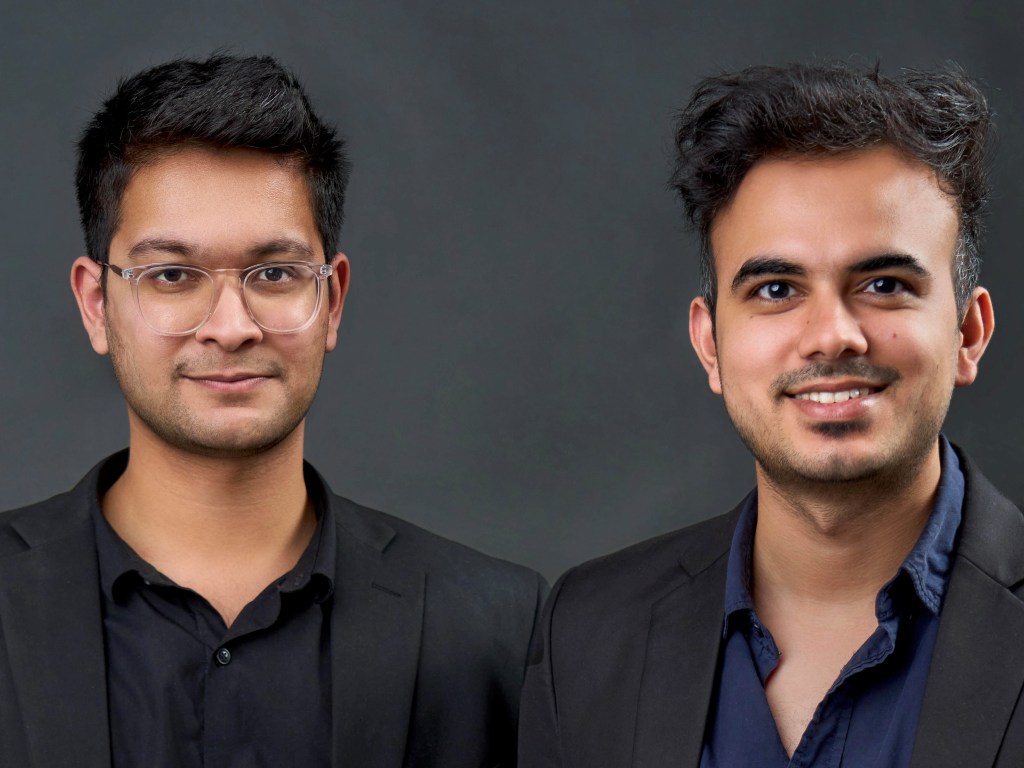 Image Credits: Triomics co-founders Sarim Khan and Hrituraj Singh
Share on FacebookShare on XShare on LinkedInShare on RedditShare over EmailCopy Share Link
Triomics nabs $22M to bring oncology-specific AI to cancer centers
2:11 PM PDT · May 27, 2026
Triomics, a startup building an AI-powered platform to help oncologists and administrative staff automate data-heavy tasks like clinical trial matching and appointment prep, has raised $22 million in Series B funding.
The round was led by Battery Ventures, with participation from returning backers Nexus Venture Partners, Lightspeed, Y Combinator, and others.
The good news is that oncology breakthroughs are keeping patients alive longer. That welcome trend, however, is creating dense, multi-year medical records that take healthcare staff a long time to review and decipher.
A typical medical chart includes physician progress notes, imaging and pathology reports, and even scans of faxes. “We have seen medical records [with] thousands of pages of information,” Triomics co-founder Sarim Khan told TechCrunch.
Founded in 2021, the startup raised a $15 million in Series A in mid-2024. Initially focused on helping doctors identify the most suitable clinical trials for their patients, Triomics expanded its platform as LLM capabilities grew. Over the last couple of years, Triomics added verifiable patient summaries to its platform, surfacing key information directly inside the tools clinicians already use, without requiring them to switch applications.
By reducing appointment prep time, these summaries give oncologists more time with their patients. The efficiency gain matters beyond individual appointments: in oncology, where patient histories are unusually complex and staff burnout is a persistent problem, tools that reduce administrative load have an outsized impact.
Triomics is also used to automate the tedious task of submitting tumor reports to government registries, a legal mandate for cancer centers.
While generic AI agents excel at basic summaries, prominent institutions like Memorial Sloan Kettering (MSK) and Yale Cancer Center use Triomics because its models are trained specifically on oncology data, Khan explained.
Triomics most direct competition comes from AI medical scribes like Abridge and Microsoft’s Nuance — tools that use AI to listen to and document patient-doctor conversations — when it comes to summarizing patient charts.
Despite the fierce competition, Triomics is growing fast. According to Khan, the startup expanded its enterprise customer base fourfold over the past year, driving a 10-fold increase in annualized recurring revenue.
Pictured left to right: Sarim Khan, Triomics co-founder and CEO, and Hrituraj Singh, Triomics co-founder and CTO.
Topics
Biotech & Health, cancer, clinical trials, Startups, Triomics, Venture
When you purchase through links in our articles, we may earn a small commission. This doesn’t affect our editorial independence.
Share on FacebookShare on XShare on LinkedInShare on RedditShare over EmailCopy Share Link

Marina Temkin
Reporter, Venture
Marina Temkin is a venture capital and startups reporter at TechCrunch. Prior to joining TechCrunch, she wrote about VC for PitchBook and Venture Capital Journal. Earlier in her career, Marina was a financial analyst and earned a CFA charterholder designation.
You can contact or verify outreach from Marina by emailing marina.temkin@techcrunch.com or via encrypted message at +1 347-683-3909 on Signal.
Newsletters
Subscribe for the industry’s biggest tech news
TechCrunch Daily News
Every weekday and Sunday, you can get the best of TechCrunch’s coverage. Add TechCrunch Daily News to your subscription choices
Startups Weekly
Startups are the core of TechCrunch, so get our best coverage delivered weekly. Add Startups Weekly to your subscription choices
TechCrunch Week in Review
Get the best of our coverage, delivered to your inbox every Saturday. Add TechCrunch Week in Review to your subscription choices
TechCrunch Mobility
TechCrunch Mobility is your destination for transportation news and insight. Add TechCrunch Mobility to your subscription choices
No newsletters selected.
Subscribe
By submitting your email, you agree to our Terms and Privacy Notice.
Loading the next article
Error loading the next article
Some areas of this page may shift around if you resize the browser window. Be sure to check heading and document order.
reCAPTCHA
Recaptcha requires verification.
protected by reCAPTCHA
This site is exceeding reCAPTCHA Enterprise free quota.


