
Peruvian textile sector suffers due to Middle East crisis: shipments fall 8% and sales to the US plummet 12.3% in the first quarter
The Peruvian textile and apparel chain faces higher logistics and input costs due to the conflict in the Middle East. The impact is already reflected in an 8% drop in exports and lower sales to the US.
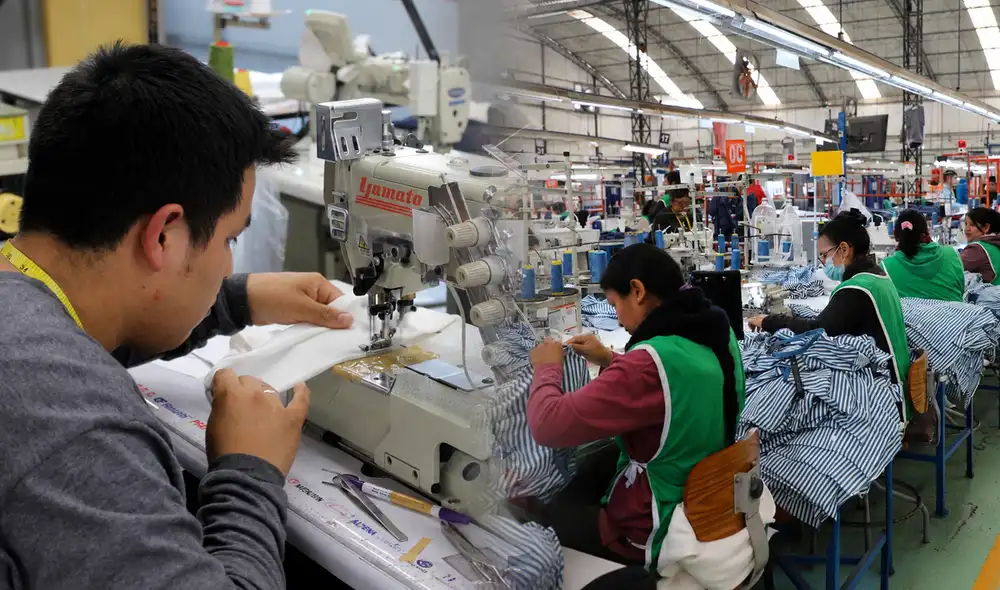
The Peruvian textile chain faces challenges from rising transportation and input costs, especially after the Middle East crisis affecting the sector's competitiveness. | Photo: La República
The crisis in the Middle East has increased prices of petroleum-derived products such as polyester, as well as raising fuel and maritime freight costs, factors that reduce the competitiveness of exporting companies.
The Association of Exporters (ADEX) reported that textile and apparel shipments abroad decreased during the first quarter of 2026.
Peruvian textile exports register 8% drop in the first quarter
The president of ADEX's Apparel Committee, Juan José Córdova Benavides, warned that the uncertainty generated by the Middle East conflict could continue to "raise the costs of raw materials used by the industry."
According to him, "the entire production chain is making efforts to maintain competitive prices and reduce the impact that is already being reflected in the -8% decline in exports during the first quarter of the year."
The effect of this situation is already reflected in export results. According to ADEX Data Trade, between January and March 2026, textile and apparel shipments exceeded US$389 million, a figure lower than the more than US$424 million recorded in the same period of the previous year.
This variation represented an 8% reduction compared to the first quarter of 2025.
Exports to the US fall 12.3% despite consumption growth
The United States remained the main destination for Peruvian textile and apparel products, accounting for 49.8% of total exports during the first quarter of the year.
However, it was also the market that showed one of the main contractions in value terms, registering a decrease of 12.3%.
Sales to that country went from US$221 million between January and March 2025 to US$194 million in the same period of 2026. Despite this, Benavides noted that clothing consumption in the US market continues to grow between 2% and 4%.
However, Peruvian companies face difficulties in responding to that demand due to strong competition from Asian suppliers such as Vietnam, India, Bangladesh, and Cambodia.
The ADEX representative further explained that Asia maintains a dominant position as a global supply center thanks to investments made by Chinese companies and brands in various countries in the region.
He also indicated that "many brands are moving part of their production to North Africa, such as Tunisia, Egypt, and Turkey, as well as to Portugal in the high-end segment. Latin America still has a small share because, for example, Peru and Colombia do not have sufficient installed capacity to cover that demand."
Synthetic fibers and new niches appear as opportunities for the sector
Against this backdrop, ADEX considers it necessary to evaluate alternatives to expand the country's exportable supply and respond to new consumer preferences.
According to Benavides, a survey conducted by YouGov revealed that 56.6% of US consumers use garments made from synthetic fibers.
In that regard, he noted that "if our main target market requires synthetic fiber garments and we have competitive advantages to develop them, we must evaluate how to expand our supply by complementing cotton. We need to increase our range and depth of products: technical clothing, pet clothing, and new specialized niches."
Most exported textile products by Peru between January and March
- Cotton T-shirts: led foreign shipments with US$47.349 million.
- Solid color cotton T-shirts: reached exports of US$41.334 million.
- Carded or combed fine alpaca hair: recorded shipments of US$27.780 million.
- Synthetic fiber shirts: were among the main exported items in the sector.
- Solid color cotton shirts: also stood out for their participation in foreign sales during the period analyzed.
Peruvian textiles reach 80 international markets in 2026
Among the companies with the largest share in shipments were Topy Top S.A., Michell y Cia S.A., Textiles Camones S.A. BIC, Textil Del Valle S.A. BIC, Southern Textile Network S.A.C., Confecciones Textimax S.A., Precotex S.A.C., Industrias Nettalco S.A., Textile Sourcing Company S.A.C. BIC, and Sudamericana de Fibras S.A.
Despite the difficulties observed in the main markets, the international presence of the sector continued to expand.
During the first quarter of 2026, Peru exported textile and apparel products to 80 countries, four more than in the same period of the previous year, evidencing the search for new commercial opportunities abroad.


