
Somali Piracy Surges Amid Hormuz Blockade
By Alex Kimani - Aug 14, 2026, 7:00 PM CDT
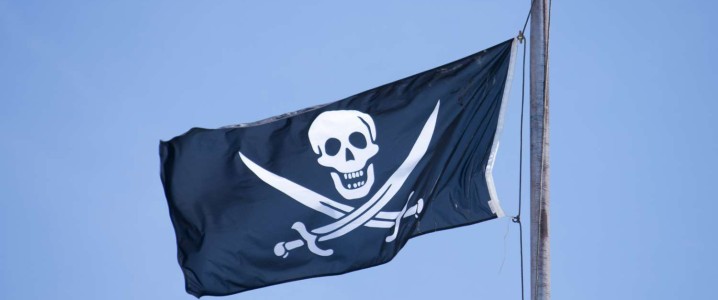
The effective closure of the Strait of Hormuz has forced hundreds of commercial ships onto longer routes around Africa, and Somali pirates are moving quickly to exploit the sudden increase in traffic off the continent’s eastern coast. Oil tankers MT Honour 25, MT Eureka and MT Asana were hijacked in the Gulf of Aden and off Puntland between April and July 2026, the largest attacks by Somali pirates in years. The Iran war has now delivered these groups more targets, spread across thousands of miles of ocean, while diverting naval resources to the Persian Gulf and Red Sea.
Somali piracy peaked in 2011 before an international crackdown reduced attacks to a fraction of their former levels. The first major revival came in late 2023, when Houthi attacks in the Red Sea forced hundreds of vessels away from the Suez Canal and around the Cape of Good Hope. And with U.S. forces all diverted to the war against Iran in the Persian Gulf, it’s largely a free-for-all for Somali pirates. Unlike the disorganized bands of the early 2000s, today's Somali pirates are ranging much farther from shore, and their operations have become much more sophisticated. And perhaps even more concerning, according to reports from a UN panel of experts, there is now direct coordination between Yemeni militants and Somali networks.
Related: South Africa’s Top Court Blocks Shell Wild Coast Exploration
In exchange for creating maritime chaos to keep Western navies distracted, the Houthis have supplied Somali pirate cells with advanced weaponry, military training and precision GPS tracking devices to pinpoint commercial hulls. Al-Shabaab--one of the most lethal terrorist groups in Africa--provides onshore logistical backing along parts of the Somali coast where pirate gangs launch operations or hold hijacked vessels. Intelligence reports indicate the group receives a generous cut of up to 30% from successful maritime ransom payouts.
According to a joint study by Interpol, the World Bank and the United Nations Office on Drugs and Crime (UNODC), Horn of Africa piracy generated over $400 million in ransom payments from 179 hijacked ships between 2005 and 2012, averaging roughly $2.23 million per ship. The money follows a structured economy, with pirate crews receiving a standard 10% to 15% fee, local financiers claim 30% to 50% for funding food, fuel and weapons, while the rest is laundered into legitimate businesses, according to the study. And it’s only becoming more lucrative with time.
A June 30, 2026, analysis by the Global Initiative Against Transnational Organized Crime (GI-TOC) reports that ransom demands have been made for all three commercial vessels hijacked in the current wave. The demand for Eureka was reportedly $10 million. Separately, the pirates holding Honour 25 have demanded $3 million for the tanker, cargo and crew.
GI-TOC says pirates received $1.2 million-$1.5 million for the release of the Chinese fishing vessel Liao Dong Yu 578 in March this year. The same vessel had reportedly generated another $2 million ransom in 2024. GI-TOC says counter-piracy officials believe the latest payment helped catalyze the current wave of attacks.
The Gulf of Guinea is yet another piracy hotspot in Africa thanks to the region’s riches in oil and gas as well as a well-trained militia due the Delta's secessionist movement. While local law enforcement and naval forces have managed to curb attacks in shallower waters, pirates are highly adaptable to new environments. Now, they are using heavily armed mother ships to strike targets well outside state jurisdictions and exclusive economic zones. The region’s pirate networks now operate with military-grade weapons, an intricate shipping intelligence network and complicated financial backing.
War-risk insurance premiums for commercial shipping transiting the Strait of Hormuz and the Persian Gulf spiked by over 1,000%--surging from pre-conflict levels of roughly 0.15%–0.25% of a vessel's value up to 7.5% and 10% per voyage shortly after the closure of the Strait of Hormuz in March.
With African maritime zones highly vulnerable due to a lack of equipment and manpower, and with American forces diverted to the Persian Gulf indefinitely, piracy sees its biggest opportunity yet. It means an African diversion isn’t necessarily going to avoid risk premiums.
By Alex Kimani for Oilprice.com
More Top Reads From Oilprice.com
- Kazakhstan Accuses Big Oil of $10.7 Billion Corruption in Kashagan Oil Project
- Hormuz Crisis Pushes Asian Refiners Toward U.S. Oil
- India's Coal Demand Set to Hit 1.6 Billion Tons by 2030
Download The Free Oilprice App Today


ADVERTISEMENT
Set us as your preferred Google source
FACEBOOK Twitter LINKEDIN REDDIT PRINT
Previous Post\ \Ranked: How Dirty Are the Eight Biggest Names in AI

Alex Kimani
Alex Kimani is a veteran finance writer, investor, engineer and researcher for Safehaven.com.
Related posts
US Oil Drillers Add Even More Rigs As Oil Prices Stay Higher Hormuz Attacks Push Oil Toward $100 Despite US Crude Build Ranked: How Dirty Are the Eight Biggest Names in AI
Leave a comment
First Name
Last Name
That email address is already in the database. Please login to your account to post your comment, or enter a different email address to continue with your comment & account creation.
Captcha
Comment
Please understand that, by submitting this form, you will be creating a free OilPrice.com account, and therefore agree to abide by our Terms of Use. Your details will be stored in our database and shared with our third party mailing list provider. You will be sent an email containing a link that will ask you to generate a new password - please follow the link to complete your OilPrice account activation.
We will save the information entered above in our website. Your comment will then await moderation from one of our team. If approved, your data will then be publically viewable on this article. Please confirm you understand and are happy with this and our privacy policy by ticking this box. You can withdraw your consent, or ask us to give you a copy of the information we have stored, at any time by contacting us.
ADVERTISEMENT
ADVERTISEMENT
Most Popular
 \Inside the U.S.–Israel–Saudi Plan to Cut Iran Out of Global Oil
 \How Engineers Are Reinventing the Wind Turbine
  \5 LNG Megaprojects Poised to Power the Next Gas Boom
  \The Hormuz Shock Is Far From Over
  \Why Trump’s Waiver of the Jones Act Is Unlikely To Lower Gas Prices



By signing up to our newsletter, you agree for your email address to be shared with our third party mail providers.
ADVERTISEMENT
ADVERTISEMENT
EXXON Mobil-0.35
Open57.81Trading Vol.6.96MPrevious Vol.241.7B
BUY 57.15
Sell 57.00


