
A four-person crew rocketed into orbit Thursday from Cape Canaveral Space Force Station, Florida, heading for a six-month expedition on the International Space Station.
Riding a Falcon 9 rocket and Dragon spacecraft, the four crew members departed from Space Launch Complex-40 at Cape Canaveral at 11:10 am EDT (15:10 UTC) Thursday. Nine minutes later, they were in orbit to begin closing in on the space station for docking Thursday evening.
The launch was delayed from mid-September to replace a balky valve in the Dragon spacecraft’s propulsion system, a task that involved cutting into a propellant line inside the ship to swap out a faulty component.
Jessica Watkins, a 38-year-old geologist turned astronaut, leads the four-person crew sent into orbit Thursday, becoming the first Black woman to command a spacecraft. Watkins is the only veteran astronaut on the mission—designated Crew-13—after spending 170 days in orbit on a long-duration spaceflight in 2022.
Pilot Luke Delaney, a Marine Corps veteran, was seated next to Watkins for the Dragon spacecraft’s ascent into orbit. Two international crew members rounded out the Crew-13 team: Canadian astronaut Joshua Kutryk, a former pilot in the Royal Canadian Air Force, and Sergey Teteryatnikov, a Russian cosmonaut who served as a naval engineer before his selection to the Roscosmos Cosmonaut Corps in 2021.
Kutryk and his wife Heather are expecting their third child later this year. It’s rare, but astronauts have been off the planet for their child’s birth before. Most recently, NASA astronaut Randy Bresnik, set to command the Artemis III mission next year, was flying aboard the Space Shuttle Atlantis in 2009 when his wife gave birth to their daughter, Abigail Mae, in Houston.
“Leaving these three (plus one on the way) is the hardest thing I’ve ever done. But that has always been the nature of exploration,” Kutryk wrote on X.
Watkins and her crewmates were on course to reach the International Space Station (ISS) about eight hours after launch, the fastest-ever launch-to-docking transit to the ISS by a US spacecraft.
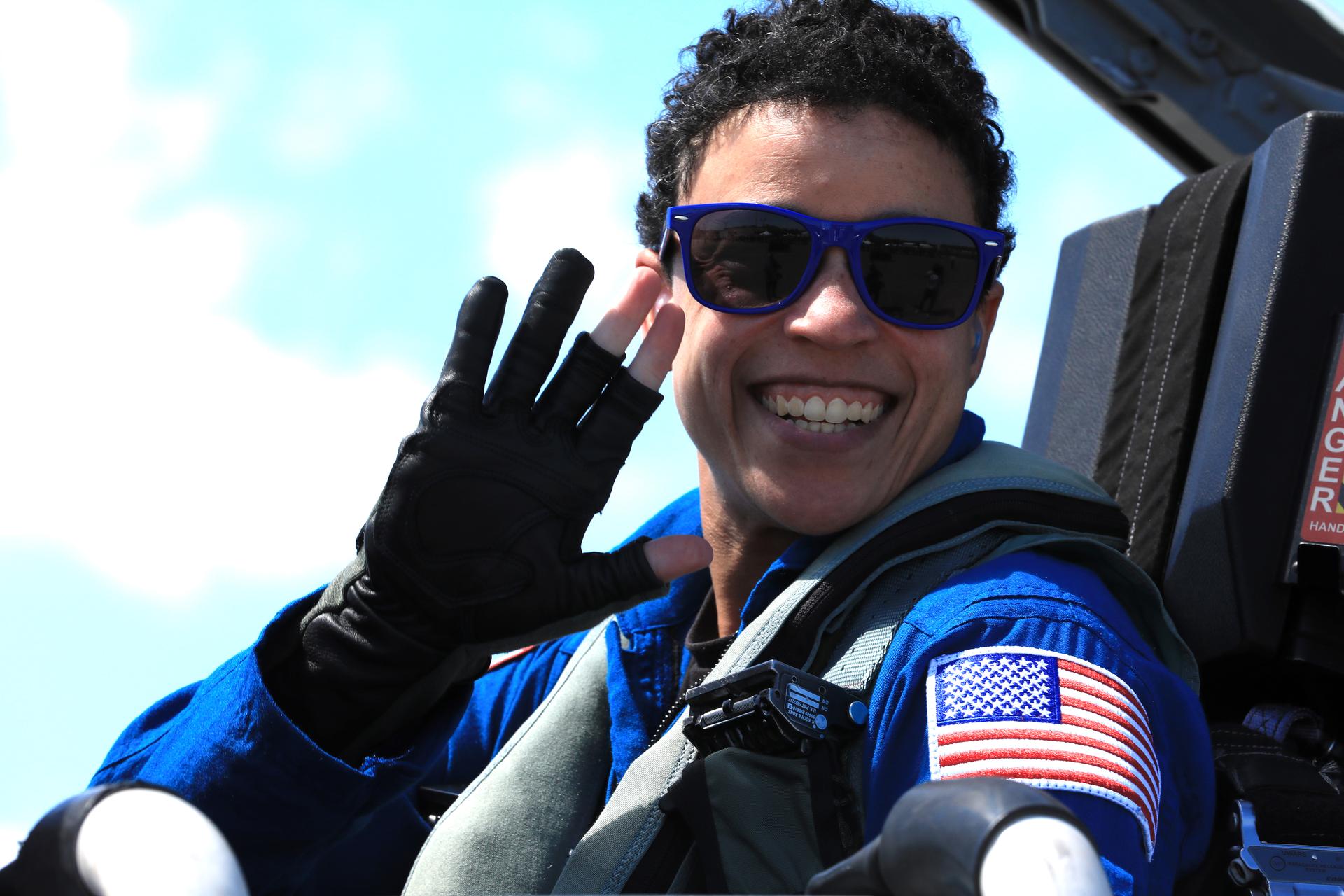
NASA astronaut Jessica Watkins, commander of the Crew-13 mission, arrives at Kennedy Space Center, Florida, ahead of launch.
Credit: NASA/Kim Shiflett
NASA astronaut Jessica Watkins, commander of the Crew-13 mission, arrives at Kennedy Space Center, Florida, ahead of launch.
Credit:
NASA/Kim Shiflett
“What an epic ride. What an epic ride it was,” Delaney radioed mission control soon after reaching orbit. “Today, we proudly continue the streak of humans living and working in orbit, building on the legacies of yesterday to pave the way for the future of space exploration.”
The ISS has been permanently staffed since 2000, with crews flying to and from the orbiting outpost on NASA’s Space Shuttles, Russian Soyuz spacecraft, and most recently, SpaceX’s Crew Dragon. NASA and its international partners plan to keep the space station operating through at least 2030. SpaceX’s plans to retire the Crew Dragon vehicle around 2030 have prompted NASA to work more closely with Boeing to bring its troubled Starliner crew capsule into service.
Honing their craft
Thursday’s flight was the 13th crew rotation mission launched by SpaceX under a multibillion-dollar contract with NASA, and SpaceX’s 21st human spaceflight overall, including test flights and fully commercial missions.
The company’s success with the Crew Dragon spacecraft restored the country’s ability to launch astronauts into orbit after a nine-year gap following the Space Shuttle retirement in 2011, ending NASA’s sole reliance on Russia for crew transportation. NASA’s other commercial crew provider, Boeing, has repeatedly stumbled on a series of test flights with its Starliner spacecraft.
SpaceX’s plans to retire Crew Dragon and the Falcon 9 rocket mean the fleets are now well beyond halfway through their operational life. SpaceX has nine more Crew Dragon flights in its backlog, including three additional crew missions to the ISS that NASA recently secured in a $946 million contract extension, bringing NASA’s total contract for 17 SpaceX crew missions to $5.92 billion.
That figure is a drop in the bucket next to SpaceX’s projected revenues from its ever-growing Starlink broadband service, the Starship/Super Heavy rocket, and orbital data centers. SpaceX, now a publicly traded company, is prioritizing its most lucrative lines of business, and flights to the ISS aren’t among them.
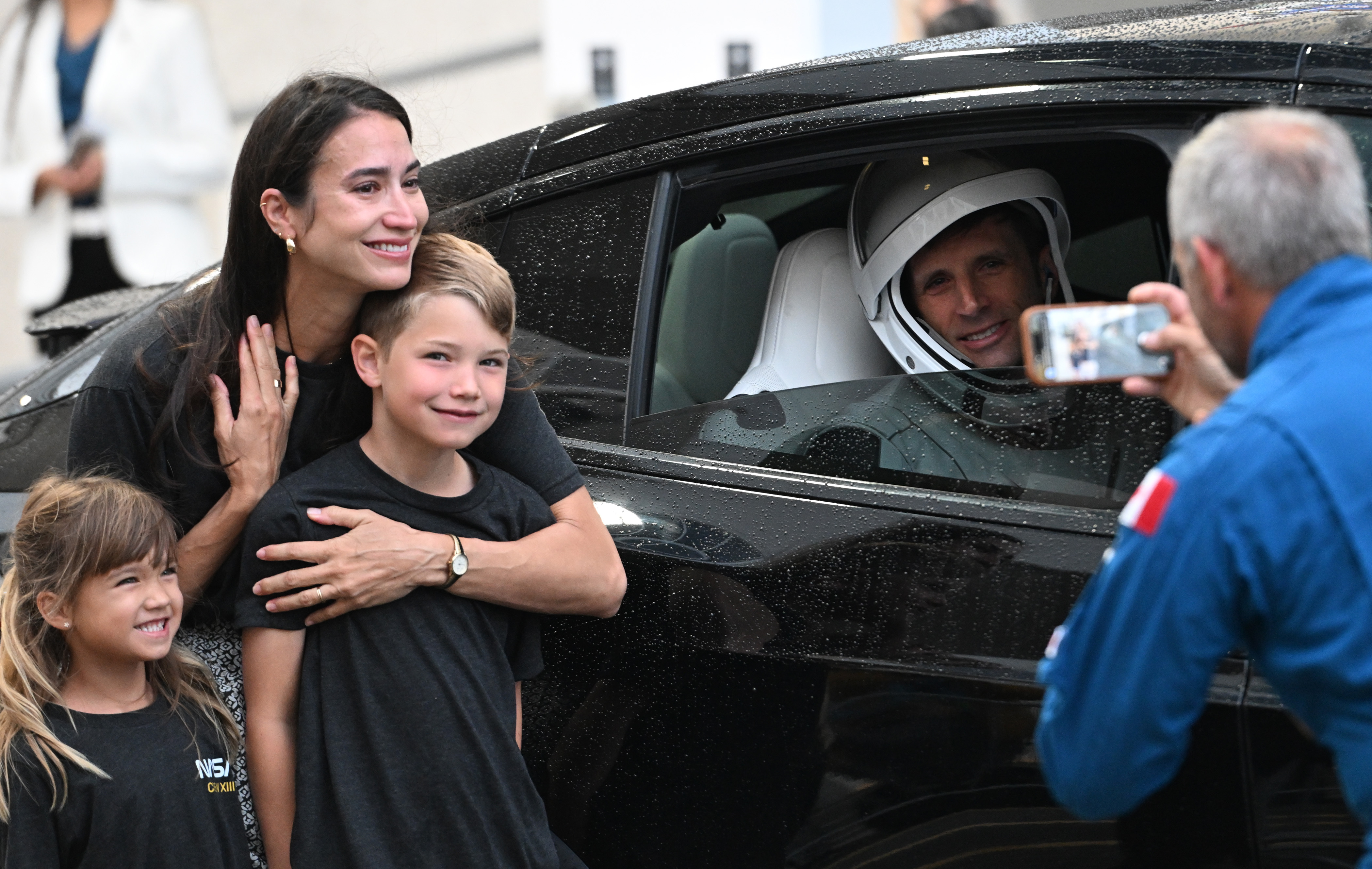
Canadian Space Agency astronaut Joshua Kutryk poses for a photo with his wife, Heather, and children after walking out from the Neil Armstrong Operations and Checkout Building at Kennedy Space Center, Florida, ahead of his launch aboard a SpaceX Falcon 9 rocket.
Credit: Paul Hennesy/Anadolu via Getty Images
Canadian Space Agency astronaut Joshua Kutryk poses for a photo with his wife, Heather, and children after walking out from the Neil Armstrong Operations and Checkout Building at Kennedy Space Center, Florida, ahead of his launch aboard a SpaceX Falcon 9 rocket.
Credit:
Paul Hennesy/Anadolu via Getty Images
Bill Gerstenmaier, SpaceX’s vice president of build and flight reliability, declined to say in a prelaunch press conference Wednesday if there is a “hard cutoff” for when the company will no longer offer Crew Dragon flights to NASA. The recent contract extension may be the last.
“We were just awarded Crew flights 15, 16, and 17, so I think our real focus is to make sure we get the most out of those flights,” Gerstenmaier said. “So we’re working really super hard to make sure that our vehicles are ready, things are ready to go fly, and we’ll keep moving forward.”
Notably, SpaceX is winding down Crew Dragon and Falcon 9 at the top of their game. Gerstenmaier pointed to the valve replacement inside the Crew Dragon spacecraft for the Crew-13 mission as evidence of SpaceX’s commitment to fulfilling its contract with NASA.
NASA announced a postponement for the Crew-13 launch in late August to give ground teams time to resolve an oxidizer leak inside Dragon’s propulsion system detected during launch preparations at Cape Canaveral. SpaceX traced the leak to a valve. The spacecraft was already loaded with nitrogen tetroxide, or NTO, the volatile, toxic oxidizer used by Dragon’s control thrusters in combination with hydrazine fuel.
Teams devised an unprecedented bit of spaceship surgery to replace the valve without draining the propellant and disassembling the spacecraft, steps that would have triggered a much longer delay. The fix involved cutting into the propellant line, removing and replacing the valve, then welding the line together again. It was the first time SpaceX has performed such a repair with a fully assembled Dragon spacecraft loaded with propellant.
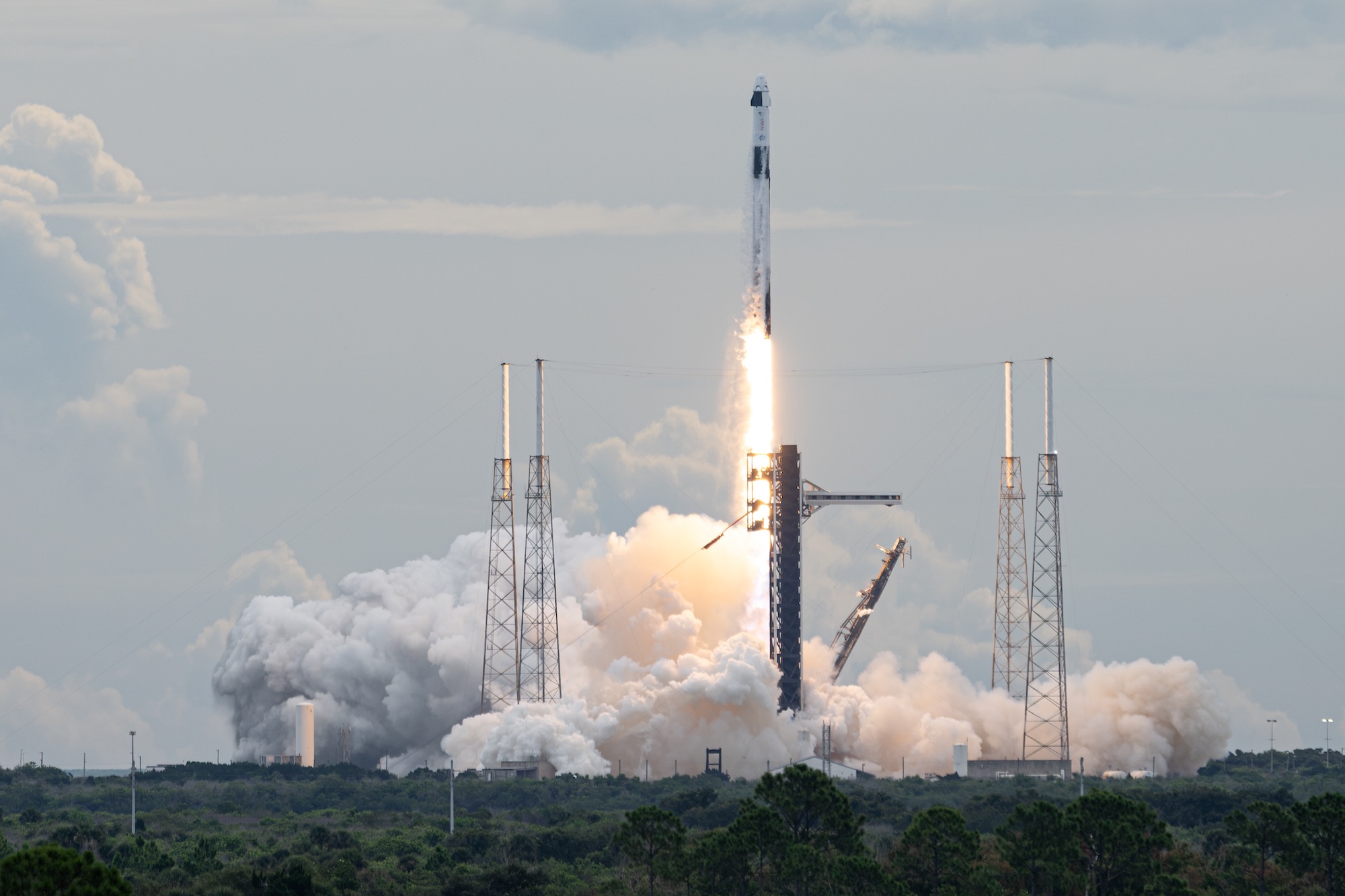
A SpaceX Falcon 9 rocket carrying the company’s Dragon spacecraft lifts off on the Crew-13 mission to the International Space Station.
Credit: NASA/John Kraus
A SpaceX Falcon 9 rocket carrying the company’s Dragon spacecraft lifts off on the Crew-13 mission to the International Space Station.
Credit:
NASA/John Kraus
“By cutting it out, we physically went in and actually cut the valve out of the line,” Gerstenmaier said. “It was welded in place, and then we actually re-welded a new valve in place.”
Engineers are testing the bad valve to diagnose the cause of the leak, but NASA officials were pleased with the fix. No leaks were detected during final preparations for launch Thursday, and Dragon’s propulsion system appeared to be functioning well after arriving in orbit.
“We looked at the plans, all of the data coming out of that, the welds, the leak, everything looks great,” said Dana Weigel, NASA’s program manager for the International Space Station. [We’re] really happy with how that repair was done.”
SpaceX’s preference to cut out the valve in place, rather than take a longer stand-down, kept the Crew-13 mission on track to arrive at the space station in time to replace Crew-12, which will return to Earth in mid-October after eight months in orbit.
The Crew Dragon spacecraft was inside SpaceX’s fueling and hazardous processing facility, known as Area 59, at Cape Canaveral Space Force Station, not at the company’s usual maintenance hangar a few miles away.
“I actually went down and looked at the vehicle itself, got in the clean room, and took a look to see where they actually had to cut the valve out,” Gerstenmaier said. “There was not a lot of room, but there was good access up on the platform. I think the unique aspect of this was the location where it was being done.
“We also did it with oxidizer onboard the vehicle, and the oxidizer tank was full, so we made sure that was all clear,” Gerstenmaier said. “We had to get special permission from the [Space Force’s Eastern] Range to do these activities, to do ‘hot work’ with NTO, with nitrogen tetroxide on the vehicle.”

Stephen Clark Space Reporter
Stephen Clark is a space reporter at Ars Technica, covering private space companies and the world’s space agencies. Stephen writes about the nexus of technology, science, policy, and business on and off the planet.


