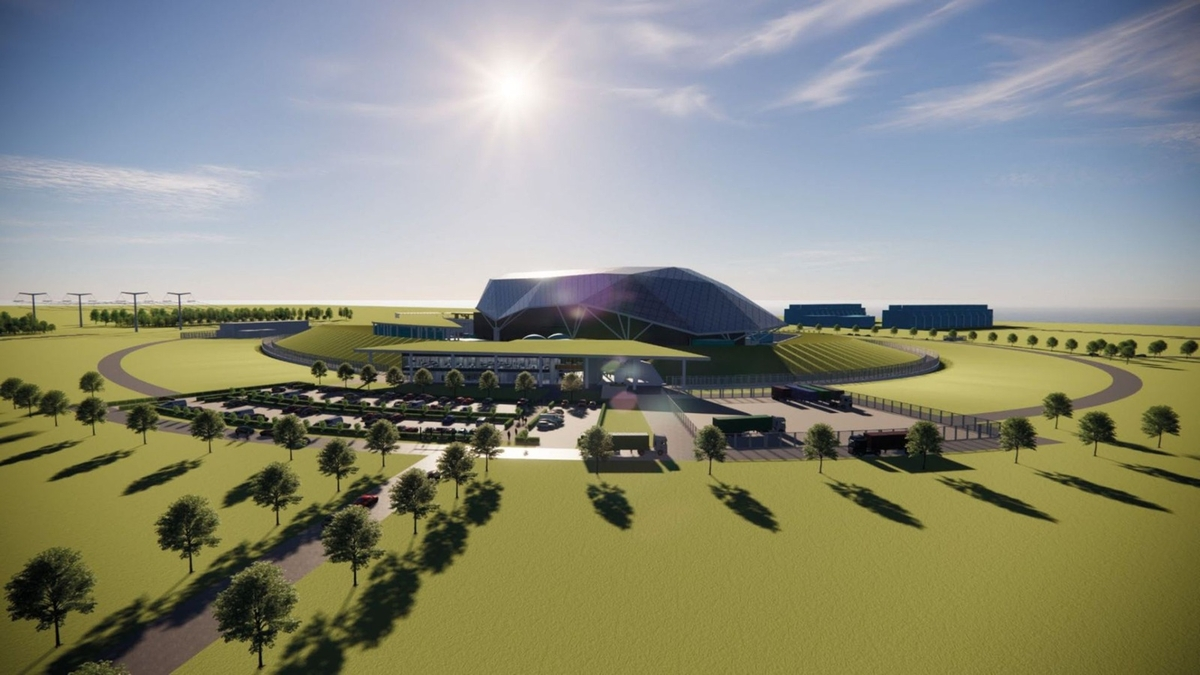
Sweden chooses Rolls-Royce to revive its nuclear fleet with SMRs
Published on June 20, 2026 at 16:30 by Christian D.
Sweden is ending four decades of nuclear hibernation by entrusting its electrical future to British engineering. This is a historic turnaround for the Scandinavian nation.
The joint venture Videberg Kraft has selected Rolls-Royce to build three small nuclear reactors on the Swedish west coast.
This major contract, which sidelines the American GE Vernova, aims to deploy 1.5 GW of capacity by the mid-2030s. This order marks the country's first nuclear construction project in over forty years.
After a rigorous evaluation process that began in 2022, the choice ultimately fell on British technology. The future installations will be located on the Värö peninsula, in close proximity to the existing Ringhals site.
The stakes are high for the country. It is a matter of ensuring security of supply for a region whose electricity needs will mechanically double by 2045, driven largely by industrial demand.
Why is Sweden restarting nuclear power plant construction?
The center-right Swedish government fully embraces this shift to meet soaring energy demand. The country anticipates a sharp increase in its electricity consumption, requiring stable and decarbonized solutions.
The use of small modular reactors (SMRs) brings unprecedented flexibility compared to the behemoths of the past. Authorities plan to build the equivalent of ten new units. This is a matter of national economic survival.
This revival comes after decades of political reluctance toward civil nuclear power. The legislative framework was recently modified to allow public financing of nuclear energy on Scandinavian soil.
A broad subsidy program was activated last August. Companies can now apply for state guarantees.
What allowed Rolls-Royce to beat its American competitors?
The British group won the bid by relying on a proven technical model and a ultra-standardized design. Anna Borg, CEO of Vattenfall, praised the qualities of the Rolls-Royce SMR, emphasizing that it is based on the familiar technology of the PWR (pressurized water reactor).
This reassuring option greatly limits construction delays and cost overruns. The American-Japanese alliance GE Vernova Hitachi could not offer the same geopolitical certainty.
Industrial arguments also weighed heavily in the final balance against competitors. The SMR components will be 90% prefabricated in the factory before being shipped.
What is the timeline for these new Swedish reactors?
The first unit is expected to inject its initial megawatt-hours into the national grid in the mid-2030s. The Nordic consortium now awaits administrative approvals to begin construction of this new-generation nuclear energy.
The state will soon take a 60% majority stake in the holding structure. Everything depends on the speed of local regulatory authorities.
The execution pace will be closely watched by observers worldwide. The extremely compact design of the miniature reactor, measuring just sixteen meters by four, facilitates final assembly.
The three modules will total 1.5 GW of power, ensuring continuous production for the next sixty years. A possible political change in the next elections remains a major unknown.
How does this decision influence the European energy market?
This signing logically propels the British manufacturer to the status of undisputed continental leader. After the Czech Republic and the United Kingdom, Sweden is the third country to formally select a Rolls-Royce SMR to green its electricity mix.
CEO Tufan Erginbilgic savors this first-mover advantage in a highly competitive market. The standardization of a European fleet now allows for sharing feedback.
The stakes go far beyond Scandinavian borders. The International Energy Agency (IEA) estimates that more than a thousand small modular reactors could be deployed by 2050, attracting massive capital.


