
IF Metall announced on Thursday that it is ending its nearly three-year strike against Tesla, effective August 19.
Tesla offered severance packages to all remaining striking employees rather than agree to a collective bargaining agreement.
Tesla's vehicle registrations in Sweden decreased by 67% in 2025, falling to 7,252 units.
The longest labor dispute in modern Swedish history is concluding, with Tesla emerging victorious without signing a collective agreement. Swedish union IF Metall stated on Thursday that it will call off its strike against the electric-car manufacturer on August 19. The strike had reached its 1,021st day this week. Initially, approximately 130 Tesla mechanics across seven workshops were involved when the strike began on October 27, 2023, demanding the collective agreement that covers most Swedish workers.
The strike did not end due to concessions from either party at the negotiation table. According to the union's own account, Tesla offered severance packages to every remaining striking member, and a sufficient number accepted these offers, leaving IF Metall with no striking members to represent.
This action also marks the end of sympathy actions that had spread across the Nordic countries. Dockworkers had blocked Tesla cars destined for Sweden in Denmark, Norway, and Finland, the postal service halted the delivery of license plates for new Teslas, and electricians refused to perform work for Tesla.
For nearly three years, Tesla endured these actions rather than sign the agreement.
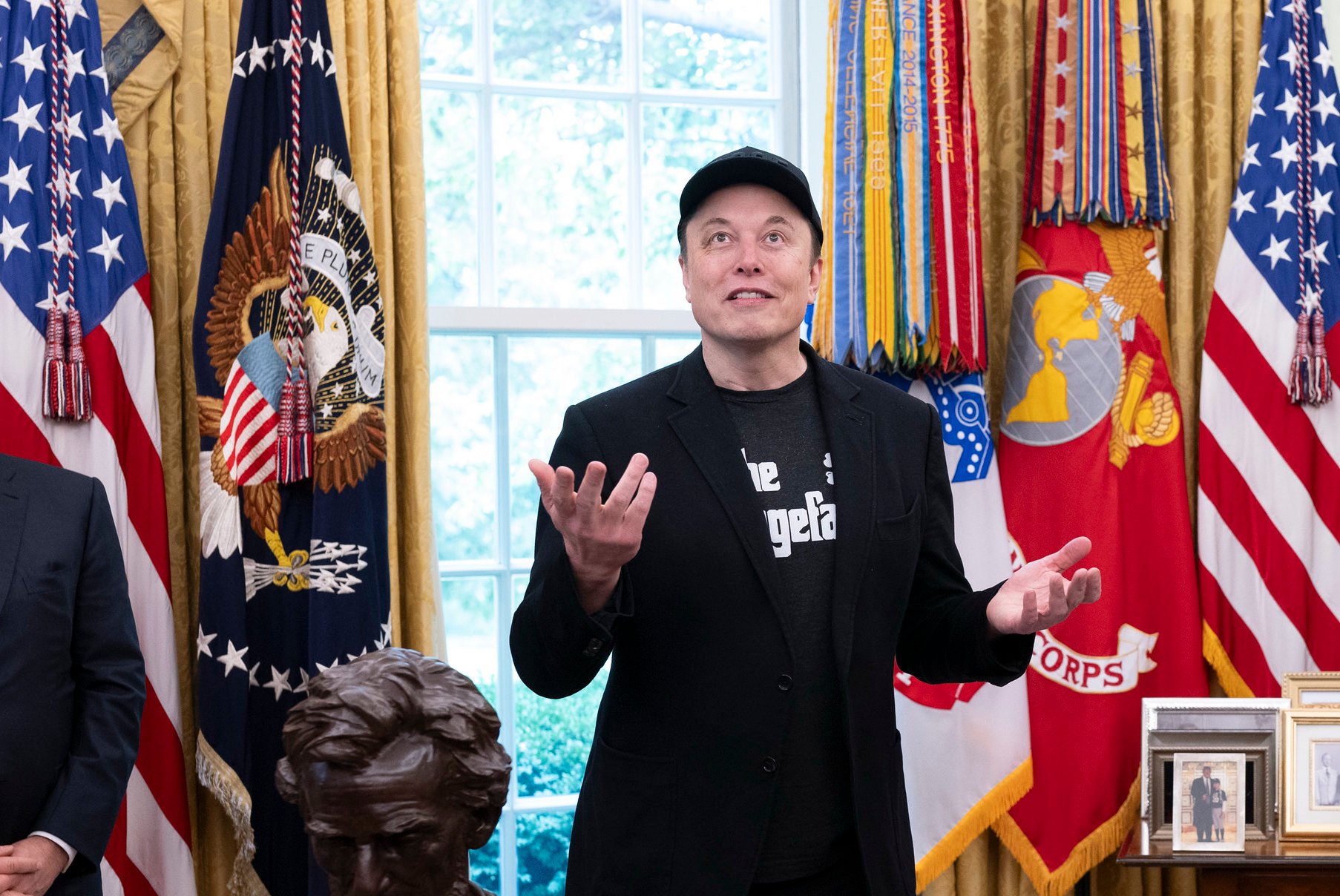
Elon Musk. Image source: The White House.
An unusual ending
Sweden was an unexpected battleground for Tesla. The company does not operate a factory in the country. The dispute concerned mechanics who service its vehicles, meaning the direct financial impact of meeting the union's demands would have been minimal.
However, the agreement itself was the critical issue. Tesla had never signed a collective agreement with IF Metall, and agreeing to one in Sweden could have provided a precedent for organizers in other parts of Europe.
Consequently, the company chose a more challenging path. It rerouted vehicles to bypass port blockades and pursued legal avenues where possible. Ultimately, it paid the last striking workers to leave their posts. The union's primary objective, as acknowledged in ending the dispute, remains unaddressed.
Neither party has disclosed the cost of the buyouts. Regardless of the amount, it was a relatively small sum. The strike began with approximately 130 mechanics, and Tesla generated $28.2 billion in revenue in the second quarter alone.
Why the line matters more now
Tesla's determination to defend its labor model for nearly three years arguably makes more financial sense today than when the strike commenced. The company's profitability has significantly decreased.
In the second quarter, Tesla's revenue increased by 26% year over year to $28.2 billion, and it delivered a record 480,126 vehicles in the second quarter, a 25% increase.
However, its operating margin dropped to 1.4% from 4.1% in the previous year, as operating expenses surged by 47% year over year and lower average selling prices, including mix, reduced profitability. Net income fell by 5% to $1.11 billion. Free cash flow also turned negative, reaching -$1.1 billion.
Capital expenditures soared by 142% to $5.79 billion, part of a plan to invest over $25 billion this year in artificial intelligence (AI) infrastructure and new manufacturing capacity.
A company with such thin margins, while undertaking heavy investment, cannot easily absorb a structurally higher cost base. Collective agreements typically increase labor costs and impede workforce adjustments. This is precisely the flexibility Tesla relies on as it retools factories for its Optimus robot and Cybercab projects. Maintaining its stance in Sweden preserved this flexibility across its European operations.

NASDAQ: TSLA
Tesla
Today's Change
(0.68%) $2.31
Current Price
$342.27
Key Data Points
Market Cap
$1.4TMarket cap calculated using publicly traded shares outstanding only. Does not include unlisted, private, or dual-class non-traded shares. Implied market cap may vary.
Day's Range
$335.33 - $351.26
52wk Range
$297.38 - $498.83
Volume
45.4M
Avg Vol
43.1M
Gross Margin
18.85%
The fight wasn't free
Nevertheless, the victory came at a discernible cost in the market where Tesla engaged in the dispute.
The company registered 21,894 vehicles in Sweden in 2024, with the Model Y being the country's top-selling car. In 2025, registrations plummeted by 67% to 7,252. Electrek, which has closely followed the strike, attributes this decline more to political backlash against CEO Elon Musk than to the labor dispute itself. However, the two factors coincided, transforming one of Tesla's strongest European markets into a secondary concern.
Regardless of how blame is assigned, the pattern should be a cause for concern among shareholders. Tesla spent nearly three years contending with 130 mechanics while its brand image suffered in the very market where the conflict unfolded.
Ultimately, Tesla preserved the labor cost structure it desired, at a time when its 1.4% operating margin offers little room for additional expenses. This flexibility is highly valuable for a company undergoing a transformation centered on robots and AI. However, Sweden represented a small market and a small workforce. A similar challenge in a larger European market, involving more employees, could prove far more costly than 1,021 days and a round of severance packages. Germany, where Tesla actually manufactures cars, is the market where such a test would carry the most significance.
Read Next
Aug 15, 2026•By Jeff Siegel

Aug 14, 2026•By Howard Smith
Stock Market Today, Aug. 14: Tesla Gains on TD Cowen Buy Reiteration and $460 Target
Aug 14, 2026•By Matt Frankel, CFP®
5 Best Lithium & Battery Tech ETFs for 2026 and How to Invest

Aug 13, 2026•By Eric Volkman
Global Electric Vehicle Sales Diverged In July
Aug 13, 2026•By Brett Schafer

Aug 12, 2026•By Lyle Daly
Tesla Charging Stations by State
About the Author

Daniel Sparks is a contributing Motley Fool stock market analyst covering technology, industrials, financials, and consumer goods. Daniel is the owner and chief investment officer of Sparks Capital Management. He holds a master’s degree in business administration from Colorado State University. The Globe and Mail profiled him and his investing philosophy in an article titled, “This stock picker is outperforming nearly everybody else. Here’s how he is doing it.”
Stocks Mentioned
[
\
Tesla
\
NASDAQ: TSLA
\
$342.27
\
(+0.68%)+$2.31](https://www.fool.com/quote/nasdaq/tsla/)

Motley Fool Stock Advisor’s Latest Pick
---% Avg Return
*Average returns of all recommendations since inception. Cost basis and return based on previous market day close.
Premium Investing Services
Invest better with The Motley Fool. Get stock recommendations, portfolio guidance, and more from The Motley Fool's premium services.


