Trump’s War on Offshore Wind Leaves U.S. Workers in Limbo
By Haley Zaremba - Aug 27, 2026, 2:00 PM CDT
- U.S. unions and workers invested heavily in offshore-wind training after federal policies and private investment appeared likely to support years of new construction.
- Trump administration policies have sharply curtailed offshore-wind development, weakening the future project pipeline and creating uncertainty for workers and supply-chain manufacturers.
- Although several projects already under construction have survived administration attempts to halt them, workers face a much smaller pipeline of future offshore-wind projects.
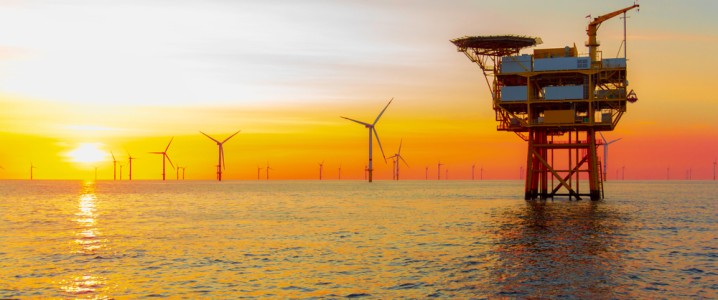
United States President Trump has strongly criticised wind power since coming into office, introducing several executive actions aimed at restricting the development of wind farms. Trump has particularly targeted offshore wind, leading to several projects being put on hold or cancelled. The on-again-off-again nature of U.S. offshore wind has hit workers hard, creating job insecurity and posing the threat of permanent project cancellations, at a time when renewable energy jobs were expected to be more stable.
Oil and gas workers have been encouraged to train in renewable energy in recent years because of the significant growth in U.S. green energy capacity and strong policies supporting further expansion under the former President Biden administration. Many workers were led to believe they could transfer their skills to the renewable energy industry.
Clean energy jobs increased by almost 12 per cent between 2021 and the end of 2024, from 3.2 million to 3.6 million workers. The passage of the Inflation Reduction Act (IRA) in 2022 under President Biden supported this growth, as renewable energy sectors such as solar, wind, and battery storage expanded rapidly. Meanwhile, jobs in the oil and gas sector fell by around 20 per cent between 2015 and 2025, a decline of 252,000 jobs.
The United States released the first joint DOE–Interior National Offshore Wind Strategy under President Obama in 2011. A study from that time suggested that offshore wind could help meet the rising U.S. energy demand, attract investment in infrastructure, and create thousands of construction and operational jobs.
The first U.S. offshore wind farm, Block Island Wind Farm near Rhode Island, began operations in 2016, leading other states to support the development of similar projects. President Biden made offshore wind a priority as part of a broader strategy to develop U.S. renewable energy, with the launch of policies such as the IRA attracting significant private investment in the sector. The federal government sold leases to major international energy companies, with a concentration in the Northeast, Virginia, and California.
However, on his first day in office, Trump signed a presidential memorandum titled “Temporary Withdrawal of All Areas on the Outer Continental Shelf from Offshore Wind Leasing and Review of the Federal Government’s Leasing and Permitting Practices for Wind Projects”. This was followed by several more orders and policies that further restricted the development of offshore wind, as well as funding cuts to both onshore and offshore wind.
In March this year, following months of failed legal battles, the Trump administration announced plans to pay France’s TotalEnergies nearly $1 billion to permanently halt its U.S. offshore wind projects. This demonstrated just how far Trump would go to stop offshore wind development, essentially putting the nail in the coffin for thousands of workers hoping to return to jobs on suspended offshore wind projects.
In 2022, New Jersey’s Economic Development Authority estimated that a typical offshore wind project creates roughly 1,000 construction jobs a year and around 100 operational jobs. Therefore, pausing or cancelling projects presents a huge hit for both workers and the local economy.
The New England industrial mechanics union, Millwrights Local 1121, invested heavily in offshore wind job training, which cost between $10,000 and $20,000 per person. This was expected to support long-term renewable energy jobs that were once considered guaranteed as part of the U.S. green transition.
Millwrights’ vice president and business manager Andy Benedetto said, “We invested millions of dollars in training… and lots of hours went into putting all this together, and now that work is dried up for the foreseeable future.” He added, “We hope not too long, but we built this whole workforce, and we sold this dream to our members that if they get involved and get the training and go on this first project, then they’re going to carry over for the next 10 years.”
By September 2025, a total of nine already-permitted offshore wind projects, which were expected to provide electricity to nearly 5 million homes and create around 9,000 jobs, had come under investigation or been paused by the Trump administration. Trump also barred any new solar and wind projects from federal land and waters.
The production of wind energy components was expected to help redevelop the domestic manufacturing sector and create new jobs. In addition to jobs directly linked to offshore wind farms, many regions of development had also begun to establish manufacturing projects and supply chains based around wind power, as seen in port cities such as Massachusetts’ Salem and New Bedford, or New Jersey’s Paulsboro.
It is not yet clear how many jobs Trump’s war on wind has affected, with significant uncertainty remaining in the sector. However, many workers who were led to believe that they could transfer their skills from the oil and gas sector to the wind energy industry have been left competing for very few roles in a highly insecure job market.
By Haley Zaremba for Oilprice.com
More Top Reads From Oilprice.com
- CNOOC Posts Record Profit as China Pumps More Oil at Home
- Treasury Expands Iran Sanctions Without Targeting Major Chinese Banks
- Europe Dodges a Rhine Crisis for the Worst Possible Reason
Download The Free Oilprice App Today


ADVERTISEMENT
Set us as your preferred Google source
FACEBOOK Twitter LINKEDIN REDDIT PRINT
Previous Post\ \ Central Asia Resists US Pressure to Choose Sides in AI Race

Haley Zaremba
Haley Zaremba is an energy journalist and researcher with more than a decade of professional experience covering global energy systems, land and natural resources, and…
Related posts
Strait of Hormuz Traffic Ticks Higher Amid New Diplomatic Push The AI Boom Is Driving a New Era of U.S. Power Demand Central Asia Resists US Pressure to Choose Sides in AI Race
Leave a comment
First Name
Last Name
That email address is already in the database. Please login to your account to post your comment, or enter a different email address to continue with your comment & account creation.
Captcha
Comment
Please understand that, by submitting this form, you will be creating a free OilPrice.com account, and therefore agree to abide by our Terms of Use. Your details will be stored in our database and shared with our third party mailing list provider. You will be sent an email containing a link that will ask you to generate a new password - please follow the link to complete your OilPrice account activation.
We will save the information entered above in our website. Your comment will then await moderation from one of our team. If approved, your data will then be publically viewable on this article. Please confirm you understand and are happy with this and our privacy policy by ticking this box. You can withdraw your consent, or ask us to give you a copy of the information we have stored, at any time by contacting us.
ADVERTISEMENT
ADVERTISEMENT
Most Popular
 \ \ U.S. Refiners Face New Crude Squeeze as Canada Cuts Oil Sands Output
 \ \ Oil Prices Fall as Iran Negotiation Hopes Return
  \ \ Aramco Finds a New Way to Keep Saudi Crude Flowing to China
  \ \ The Biggest Victims Of Trump’s Economic D-Day On Iran
  \ \ The U.S. Power Play in Iraq That Moscow and Beijing Didn’t See Coming