
Trump Administration Picks Five States for Nuclear Fuel-Cycle Hubs
By Tsvetana Paraskova - Jul 29, 2026, 3:00 PM CDT
- The U.S. DOE selected five Republican-led states—Utah, Tennessee, Oklahoma, Louisiana, and Idaho—as potential sites for Nuclear Lifecycle Innovation Campuses to support fuel recycling, advanced reactors, and nuclear manufacturing.
- The campuses could attract up to $50 billion in investment, create nearly 25,000 jobs, and help address America's growing stockpile of spent nuclear fuel while strengthening domestic nuclear fuel production.
- The initiative aims to boost U.S. energy security, reduce reliance on foreign enriched uranium, and support the Trump administration's goal of quadrupling U.S. nuclear capacity to 400 GW by 2050.
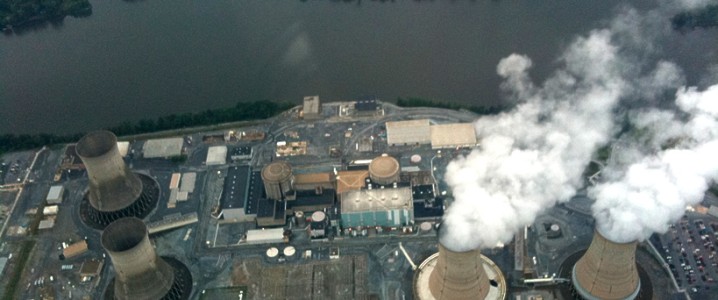
The U.S. Department of Energy has picked five states led by Republican governors to potentially host nuclear fuel waste in exchange for billions of dollars of support to advance manufacturing in the full nuclear fuel cycle.
These so-called Nuclear Lifecycle Innovation Campuses are an ambitious project by the Trump Administration to store and repurpose spent nuclear fuel, support advanced reactor deployment, expand domestic manufacturing, and potentially co-host data centers. The campuses have the potential to attract up to $50 billion in capital investment, generate as much as $10 billion in state and local tax revenue, and create nearly 25,000 jobs with the establishment of a campus, DOE said this week.
The Department of Energy has picked Utah, Tennessee, Oklahoma, Louisiana, and Idaho as potential hosts of the Nuclear Lifecycle Innovation Campuses, part of the Administration’s ambition to expand America’s nuclear power industry, targeting to quadruple U.S. nuclear energy capacity from about 100 gigawatts (GW) now to 400 GW by 2050. Related: US Oil Inventories Sag as Hormuz Turmoil Rages On
Reestablishing the United States as the global leader in nuclear energy would also need the federal government to find hosts for the nuclear waste once its purpose to fuel reactors has been fulfilled.
Campuses in the five Republican-governed states would be designed to support activities across the full nuclear fuel lifecycle, including fuel fabrication, enrichment, reprocessing used nuclear fuel, and final disposition of used nuclear fuel.
In addition, depending on state priorities and regional capabilities, the campuses may also host advanced reactor deployment, power generation, advanced manufacturing, and co-located data centers, DOE said.
Storing nuclear fuel has been a multi-decade-old issue for U.S. Administrations, which have tried to find a solution to the problem.
There was a project to store spent fuel in Yucca Mountain in Nevada, but it was halted amid fierce opposition from the state.
The United States currently has no permanent disposal facility for spent nuclear fuel or other highly radioactive waste.
Currently, spent fuel is being stored at nuclear power plants and former nuclear sites, but this cannot be a permanent solution as the stock of spent fuel is growing, while advances in technology and manufacturing could allow for reprocessing of the waste or part of it.
As of 2025, more than 95,000 metric tons of spent nuclear fuel were stored across 79 sites in over 30 states. By the time current reactors reach the end of their operational life, the number could rise to around 180,000 metric tons, DOE has estimated.
Hence, the new Nuclear Lifecycle Innovation Campuses, for which DOE has received 28 applications from 26 states. After reviewing the applications, DOE picked Utah, Tennessee, Oklahoma, Louisiana, and Idaho.
These five states have either hosted nuclear projects, including the Manhattan Project, in the past, or have National Laboratories renowned for nuclear research and fuel enrichment, such as the Oak Ridge National Laboratory in Tennessee and the Idaho National Laboratory, which specializes in nuclear research.
Potential reprocessing of spent fuel could help the U.S. ambitions to boost domestic supply of nuclear-power-grade fuel and reduce dependence on foreign enriched uranium. Reprocessed fuel could be used in advanced nuclear reactors, which could be developed at the new Nuclear Lifecycle Innovation Campuses.
If these campus projects advance to the operational stage, they could serve the dual purpose of reprocessing nuclear waste alongside nuclear energy innovation and advanced reactor research and manufacturing.
Commenting on the selection of the five states to potentially host campuses, Idaho Governor Brad Little said in DOE’s statement, “We look forward to working with DOE to continue advancing every stage of the nuclear lifecycle, strengthening our nation's energy security, creating good-paying jobs, and ensuring Idaho remains the home of America's nuclear renaissance.”
By Tsvetana Paraskova for Oilprice.com


