
Over the first year and a half of Donald Trump’s second presidency, national leaders have adopted a number of different strategies to mitigate the damage Trump has caused internationally.
Those strategies have changed significantly over time. During the first year, most foreign leaders tried to keep their relationship with the United States on track by choosing what they saw as the path of least resistance – knuckling under to Trump’s threats, pandering to his vision of reality, and not challenging even his most outrageous behaviour.
That changed at the beginning of 2026, as leaders began to realise the limitations of appeasement. Canadian prime minister Mark Carney has repeatedly led the world in standing up to Trump – a strategy that is as potentially costly as it is popular at home.
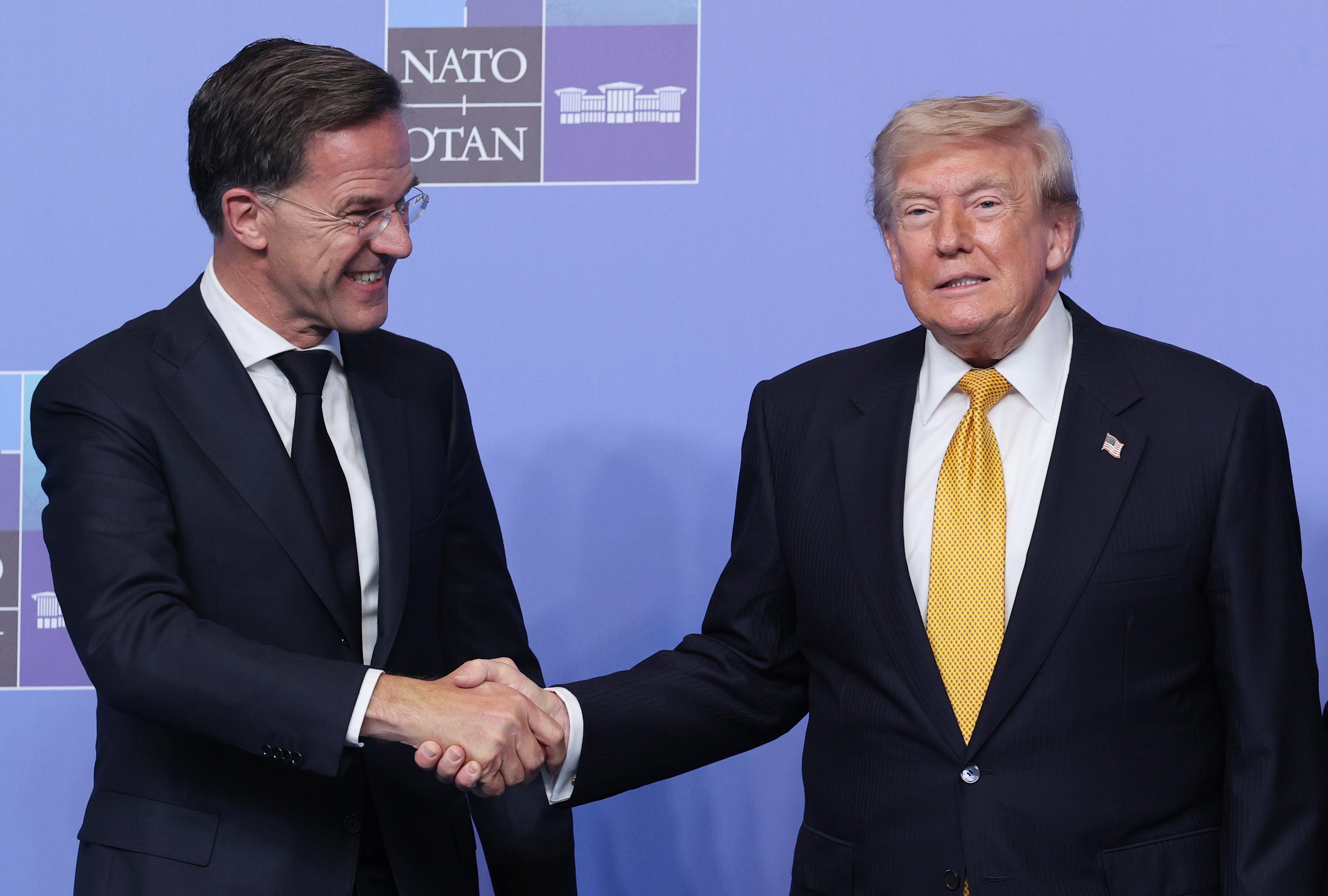
That approach is not universal. By contrast, Nato secretary general Mark Rutte, possibly because of the unique nature of his role, still feels the best course of action is a fixed grin and unctuous grovelling in response to every insult and attack from Trump and his officials.
open image in gallery
Mark Rutte has seen fit to keep Trump appeased – even at a time when major world leaders like Canada’s Mark Carney are deciding to do the opposite(Getty)
But even though coping strategies for dealing with Trump may be evolving, there are some underlying assumptions about the nature of the new normal in global affairs that in some cases remain unchanged, with potentially dangerous consequences.
That includes in particular the belief, lingering in some communities, that Trump is a temporary aberration, that his time in power will soon be over, and as soon as he departs things will start to return to “normal”.
Even though the UK’s National Security Strategy doesn’t refer directly to Trump, it looks forward touchingly to a time “when we come out of this period of turbulence” – as though all we have to do is wait and things will get better. And politicians in democratic countries around the world have expressed similar hopes for waiting out the Trump administration, due to come to an end in 2028.
Democracies around the world have to be ready for the process of authoritarian state capture in the United States not to be reversed in the near future
But there are a number of reasons why hope of this kind does not amount to a strategy. In a new book published this week entitled American Overthrow, I lay out why we should instead be preparing for the “period of turbulence” to extend well beyond that time.
First, Trump may not necessarily depart on schedule. His team are working hard to ensure that forthcoming elections, if they happen at all, deliver a result that does not mean a change of power. Voter suppression and seizing control of democratic processes are just two ways the administration hopes to skew the outcome of the upcoming midterms in November 2026 and the presidential election in 2028. And Trump has repeatedly stated his intent to serve for a third term. That’s expressly prohibited by the US constitution, but Trump and his team have already shown conclusively how easy it is to disregard laws and the Constitution itself with the backing of a compliant Supreme Court.
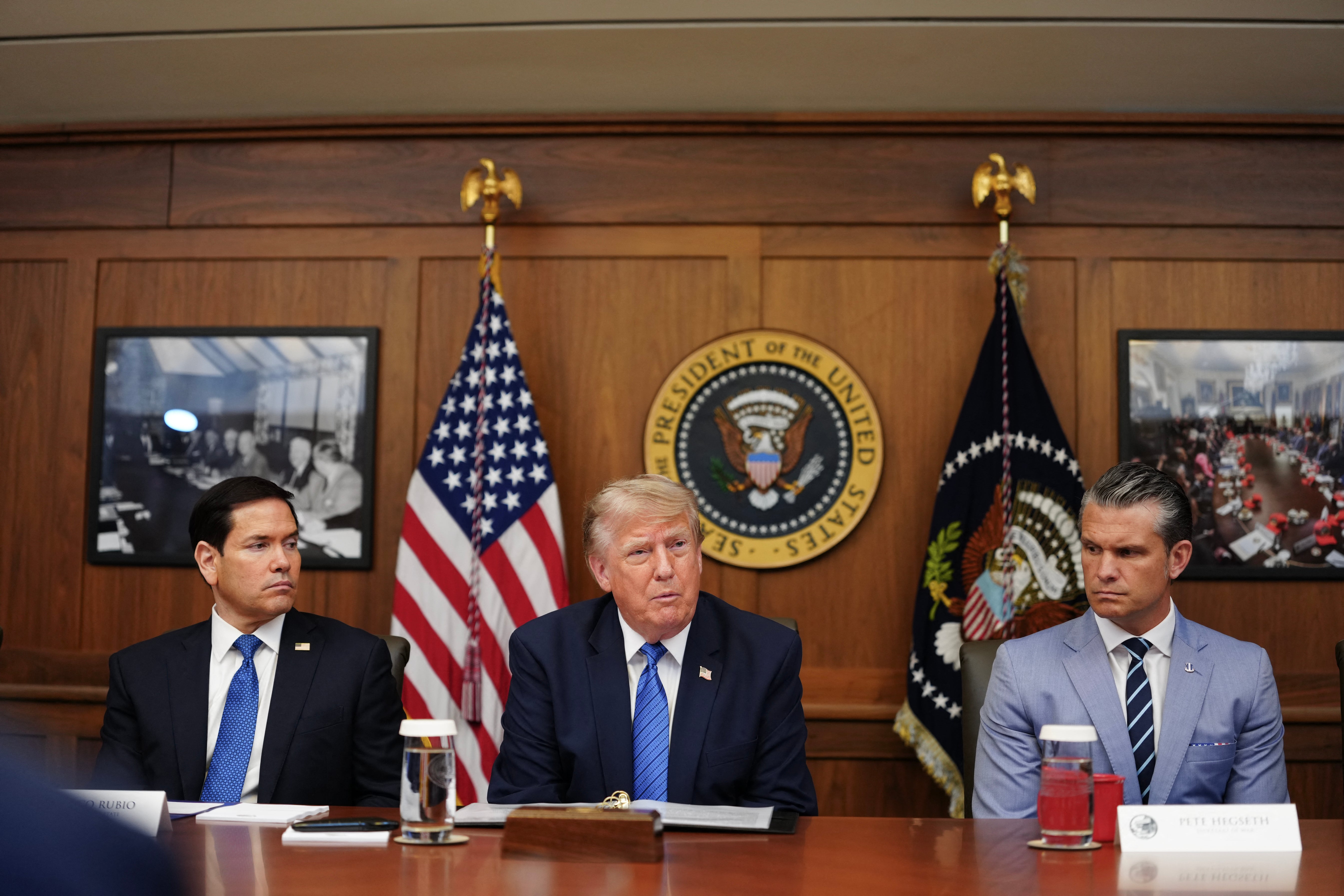
Second, it’s not just Trump. For years, Russia-watchers, presented with relentless optimism that once Vladimir Putin dies relations with Moscow will improve, had to explain that the problem was not just one man, and Putinism would long survive Putin. Now, the group of like-minded individuals around Trump present the same problem in the US. Even if Trump does depart, he is surrounded by people who think and act like him and will be ready to take power in his stead.
open image in gallery
There are many around Trump who are committed to carrying on his style of politics(AFP/Getty)
Third, some of the changes under Trump may be irreversible. Democracies around the world will be eager to try to rebuild relations with a future US administration that once again considers American power to be enhanced, not degraded, by partnerships and alliances. But the turmoil caused by Trump’s random and unpredictable tariffs has already rearranged global trading relationships, and it is unlikely that even if some trust is eventually rebuilt, other countries will once again allow their security and economic policies to be so vulnerable to Washington’s benevolence.
Those long-lasting changes apply to life within the United States as well as to its foreign affairs. The ongoing systemic damage to the US economy, with national debt now topping $40 trillion and the interest burden surging accordingly, is a crisis that will linger long after Trump has departed. The swingeing attacks on vaccination programmes and food safety checks have already made themselves felt in spikes in communicable diseases and foodborne illnesses sweeping across parts of the United States. And the environmental damage, where protections both of humans and of the environment have been scrapped in favour of Trump’s oligarch friends’ further self-enrichment, will be impossible to reverse.
In short, democracies around the world have to be ready for the process of authoritarian state capture in the United States not to be reversed in the near future, and for the global retreat of US power to become more firmly established.
European faith that the rules-based international order and international law could replace investment in hard power was a luxury afforded by the United States' hard power umbrella. Now that umbrella is steadily being furled, but countries like the UK are still in denial about the coming storm.
To grasp the extent of the danger, it’s enough to map Trump’s policies to Moscow’s long-held ambitions for the United States. As I discovered while researching American Overthrow, the direct matches are overwhelming in number and clarity. As former Trump advisor Fiona Hill noted after reviewing the evidence, “Donald Trump’s political template is Vladimir Putin’s”.
open image in gallery
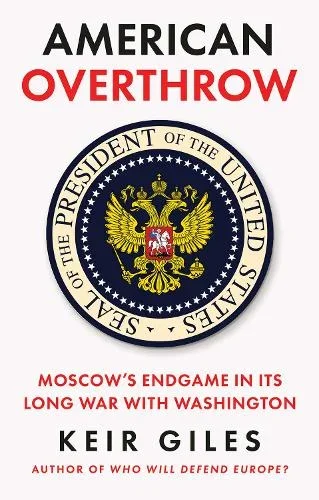
(Hurst Publishers)
That means that any lingering confusion of hope with strategy should by now have been firmly put aside. European leaders should be in no doubt that a world where US policy is inspired by Moscow is a profoundly dangerous one for democracies — and this is not a storm that can be waited out, but a climate change that requires adaptation for survival.
‘ American Overthrow: Moscow’s Endgame in Its Long War with Washington ’ is available from 3 September, published by Hurst Publishers


