
Schools to offer technical subjects to pupils from age 14, Burnham says
48 minutes ago
Branwen Jeffreys, Education Editor, Nathan Standley, Education reporter and Toby Mann

Secondary school pupils in England will be able to study subjects like manufacturing and AI in addition to core academic learning under reforms outlined by Prime Minister Andy Burnham.
The government said the courses, which would be available from Year 10, would be linked to local industries and designed to give children a clearer pathway into work.
Data published this year showed more than one million young people across the UK were not in education, employment or training, the highest level in more than 12 years.
The government has described the policy as a "fundamental change to the education system" but few details behind the broad political vision have been published so far.
Writing in the Times, Burnham said: "In the age of AI, practical and technical skills haven't become less valuable - they've become more valuable than ever. Britain will need brilliant engineers, electricians and cybersecurity experts more than ever before.
"For the first time, technical education will be at the heart of our curriculum, not bolted onto the sides."
Pupils would continue to study core maths, English and science but would also have the option of combining the subjects with technical education.
It will include the chance to gain work experience and create connections with local employers, Burnham said.
The Association of School and College Leaders, which speaks for many secondary headteachers, said they welcomed the ambition of preventing young people falling out of education or work at 16.
With schools already asked to manage on tight budgets and support radical reforms to special educational needs, the union also said there was an issue of capacity.
The BBC understands that the government expects the new pathways into work to be up and running in some areas by 2028.
Burnham said that "for too long" students had been told to take academic subjects to "do well and be respected".
"My message to young people is this - whether you choose construction, coding or classics, or maths, manufacturing or mechanics, you'll get the skills you need and be given the respect you deserve."
The government, he added, was delivering the "major shake-up" required to fix the youth unemployment crisis in Britain, starting with improving the availability and quality of technical education.
Along with the changes to learning, Ofsted will change the way it measures performance and will inspect for technical education. It is not clear how this will fit alongside national measures designed to hold schools to account for the number of pupils taking core academic GCSEs.
An area chart, with an appearance not dissimilar to an undulating mountain range, showing the number of young people who are not in education, employment, or training from quarter one 2019, to quarter four 2025. The number at the start of the line at the top of the area chart is around 0.8 million, and this reaches a peak of almost 1 million by the final value, which is 0.96 million.
The changes announced on Tuesday will only impact England, as education is a devolved policy area.
But improving access to technical and vocational education has been a common focus for governments in Wales, Scotland and Northern Ireland too in recent years.
The reforms are about aligning political ambitions for education with plans to devolve powers to local areas.
They will build on local initiatives like the MBacc, or Greater Manchester Baccalaureate, which was launched in September 2024 by Burnham when he was the city's mayor.
It has provided a framework for pupils to pick GCSE subjects in both academic and technical subjects which align with growing local industries, like green energy or digital.
Teenagers under this programme have also been promised more careers advice and work experience that links to seven sectors of work.
Education Secretary Lucy Powell said the announcement marked the "start of a real shared effort with employers, businesses, mayors and councils to design an education system that connects young people to jobs and careers in their local area".
"The technological revolution we are living through should mean young people become the fresh lifeblood our economy needs to adapt and grow," she said.
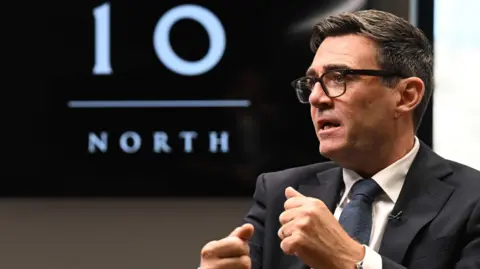
Burnham says he wants an education system "which gives all young people a clear path in life"
In an interim report published in May, into why so many across the UK fall into the Neet category, former minister Alan Milburn had said young people risked becoming part of a "lost generation".
That report was published the same day as figures from the Office for National Statistics showed more than one in eight of UK 16- to 24-year-olds were Neet at the start of this year.
Milburn said the changes announced for England on Tuesday were "very welcome".
"They are a big step in the right direction and consistent with the findings of my review," he said.
But Laura Trott, the shadow education secretary, said the announcements "don't come anywhere close to undoing the damage Labour has already done to the job market".
"The focus should be on the knowledge-rich curriculum that has helped the most deprived children."
Liberal Democrat education spokesperson Munira Wilson said there had to be provisions to allow pupils flexibility to "change direction and move between 'academic' and 'technical'".
"We must not allow these changes to predetermine children's futures at just 14, baking in disadvantage," she added.
Paul Whiteman, general secretary of the National Association of Head Teachers, said school leaders supported the move.
"However, this announcement sets out a direction of travel rather than detailed proposals, and schools will need much greater clarity about what it means in practice and over funding," he added.
Opportunities shrinking for too many young people, says major report on 'lost generation'
'I've applied for more than 400 roles' - how young people are facing the job shortage


