
UK Wind Power Hits Record High as Energy Security Risks Mount
By Felicity Bradstock - Sep 13, 2026, 10:00 AM CDT
- U.K. wind generation reached a record 86.4 TWh in 2025, supplying 29.5% of the country’s electricity.
- Wind output surged again in early 2026, helping reduce Britain’s exposure to soaring fossil-fuel prices during the Middle East energy crisis.
- The U.K. has more than 50 GW of onshore wind in its development portfolio and a 93 GW offshore wind pipeline spanning projects at multiple stages.
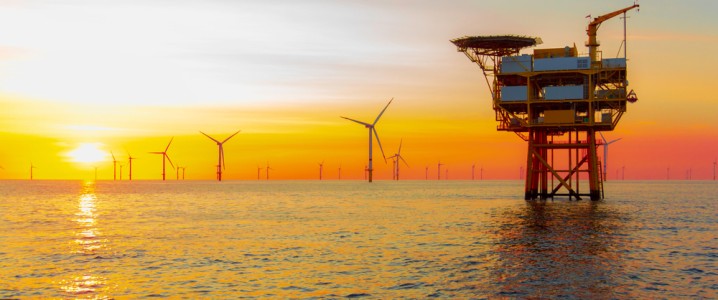
The United Kingdom has dramatically increased its wind energy capacity over the last decade, producing record levels of wind power in 2025. With several more projects in the pipeline, wind power is expected to contribute a significant share of the U.K. energy mix by the end of the decade, supporting diversification aims and boosting energy security.
In the U.K., in 2025, wind was the largest single renewable electricity source, according to data from the National Energy System Operator (Neso). Together, wind, solar, hydro, and biomass generated over 127 terawatt-hours (TWh) of electricity across the U.K., contributing about 44% percent of the country’s electricity, up from 50.5 percent in 2024. Meanwhile, fossil fuels contributed 32.3 percent of electricity generation, almost entirely from natural gas.
Wind generated more than 85 TWh, or almost 30 percent of Great Britain’s electricity last year, with offshore wind generating a record 17.7 percent of the U.K.’s electricity mix, at 52 TWh, according to data from the Department for Energy Security and Net Zero.
“We secured a record-breaking amount of offshore wind in the last round, which will bring over £30 billion in private investment to the U.K., and it’s essential that we continue to procure good value renewables,” RenewableUK’s CEO Tara Singh stated of the results. “The last auction showed onshore wind is half the cost of new gas plants and offshore wind is 40% cheaper,” Singh added.
In the first three months of 2026, power from wind farms rose by 31 percent, compared to the same period in 2025, according to London Stock Exchange data. This helped increase overall clean energy production by 16 percent from the previous year, and total power output by 4 percent.
The increase in wind power production has helped the U.K. to diversify its energy mix and reduce dependence on fossil fuels. The accelerated rollout of more renewable energy capacity is expected to boost the country’s energy security. Already this year, higher levels of clean energy output have helped the U.K. avoid being hit so hard by the global oil and gas shortages created by the closure of the Strait of Hormuz, a key trade corridor connecting Europe and Asia.
Oil and gas prices have risen sharply in recent months due to trade restrictions, which have led to a global fuel shortage. The impact of ongoing geopolitical disruption on energy trade has made it increasingly evident that overreliance on fossil fuels could undermine energy security for many countries. While several countries around the world have been scrambling for alternative fuel supplies, the U.K. has benefited from growth in its clean power sector in recent years, helping shield it from the crisis.
Plans to develop new onshore wind projects in England have reached their highest annual level in a decade, with 45 applications for new wind farms submitted in the year to March, at a rate of around 36 MW a month, the Guardian recently reported. Onshore wind power capacity entering the planning system has more than tripled since Labour lifted the de facto ban on onshore wind in England in 2024, which had been in place since 2015. The U.K. onshore wind farm project pipeline at any stage of development now stands at over 50 GW, growing by over 3 GW in the last year.
Scotland dominates the U.K. onshore wind capacity, as the development of new projects was never restricted under the Conservatives’ de facto ban, as energy planning is a devolved matter handled separately by the Scottish Government. Scotland accounts for 75 percent of the U.K.’s current onshore wind portfolio, followed by Wales with 12 percent, England with 8 percent, and Northern Ireland with 5 percent.
In January, German chancellor Friedrich Merz said he wants the North Sea to become the “largest reservoir of clean energy worldwide”. This comes as part of plans between the U.K. and nine other European countries to accelerate the deployment of offshore wind farms in the 2030s and to build a power grid in the North Sea to transform the ageing oil basin into a “clean energy reservoir”. The group plans to construct wind farms at sea that directly connect to various countries via high-voltage subsea cables, aiming to provide 100 GW of power, or enough electricity capacity to power 143 million homes.
The Crown Estate’s latest U.K. Offshore Wind Report, published in May, highlighted a 93 GW pipeline of fixed and floating offshore wind capacity in the U.K., in planning or with identified future potential. Approximately 40,000 people are employed in the U.K. offshore wind sector, a figure that could rise to as many as 94,000 by 2030. In addition, in 2025 alone, offshore wind displaced an estimated 20.8 million tonnes of carbon dioxide.
The U.K. has accelerated the development of its wind energy capacity in recent years, with a substantial project pipeline for the coming years. The expansion of the U.K.’s onshore and offshore wind capacity is expected to help the country diversify its energy mix and reduce reliance on fossil fuels, thereby boosting energy security over the coming decade.
By Felicity Bradstock for Oilprice.com
More Top Reads From Oilprice.com
- OPEC Sees Oil Demand Growth Explode Sixfold in 2027
- WTI Breaks $100—and This Rally Has Legs
- IEA: Global Coal Demand Set to Hit Record High as Iran War Chokes LNG Supply
Download The Free Oilprice App Today


ADVERTISEMENT
Set us as your preferred Google source
FACEBOOK Twitter LINKEDIN REDDIT PRINT
Previous Post\ \ Stolen Electricity is Powering Illegal Crypto Farms Across the Globe

Felicity Bradstock
Felicity Bradstock is a writer and journalist based in Mexico City. She writes for energy websites and covers several other industries, as well as writing…
Related posts
Oil Industry Braces for Years-Long Iran War U.S. Oil Rig Count Rises as Oil Tops $100 Saudi Arabia’s Critical Oil Bypass Comes Under Threat
Leave a comment
First Name
Last Name
That email address is already in the database. Please login to your account to post your comment, or enter a different email address to continue with your comment & account creation.
Captcha
Comment
Please understand that, by submitting this form, you will be creating a free OilPrice.com account, and therefore agree to abide by our Terms of Use. Your details will be stored in our database and shared with our third party mailing list provider. You will be sent an email containing a link that will ask you to generate a new password - please follow the link to complete your OilPrice account activation.
We will save the information entered above in our website. Your comment will then await moderation from one of our team. If approved, your data will then be publically viewable on this article. Please confirm you understand and are happy with this and our privacy policy by ticking this box. You can withdraw your consent, or ask us to give you a copy of the information we have stored, at any time by contacting us.
ADVERTISEMENT
ADVERTISEMENT
Most Popular
 \ \ WTI Breaks $100—and This Rally Has Legs
 \ \ Russian Mobilization Rumors Ripple Across Central Asia
  \ \ Canadian Oil Pushes Deeper Into U.S. Gulf Coast Market
  \ \ Europe's "Less" Is Doing More Than Anyone Gives It Credit For
  \ \ Permian Gas Has Been Worth Less Than Nothing for 118 Days This Year



By signing up to our newsletter, you agree for your email address to be shared with our third party mail providers.
ADVERTISEMENT
ADVERTISEMENT
EXXON Mobil-0.35
Open57.81Trading Vol.6.96MPrevious Vol.241.7B
BUY 57.15
Sell 57.00


