UN Warns World Must Prepare for Life Beyond 1.5°C
By Felicity Bradstock - Sep 19, 2026, 10:00 AM CDT
- UNEP says the world is likely to cross the 1.5°C warming threshold within the next few years and that higher and longer-lasting overshoot will increase risks to people and ecosystems.
- The report promotes an “overshoot, peak and decline” pathway in which emissions fall rapidly, warming peaks as low as possible, and net-negative emissions eventually bring temperatures back toward or below 1.5°C.
- UNEP stresses that carbon dioxide removal will be necessary but cannot replace deep emissions cuts, while vulnerable developing countries are pushing for more adaptation finance and faster reductions from major emitters.
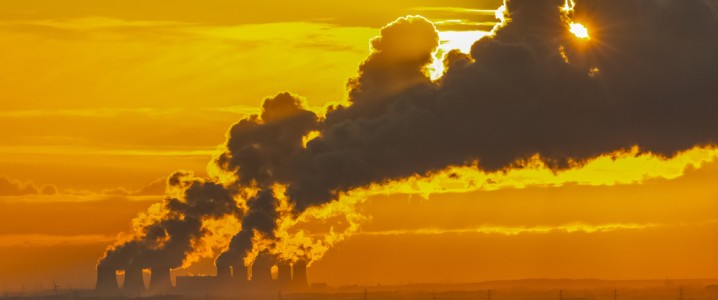
The United Nations has, for the first time, acknowledged that the world will overshoot its target of limiting global warming to 1.5°C above pre-industrial levels, marking the failure of the 2015 Paris Agreement pledges.
The world is now expected to warm to 1.5°C above pre-industrial levels within the next few years, according to a report from the UN Environment Programme. Even if all climate commitments are met, the world is expected to warm by at least 1.8°C, the report states. The report was released shortly after a summer in which Europe experienced record temperatures, provoking drought and wildfires across the region, while deadly floods swept through parts of Asia.
The temperature rise will lead to more extreme weather events, such as heat waves and floods, as well as glacier melting, rising sea levels, and coral bleaching, according to the report. Changes in crucial global systems could also occur, such as the weakening or collapse of ocean currents that carry heat northward from the tropics, the report said, with the potential to “reshape the world forever.”
The UN Secretary-General, António Guterres, said in a speech at the report’s launch, “ Every fraction of a degree will cost lives, destroy livelihoods, deepen inequality, and push ecosystems closer to irreversible damage.” Guterres emphasised the need to accelerate the phaseout of fossil fuels and the renewables revolution; slash methane pollution; protect land, forests and oceans.
Guterres said that “governments must over-deliver on national climate plans, net-zero commitments, and beyond”, while “developed countries must triple adaptation finance and ensure it reaches those most at risk.” He added, “the science is clear. The solutions are at hand. And the world has never been better equipped to deploy them. Now is the time to raise ambition and accelerate action. The fight for 1.5 degrees is the fight for humanity.”
Rather than dwelling on the anticipated outcome, the report establishes a strategy to bring temperatures back down or below 1.5°C by the end of the century. The UNEP presents its “overshoot, peak, decline” pathway as the “best remaining option” and suggests that world powers must work together to keep the above-1.5°C phase as short-lived as possible, with a focus on rapidly reducing the temperature.
This, the UNEP emphasises, can only be achieved by immediately cutting all greenhouse gas emissions and removing carbon dioxide. It also highlights accelerated adaptation and mitigation strategies. The report states that “there are no good outcomes” if the world stays above 1.5°C. Furthermore, it is impossible to know what the world will look like once the climate has stabilised again. However, “every fraction of a degree avoided reduces risks,” and achieving this goal must be pursued urgently. The UNEP calls for “collective and global action to get on an overshoot, peak, and decline pathway.”
To help manage global warming and bring temperatures back down, UNEP stresses the importance of collective carbon capture efforts. This includes planting enormous forests around the world and deploying novel technologies, such as carbon capture and storage (CCS) equipment, to suck carbon out of the air. However, CCS technologies have been widely criticised in recent years and have still not yet achieved significant success on a commercial scale.
Following the launch of the report, many criticised UNEP for not focusing explicitly enough on the need to rapidly phase out fossil fuels. Countries committed to pivoting away from oil, gas, and coal at a 2023 international climate summit; however, many are failing to meet their pledges, thereby allowing emissions to continue climbing. In addition, the Trump administration withdrew the United States, the world’s largest greenhouse gas emitter, from the Paris Agreement and, in doing so, is significantly hindering climate progress.
Meanwhile, some of the world’s Least Developed Countries (LDCs) are taking action into their own hands due to the persistent failures of high-income countries. Ministers and representatives from various LDCs convened in September for the LDC Group on Climate Change High-Level Ministerial Meeting to prepare for the November COP31 climate summit, which concluded with the adoption of the Dili LDC Group Ministerial Declaration on Climate Change, outlining key priorities for the LDC Group.
H.E. Marcos Da Cruz, Minister of Agriculture, Livestock, Fisheries, and Forestry of the Democratic Republic of Timor-Leste, said, “Our Strategy and Ministerial Meeting over the last three days has reinforced one clear message: LDCs cannot afford another year of promises without delivery. We are leaving Dili more united and with clear political direction for COP31. Finance must reach our countries. Adaptation must be scaled up and implemented. Loss and damage must be addressed. And those with the greatest responsibility and capacity must lead with deeper and fast emissions cuts.”
Even if the world can come together to make meaningful changes, a single decade of warming could take about 50 years to reverse, the UNEP warns. Despite climate scientists warning about the impact of global warming for decades, and most countries committing to make meaningful changes to mitigate the risk of climate change, 1.5°C warming now appears inevitable. This has led LDCs to plan for adaptation to anticipated challenges in the coming decades and UNEP to present a strategy to reduce temperatures after peak temperatures are reached.
By Felicity Bradstock for Oilprice.com
More Top Reads From Oilprice.com
- Germany Weighs Market Incentives to Boost Record Low Gas Storage Level
- TTF Gas Hits $92.95 as Gulf Tensions Weigh on Energy Markets
- Ukraine Hits Refinery as Moscow Prepares to Extend Diesel Export Ban
Download The Free Oilprice App Today


ADVERTISEMENT
Set us as your preferred Google source
FACEBOOK Twitter LINKEDIN REDDIT PRINT
Previous Post\ The Race to Cut Methane Emissions Is Exposing a Global Divide

Felicity Bradstock
Felicity Bradstock is a writer and journalist based in Mexico City. She writes for energy websites and covers several other industries, as well as writing…
Related posts
The Race to Cut Methane Emissions Is Exposing a Global Divide Cooling Emissions Are Set to Triple by 2050 as Heat Waves Intensify Europe's Hottest June on Record Traced to Climate Change
Leave a comment
First Name
Last Name
That email address is already in the database. Please login to your account to post your comment, or enter a different email address to continue with your comment & account creation.
Captcha
Comment
Please understand that, by submitting this form, you will be creating a free OilPrice.com account, and therefore agree to abide by our Terms of Use. Your details will be stored in our database and shared with our third party mailing list provider. You will be sent an email containing a link that will ask you to generate a new password - please follow the link to complete your Oil Price account activation.
We will save the information entered above in our website. Your comment will then await moderation from one of our team. If approved, your data will then be publically viewable on this article. Please confirm you understand and are happy with this and our privacy policy by ticking this box. You can withdraw your consent, or ask us to give you a copy of the information we have stored, at any time by contacting us.
ADVERTISEMENT
ADVERTISEMENT
Most Popular
 \
Chinese Solar Panels Drop to 12 Cents a Watt, Rooftop Installs Surge Worldwide
\
Chinese Solar Panels Drop to 12 Cents a Watt, Rooftop Installs Surge Worldwide
 \
Saudi Pipeline Outage Hits an Oil Market Running Out of Buffers
\
Saudi Pipeline Outage Hits an Oil Market Running Out of Buffers  \
Oil Industry Braces for Years-Long Iran War
\
Oil Industry Braces for Years-Long Iran War  \
Oil Prices Surge as Middle East Attacks Continue and Diplomacy Stumbles
\
Oil Prices Surge as Middle East Attacks Continue and Diplomacy Stumbles  \
Inside Putin’s $135 Billion Arctic Gamble That Could Save His Ukraine War
\
Inside Putin’s $135 Billion Arctic Gamble That Could Save His Ukraine War