
Calls to Overhaul the UN Security Council Gain New Momentum
By Eurasianet - Sep 26, 2026, 12:00 PM CDT
- The UN is facing increasing pressure to give developing countries more influence, with Kyrgyzstan's president calling for permanent Security Council seats for Africa and Latin America.
- Western sanctions also came under attack as he accused the United States and Europe of using sanctions to pressure smaller countries.
- Trump received praise from the Kyrgyz leader for slashing US support for NGOs abroad, saying the cuts gave countries like Kyrgyzstan more control over their own political development.
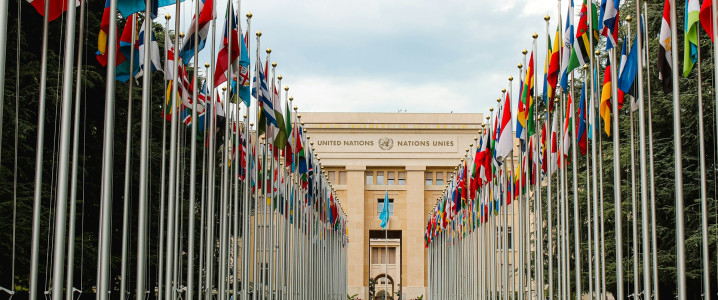
With Kyrgyzstan set to begin a two-year term on the UN Security Council at the end of this year, the Central Asian nation’s president, Sadyr Japarov, sent some barbs and props to President Donald Trump in a speech at the General Assembly.
Japarov’s September 22 address made it clear that Bishkek sides with China on the matter of reforming the United Nations, with the aim of altering the balance of power within the institution to diminish Western influence.
“Today the world has changed,” Japarov stated. To reflect that change, the composition of the Security Council, the UN entity responsible for promoting peace and security, needs to be expanded, he added.
“It would be fair to give the African continent, with a population of over 1 billion, two permanent seats, and Latin America one permanent seat,” he said. Currently, the Security Council comprises 15 member states, including the five permanent members, the United States, the United Kingdom, France, Russia and China.
Casting itself as a developing nation, Beijing’s official stance is that the Security Council “should not become a club of big or rich countries.” Chinese officials have long pushed for “equitable reform” of the Security Council “to boost its authority and efficiency, enhance its capacity to tackle global threats and challenges, and let it better fulfill its mandate prescribed in the UN Charter.”
The Trump administration, which is generally antagonistic to the UN system, resists the idea of Security Council expansion. The UK and France, meanwhile, favor expansion, but have called for permanent seats to be given to Brazil, Germany, India and Japan, in addition to “ permanent African representation.”
Reform along British and French lines would unlikely be to China’s liking, given that Germany, India and Japan all have fraught relations with Beijing.
For example, China may be Germany’s largest trading partner, but as a German Foreign Ministry statement in early 2026 noted: “Fundamental differences of opinion do exist. This is particularly the case with regard to human rights, especially individual freedoms, as well as regarding certain economic matters and questions concerning the validity of international law.”
Japarov’s UN speech contained some notable nuggets concerning the United States, the UK and the European Union. Without naming names, he castigated Washington, London and Brussels for what he portrayed as “unjustified” sanctions against Kyrgyzstan.
The EU imposed its first-ever “ anti-circumvention” sanctions on Bishkek in April, prohibiting the export of certain dual-use electronic components. The move followed a determination that Kyrgyzstan was helping Russia circumvent Western sanctions by reexporting goods with potential military applications. The United States, meanwhile, has sanctioned specific Kyrgyz entities for alleged sanctions-busting activities.
Japarov called sanctions “a tool for interference in the internal affairs of sovereign states,” adding that the West was manipulating them to “put pressure on smaller countries such as Kyrgyzstan, trying to force them to negotiate on certain issues and issuing ultimatums.”
The Kyrgyz leader then quickly pivoted to praise Trump for taking steps to drastically cut funding for non-governmental organizations, which he intimated were not constructive forces in building civil societies, but malign actors pushing agendas that undermine state-building efforts.
Japarov was referring to Trump’s efforts soon after returning to the presidency in early 2025 to drastically cut State Department and USAID funding for NGOs and independent, non-profit media outlets around the world. Ultimately, USAID was abolished as an independent agency.
Japarov ended up contradicting himself, contending that the United States is using sanctions to infringe on Kyrgyzstan’s sovereignty, then saying the US had strengthened Kyrgyzstan’s statehood by largely eliminating pesky NGO activity in the country.
“Trump's decisions have created conditions for strengthening the sovereignty of states and their independent choice of their own development path,” Japarov said. “Therefore, I would like to take this opportunity today to express my gratitude to Mr. Trump for ending funding for NGOs.”
Among the major consequences of the reduction of US assistance to NGOs globally, the ability of non-profit watchdog organizations to hold governments accountable for rights abuses and authoritarian practices has been severely weakened.
Freedom House in its most recent country report on Kyrgyzstan classified the country as “ not free.”
“Both the judiciary and extralegal violence have since been used to sideline President Japarov’s political opponents and media and civil society critics,” according to Freedom House.
By Eurasianet
More Top Reads From Oilprice.com


