
U.S.-Venezuela Oil Deal Threatens China’s Oil-Backed Loans
By Charles Kennedy - Sep 03, 2026, 7:00 PM CDT
- China’s decades-long bet on Venezuela is under threat, with U.S.-backed NABEP gaining 100-year rights to 17 oil fields containing an estimated 65 billion barrels.
- Beijing still faces at least $10 billion in Venezuelan debt exposure, while U.S. control over future barrels could complicate oil-backed repayments and restrict Chinese access.
- China risks financial, commercial, and geopolitical losses, including reduced access to discounted crude, displaced upstream investments, and diminished influence over Venezuela’s oil sector.
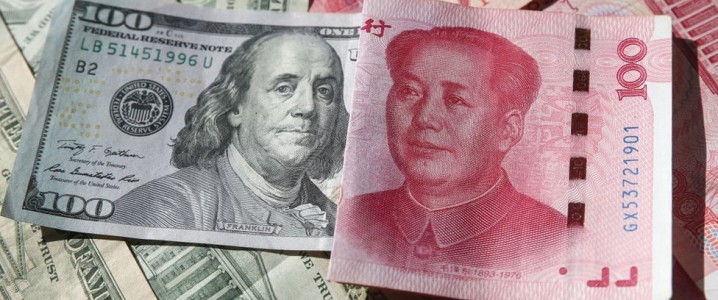
For decades, Venezuela has been one of China’s most important partners in Latin America and the largest recipient of Chinese government funds in Latin America, with Beijing lending Caracas tens of billions of dollars and accepting oil as repayment. Chinese policy banks provided it with at least $60 billion in oil-backed financing through 2015, while broader estimates of Chinese lending and investment commitments exceed $100 billion. Analysts estimate that Caracas still owes Chinese lenders at least $10 billion.
Recovering that money was never going to be easy, but Trump’s new arrangement for Venezuelan oil will make it even more challenging for Beijing because a sizable chunk of the country’s future oil production will now be under the control of U.S.-aligned interests.
Last week’s multibillion-dollar agreement with North American Blue Energy Partners, or NABEP, to expand production and commercialize Venezuela’s enormous petroleum reserves includes fields previously operated or pursued by Chinese companies and a Russian firm.
NABEP, formerly owned by U.S. oil tycoon Harry Sargeant and now controlled by Venezuelan businessman Alejandro Betancourt, says it plans to invest as much as $100 billion in Venezuelan oil infrastructure.
According to the White House and NABEP, the company has received 100-year rights over 17 fields in the Lake Maracaibo region and the Orinoco Belt. Those fields contain an estimated 65 billion barrels of proven reserves (about one-fifth of Venezuela’s total). The arrangement would give the U.S. government rights to a 35% stake in NABEP’s corporate parent and access to 20% of its production at cost. Washington would also have the right of first refusal on the remaining output. NABEP says the development could generate more than $200 billion in taxes and royalties for Venezuela over its first 25 years.
Related: High Oil Prices Speed Up China’s Shift Away From Crude
The concessions transfer fields previously operated or pursued by Chinese companies to a U.S.-backed producer, cutting into the access Beijing spent two decades financing.
Several of the projects now included in the NABEP portfolio were previously operated or targeted for development by Chinese companies, including China National Petroleum Corp., Sinopec and China Concord Resources. Their displacement threatens Beijing’s upstream investments and weakens its ability to influence how Venezuelan barrels are produced, priced, marketed and used to settle debts. NABEP will control production from the transferred fields. The U.S. State Department can buy 20% of the output at cost and holds first refusal on the remaining 80%, leaving Chinese refiners and lenders without guaranteed access to those barrels.
Chinese policy banks handed some $60 billion to Venezuela through 17 loan contracts that were to be repaid with oil shipments. That debt is the obligation of the Venezuelan state regardless of who operates the fields. NABEP’s control over the newly awarded production does not override the existence of the debt, but it does change how it might be repaid. The U.S. State Department can buy 20% of its output at cost and claim first refusal on the remaining 80%, reducing the barrels Caracas can direct to Chinese lenders and refiners.
Chinese Foreign Ministry spokesman Guo Jiakun said China’s economic cooperation with Venezuela was protected by international law and insisted that “China’s lawful rights and interests in Venezuela must be protected.” But realistically, Beijing will have a hard, litigious time reversing the transfer.
China buys an estimated 50-89% of Venezuela’s oil exports, much of it at discounts through independent refineries operating on thin margins. Traders concealed the cargoes through ship-to-ship transfers, shadow-fleet tankers and documents identifying the crude as Malaysian or Brazilian, with most transactions settled in renminbi.
From another perspective, Venezuelan crude supplies roughly 4 to 4.5% of China’s seaborne oil imports. Chinese refiners can replace it with heavy grades from Iran, Iraq or Canada at higher prices. The loss comes in the refinery margins because discounted Venezuelan barrels allowed Chinese teapots to stay profitable despite weak domestic fuel demand and excess refining capacity.
Between 50,000 and 100,000 bpd have also been allocated to servicing Venezuela’s Chinese debt since 2020. Chinese refiners and banks are now competing for barrels whose sale passes through a company partly owned by the U.S. government.
So, Beijing’s losses would be three-fold: financial, commercial and geopolitical. Chinese lenders could face a longer and more uncertain path to repayment, while teapots could lose access to deeply discounted heavy crude, and Chinese oil companies could be shut out of fields they had spent years cultivating. Washington gains influence over a petroleum system that China once appeared positioned to dominate.
For Beijing, the biggest damage may be to the premise underlying its entire Venezuelan strategy: that large loans, infrastructure investments and diplomatic support would secure enduring access to resources and political loyalty.
By Charles Kennedy for Oilprice.com
More Top Reads From Oilprice.com
- Hormuz Disruptions Could Drag Into Next Year, Japanese Tanker Giant Warns
- Russia Says Oil Output Drop Is Temporary as Refineries Restart
- EU Vows Tougher Russia Measures After Leipzig Drone Attack
Download The Free Oilprice App Today


ADVERTISEMENT
Set us as your preferred Google source
FACEBOOK Twitter LINKEDIN REDDIT PRINT
Previous Post\ \ Why Oil Majors Don’t Want to Build New U.S. Refineries

Charles Kennedy
Charles is a writer for Oilprice.com
Related posts
Why Oil Majors Don’t Want to Build New U.S. Refineries Baltic Dry Index Breaks Out as a “Perfect Storm” Hits Shipping Electric Trucks Have Moved From Impossible to Inevitable
Leave a comment
First Name
Last Name
That email address is already in the database. Please login to your account to post your comment, or enter a different email address to continue with your comment & account creation.
Captcha
Comment
Please understand that, by submitting this form, you will be creating a free OilPrice.com account, and therefore agree to abide by our Terms of Use. Your details will be stored in our database and shared with our third party mailing list provider. You will be sent an email containing a link that will ask you to generate a new password - please follow the link to complete your OilPrice account activation.
We will save the information entered above in our website. Your comment will then await moderation from one of our team. If approved, your data will then be publically viewable on this article. Please confirm you understand and are happy with this and our privacy policy by ticking this box. You can withdraw your consent, or ask us to give you a copy of the information we have stored, at any time by contacting us.
ADVERTISEMENT
ADVERTISEMENT
Most Popular
 Solar Has Crossed a Critical Economic Tipping Point
 New Tech Breakthrough Aims To Solve The World's Plastic Waste Problem
 Oil Prices Surge as U.S. and Iran Exchange Strikes
 U.S. Eyes 18th-Century Law to Seize and Sell Iranian Oil
 Oil Prices Rally as U.S. Targets Iranian Tankers in New Escalation



By signing up to our newsletter, you agree for your email address to be shared with our third party mail providers.
ADVERTISEMENT
ADVERTISEMENT
EXXON Mobil-0.35
Open57.81Trading Vol.6.96MPrevious Vol.241.7B
BUY 57.15
Sell 57.00


