
U.S. Backs Madagascar’s Rare Earths Project
By Alex Kimani - Jul 29, 2026, 6:00 PM CDT
- The Trump administration is expanding its rare earth strategy in Africa, backing a Madagascar project to reduce U.S. dependence on China's dominance of critical minerals.
- Washington is ramping up investment across the rare earth supply chain, following support for projects in Mozambique, MP Materials, and USA Rare Earth to build domestic and allied mine-to-magnet capacity.
- The push comes as China tightens export controls and blacklists U.S. firms, intensifying the global race to secure critical mineral supply chains.
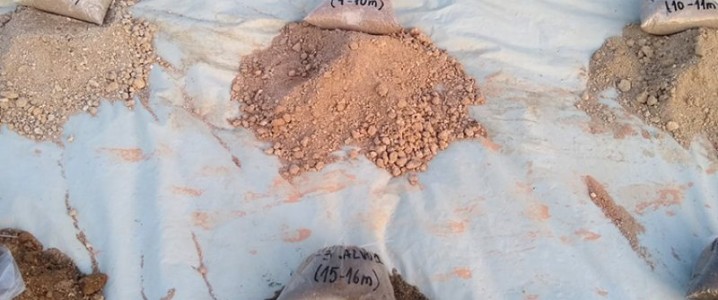
The Trump administration has opened another front in the global rare earths race, backing a new project in Madagascar as Washington accelerates efforts to break China’s grip on the critical minerals that power everything from advanced weapons and AI infrastructure to oil refining and electric vehicles.
The U.S. International Development Finance Corporation (DFC) has committed up to $4.84 million to Harena Rare Earths’ (OTCQB: CRMNF) Ampasindava project in northern Madagascar. The funding will support pilot plant operations, metallurgical testing and environmental studies, with successful completion potentially unlocking much larger U.S. government-backed construction financing. Harena estimates total project costs at roughly $150 million.
The Ampasindava ionic clay deposit is expected to produce 4,000 metric tons of rare earth oxides annually, including 1,700 tons of high-value magnet elements like neodymium, praseodymium, dysprosium and terbium. A State Department spokesperson told Reuters that Washington is looking to increase its critical minerals investments in Africa to counter “opaque, predatory investments from our adversaries” in a thinly veiled dig at China.
China currently controls nearly 70% of global rare earth mining and close to 90% of refined magnet processing. These elements are vital for many technologies, including crude oil refining, defense systems, EV batteries, wind turbines, healthcare and electronics.
"Madagascar fits within that strategy, and we see opportunities throughout the country to increase U.S. and U.S.-aligned investment in the critical mineral sector," the spokesperson said.
The Madagascar project is not the first rare earths project in Africa to receive backing by the Trump administration. Back in February, the U.S. Trade and Development Agency awarded a $1.87 million grant to Altona Rare Earths to fund a pre-feasibility study (PFS) for the Monte Muambe rare earths project in Mozambique.
Located in northwest Mozambique, the Monte Muambe Rare Earths mine contains several critical and rare elements including neodymium, praseodymium, dysprosium and terbium. Initial parameters from earlier scoping models being refined under the current PFS include ~15,000 tonnes of mixed rare earth carbonate annually with a mine life of 18 years and an estimated development cost of $276.3 million.
Altona Rare Earths has also discovered high-grade gallium intercepts within the mine’s carbonatite deposit, with the ongoing PFS conducting metallurgical testing to evaluate recovering gallium as a highly valuable byproduct to boost returns and project economics. Additionally, exploration has confirmed co-existing fluorspar, which the company is evaluating as a potentially viable, standalone mineral asset.
The Trump administration has cut numerous equity and project financing deals with rare earth companies as it seeks to secure the country’s REE supply chain.
A year ago, the U.S. Department of Defense entered into a landmark public-private partnership with Nevada-based MP Materials (NYSE:MP) featuring a $400 million purchase of convertible preferred stock by DoD and a $150 million loan. The 10-year agreement also offered a price floor commitment, guaranteeing that 100% of magnets produced at MP Materials upcoming 10X Facility in Texas will be purchased by defense and commercial customers, backed by the $110/kg NdPr price floor. The administration also entered into a similar agreement with Oklahoma-based USA Rare Earth (NASDAQ:USAR) in January 2026, taking a 10% equity stake as part of a $1.6 billion financing package to build a domestic mine-to-magnet supply chain.
Over the past couple of years, China has repeatedly weaponized its REE hegemony, especially in trade wars, by implementing export controls and restricting processing technology.
Last year, Beijing imposed export licensing requirements on samarium, gadolinium, terbium, dysprosium, lutetium, scandium and yttrium in retaliation for U.S. tariffs. Those heavy rare earths are indispensable to the high-performance permanent magnets used in electric vehicles, wind turbines, advanced electronics and military systems. China later expanded those restrictions, expanding export controls to additional rare earth materials and tightening oversight of processing technologies, further strengthening its grip over the global supply chain
Last month, Beijing escalated the situation by blacklisting 10 American companies, including top U.S. rare earth firms like MP Materials and USA Rare Earth, from acquiring Chinese dual-use materials. This was yet another tit-for-tat move by Beijing after the U.S. Pentagon expanded its 1260H military-linked blacklist to include Chinese e-commerce giants Alibaba (NYSE:BABA) and Baidu (NASDAQ:BIDU), as well as giant EV makers BYD (OTCPK:BYDDF) and NIO (NYSE:NIO).
Madagascar has become the latest stop in Washington’s campaign to establish a strategic foothold across Africa’s critical minerals sector. U.S. agencies have already backed projects in neighboring Mozambique while investing heavily in the Lobito Corridor linking Angola, Zambia and the Democratic Republic of the Congo–all to get beyond China’s reach.
By Alex Kimani for Oilprice.com


