
Premium Content
Why Blocking U.S. Diesel Exports Could Make Fuel More Expensive
By Irina Slav - Sep 28, 2026, 6:00 PM CDT
- Analysts warn that trapping surplus diesel in the United States could rapidly fill storage and force refiners to cut crude runs.
- Lower refinery throughput would reduce production of gasoline and jet fuel as well as diesel, potentially shifting higher costs to other fuels.
- A ban would also remove significant U.S. diesel supply from an already tight global market while potentially widening the discount of U.S. crude to Brent.
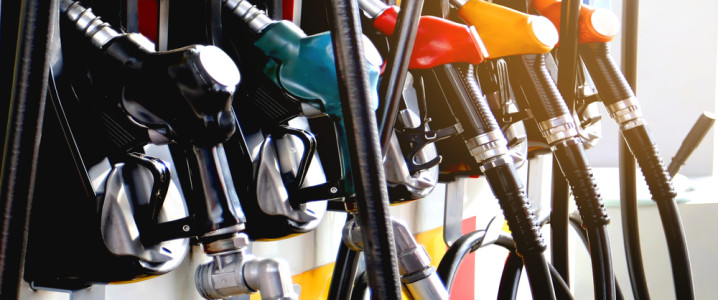
Talk of a possible ban on U.S. exports of diesel fuel to curb soaring prices at the pump could end up pushing all fuel prices higher, cutting refinery runs as storage fills up, analysts have warned. The move could result in a glut of the fuel in the United States while the rest of the world struggles to secure supply.
Retail diesel prices in the U.S. hit an all-time high of over $6.50 per gallon last week amid the global crunch that led to higher exports of the fuel, notably to Europe. In order to rein in prices for American drivers, legislators proposed a temporary ban on exports, and President Trump signaled he would get behind such a move.
Not all agree it would be the right move, however. Energy Secretary Chris Wright warned it would lead to some unintended consequences last week, saying that “The blunt tool of banning diesel exports definitely doesn't work. If you can't export the diesel that comes out of our refineries, you run out of places to store it, and you have to reduce US refining, which would put upward pressure on gasoline prices and jet fuel prices.”
Analysts concur. Wood Mackenzie said in a note last Thursday that a ban would quickly fill up storage space and force a sharp cut in refinery runs, which would “ultimately increase the volume and cost of gasoline imports, potentially shifting the cost burden from diesel to gasoline at the pump.”
The consultancy has estimated that a 90-day ban on diesel exports would result in the redirection of some 700,000 barrels of the fuel and gasoil to storage, and this would fill available storage space to the maximum in a little more than a month. As a result, refiners would be forced to cut their run rates by some 2 million barrels daily, meaning gasoline production would also suffer a reduction. Then again, energy companies could boost exports of crude by the same amount.
On the face of it, higher exports of crude could lead to lower prices in that energy commodity, if not its derivatives, but there is a problem with that scenario and that problem has to do with available refining capacity outside the United States. That capacity is limited—and it is all in China. Europe is especially short on refineries, hence its significantly higher fuel imports from the United States.
“The irony of a US diesel export ban is that it would likely increase costs for American consumers,” Wood Mackenzie’s senior VP for refining, chemicals, and oil markets, Commodities Research, said. “Cutting crude runs to manage the oversupply would shift the cost burden from diesel to gasoline, meaning a policy designed to bring relief at the diesel pump could end up driving prices higher at the gasoline pump,” Alan Gelder explained. He added that “China is currently the only country with material spare refining capacity that could cover the loss of US refinery throughputs. However, China may well decide it is not in its interest to do this.”
The talk of a diesel export ban has meanwhile already served to pressure U.S. crude oil prices. West Texas Intermediate is trading at a discount of $12 to Brent crude, even as both benchmarks book gains following President Trump’s rejection of Iran’s plan for a peace deal, which the latter presented during last week’s UN General Assembly session in New York.
Normally, this would boost demand for U.S. crude barrels. But that limited refinery capacity in some key markets mentioned above is interfering with the natural course of things. On top of that, higher freight and insurance costs resulting from the war in the Middle East have compromised oil demand’s relationship with the commodity’s prices.
Freight costs have surged due to the limited availability of tankers, and insurance costs have gone up because of war premiums for the Middle East. According to Signal Maritime data cited last week by Reuters’ Ron Bousso, a VLCC journey from the Gulf Coast to Asia now costs around $50 million. This compares to $16 million before the United States-Israeli war with Iran began at the end of February. The combination of tight refining capacity outside the United States and higher freight and insurance costs has flipped the script on oil demand, even amid the current squeeze.
Refiners in the United States produce 5.1 million barrels of diesel fuel daily. Exports run at 1.2 million barrels daily, according to JP Morgan data. Domestic consumption averages some 3.6 million barrels. Theoretically, there is enough diesel fuel both for the domestic market and for exports. However, the fact that both crude oil and diesel markets are global means price moves on that global market inevitably affect the domestic market as well. And it seems that a ban on diesel fuel exports, even for 90 days, would do more harm than good, notably to those whom it is supposed to help.
By Irina Slav for Oilprice.com
More Top Reads From Oilprice.com
- SpaceX Sends Starship to Orbit and Deploys 26 Starlink V3 Satellites
- TotalEnergies Targets 3% Annual Oil and Gas Growth Through 2030
- European Gas Prices Rally on U.S.-Iran Stalemate
Download The Free Oilprice App Today


ADVERTISEMENT
Set us as your preferred Google source
FACEBOOK Twitter LINKEDIN REDDIT PRINT
Previous Post\ \ How AI Could Upend the Secretive World of Fuel Trading Next Post\ \ Hormuz Rerouting Doubles Cape Traffic Without Delivering a Windfall

Irina Slav
What I Cover Irina Slav has been writing about global energy markets since 2007, covering the oil and gas industry, energy security, commodities, and the…
Related posts
Hormuz Rerouting Doubles Cape Traffic Without Delivering a Windfall Standard Chartered: Record CTA Long Bets Are Capping Oil's Upside The World Is Entering a New Era of Energy Security
Leave a comment
First Name
Last Name
That email address is already in the database. Please login to your account to post your comment, or enter a different email address to continue with your comment & account creation.
Captcha
Comment
Please understand that, by submitting this form, you will be creating a free OilPrice.com account, and therefore agree to abide by our Terms of Use. Your details will be stored in our database and shared with our third party mailing list provider. You will be sent an email containing a link that will ask you to generate a new password - please follow the link to complete your OilPrice account activation.
We will save the information entered above in our website. Your comment will then await moderation from one of our team. If approved, your data will then be publically viewable on this article. Please confirm you understand and are happy with this and our privacy policy by ticking this box. You can withdraw your consent, or ask us to give you a copy of the information we have stored, at any time by contacting us.
ADVERTISEMENT
ADVERTISEMENT
Most Popular
 \ \ Why WTI Is Suddenly Trading $12 Below Brent
 \ \ White House Rules Out Diesel Export Ban as Prices Surge Above $6.50
  \ \ Saudi Pipeline Restart Fails to End Oil Market Tightness
  \ \ Is China’s Secret Power Advantage About To Trigger An 89% Crash In US AI Stocks
  \ \ Why Are Diesel Prices So High?



By signing up to our newsletter, you agree for your email address to be shared with our third party mail providers.
ADVERTISEMENT
ADVERTISEMENT
EXXON Mobil-0.35
Open57.81Trading Vol.6.96MPrevious Vol.241.7B
BUY 57.15
Sell 57.00


