
View from the top
By ALLISON SCHRAGER
Sunday, 04 Oct 2026
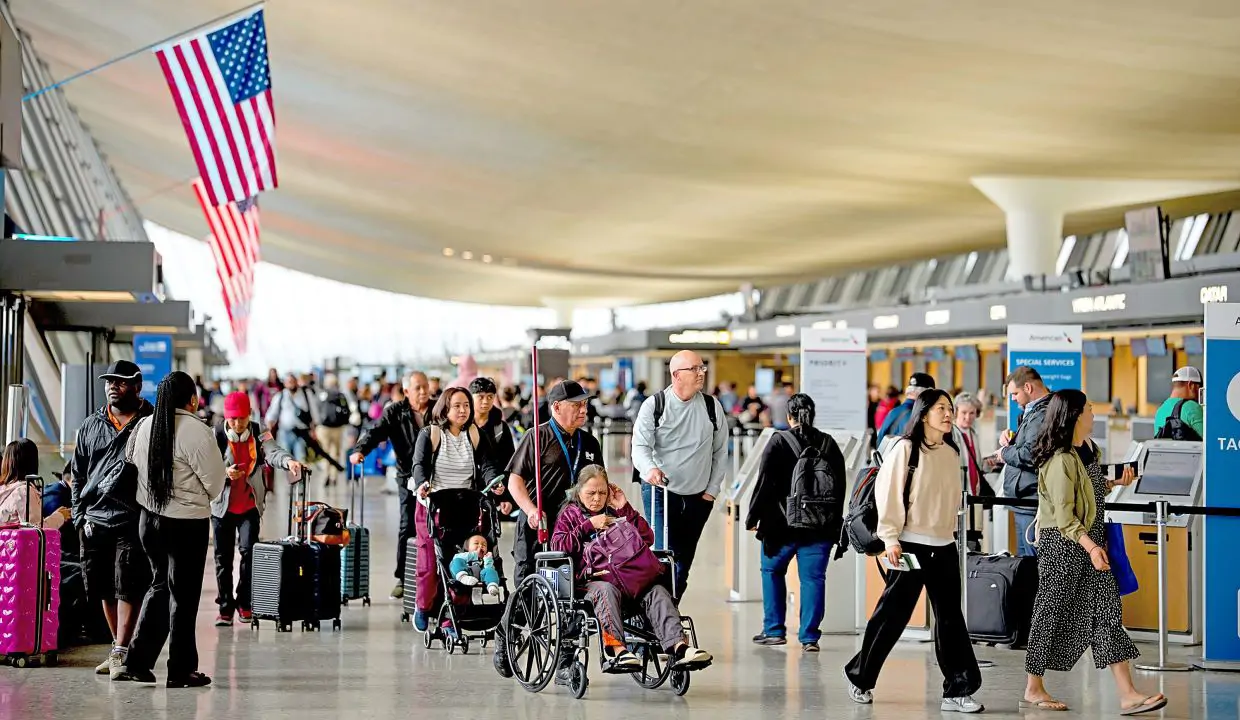 The travel divide: Now airlines are heightening the class war among the mass affluent too, says the writer. — Getty Images/TNS
GETTING on an aeroplane has become the perfect metaphor for life in America. On the one hand, flying has become cheaper and more accessible. On the other, it has become more stratified and stressful.
Sure, everyone likes those US$199 (RM813) fares, but no one likes having to shuffle through the first-class cabin, where the amenities are right in your face, on their way to their middle seat in coach, where there is no room in the overhead bins.
Now airlines are heightening the class war among the mass affluent, too. New fare categories are being introduced for overseas business class: Passengers still get the flat bed, but not the fancy lounge or the ability to pick their seat. Soon they’ll probably take away the ice cream. Just when I thought I had finally made it.
I know, I know: Break out the tiny violins. But what’s happening in the airline industry can shed light on what’s happening in the larger economy, where so many Americans are richer than they used to be but also more dissatisfied.
First, there is the fact that more Americans now fly. In the early 1970s, fewer than one in four people flew in a given year, and less than half had ever flown at all. Now almost half have flown in the last year, and 86% have flown in their lifetimes. Flying became more common in part because it became much cheaper. In 1993, the average domestic airfare from Chicago – to all the places you can go from O’Hare – was US$978 (adjusted for inflation, equivalent to RM3,995). In 2026, it was US$421 (RM1,720).
This was the result of a number of factors: deregulation, better technology, more transparent price comparisons and, not insignificantly, higher incomes. Another reason for the decline in prices is that airlines changed their business model, unbundling services and practicing more price discrimination.
Not everyone – actually, almost no one – likes these developments. Customers resent having to pay extra to check a bag or pick their seat, which are now smaller. And the meals are terrible, if they’re offered at all.
But all this penny-pinching means that, when it comes to fares, airlines can pass along more savings. Meanwhile, first class remains pretty great, especially for overseas trips – where you get a flat bed and the sundae bar. It’s also worth noting that these expensive tickets, which can cost thousands of dollars, subsidise the cheaper fares for everyone else.
Overall, this arrangement is better, because it allows more people to fly more often. But that doesn’t change the fact that, for people in coach, flying is now a less pleasant experience. And not just objectively, but relatively: It’s hard enough to deal with all the indignities, but what’s infuriating is that there are people on the very same plane who don’t have to deal with them at all.
Given the emerging trends in the wider economy, it’s hardly surprising that the airline industry is now opting for even more stratification. Both United and Delta will soon offer new fare categories for overseas business class, undoubtedly driven by rising costs, more volatile energy prices, and higher demand from affluent travellers who are still price sensitive.
The new categories mean airlines will be able to serve more business-class passengers at different prices. This should make some consumers better off, since it means more people get better seats. But it is also in a sense a service cut, since those seats come with fewer perks.
In the wider economy, as more people enter the upper middle class, they demand better goods and services. But there is not infinite supply, so the market responds with even more stratification. That’s how we end up with airline seats aimed at the top 5% or the top 2% (the 1% fly private).
Over the next few decades, expect more of this in other areas too. Technology will reshuffle the economy and make some people incredibly wealthy and many others just better off. The US may also face a higher inflationary environment, while technology offers businesses more ways to know customers’ individual preferences – and charge accordingly.
In other words: Whether we like it or not, more price differentiation is in our future. Personally, I’d be happy to get a cheaper flatbed seat, even if I have to watch the person in front of me eat his ice cream. — Bloomberg Opinion/TNS
Bloomberg Opinion columnist Allison Schrager is also a senior fellow at the Manhattan Institute and author of ‘An Economist Walks Into a Brothel: And Other Unexpected Places to Understand Risk’.


