
EPA Power Plant Rollback To Add 123 Million More Tons of CO2
By Felicity Bradstock - Sep 27, 2026, 10:00 AM CDT
- The repeal is expected to add 123 million metric tons of CO2 over the next decade, unwinding rules the EPA itself once projected would cut emissions by 1 billion tonnes by 2027.
- Administrator Lee Zeldin frames the move as ending the “war on coal,” but the EPA's new analysis leaves out the value of the 1,200 premature deaths its old rules were meant to prevent.
- The Sierra Club is heading to court over the rollback, which lands the same month the UN warns the world is on track to blow past the 1.5°C warming threshold.
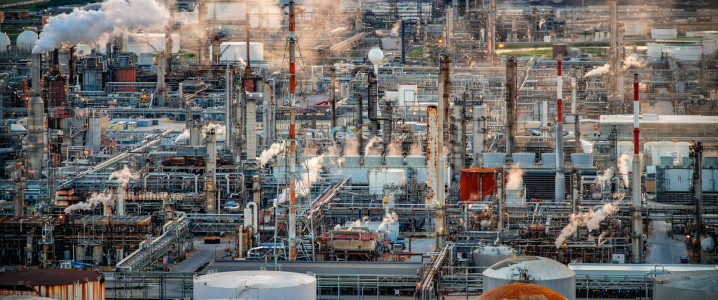
The U.S. Environmental Protection Agency (EPA) announced in September that it will relinquish its authority to regulate greenhouse gas emissions from power plants under the Clean Air Act, a tool previously used to tackle climate change. This effectively removes any limits on emissions from coal and gas plants and reduces the government’s ability to curb this pollution.
When the carbon pollution standards for power plants were introduced under the Biden administration in 2024, the EPA said it expected the new rules to reduce greenhouse gas emissions by 1 billion tonnes by 2027 and provide $370 billion in net benefits. The stricter standards were also expected to prevent 1,200 premature deaths and 360,000 asthma attacks in 2035 alone by improving air quality.
The EPA expects the new move to result in an additional 123 million metric tonnes of carbon dioxide released into the atmosphere over the next decade. The new EPA analysis does not factor in the financial benefit of lives saved through reduced air pollution in its calculations; therefore, it estimates the move will save power plant operators $370 million in direct compliance costs, demonstrating where the Trump administration’s priorities lie.
The decision followed President Trump’s earlier-in-the-year move to overturn the foundational 2009 EPA endangerment finding that greenhouse gases pose a significant threat to public health and the environment. In February, the EPA also scrapped pollution standards for cars and trucks.
EPA administrator Lee Zeldin said the Trump administration made the rule change to end the “war on coal”. Zeldin said, “Americans will see a decrease in electricity prices, but this is just the beginning,” during a G20 meeting in Houston in September. He added, “We are working to go even further so that American energy can be fully unleashed. Realising the full potential of American energy means more jobs, lower prices and a more prosperous America.”

Meanwhile, the EPA released a statement in which it said, “Models continue to show that GHG (greenhouse gas) emissions from power plants have no material impact on global climate change. In fact, if all carbon dioxide were eliminated tomorrow, there would be no meaningful climate impact.”
The statement from the EPA is strongly at odds with the latest climate science. In fact, the U.S. Energy Information Administration stated in 2024, “Scientists know with virtual certainty that high levels of greenhouse gases in the atmosphere tend to warm the planet. In computer-based models, rising concentrations of greenhouse gases result in a rising average surface temperature of the Earth over time. Rising temperatures may produce changes in precipitation patterns, storm severity, and sea level. Collectively, this phenomenon is commonly referred to as climate change.”*
More recently, a University of California at Merced and the Union of Concerned Scientists study found that “climate change from all climate-warming greenhouse gas emissions over the last 70 years has resulted in a 36 per cent decline in annual average mountain snowpacks, the major source of surface water in Western [U.S.] states.”
Electricity generation in the United States alone accounts for a quarter of the country’s greenhouse gas emissions. If the sector were a country, it would be the fifth-largest carbon polluter worldwide, after China, the United States, India, and Russia.
Related: Beijing's Iran Oil Trade Draws Fresh Criticism From Capitol Hill
Environmental groups were quick to respond to the latest rule change with legal action. Holly Bender, chief programme officer at the Sierra Club, stated: “This is full-throated climate denial while the climate crisis happens in real time, and a shocking betrayal of the American public.” Bender added, “The Sierra Club will fight back against this reckless and dangerous proposal with everything we have in the courts, in Congress, and in communities across the country.”
The move goes hand in hand with the Trump administration’s plans to double down on natural gas development and to save coal plants across the country that were previously set to retire. Both the supply and demand of U.S. natural gas are expected to rise to record highs this year and next, to outpace China’s gas development, according to the U.S. Energy Information Administration (EIA).
At the same time, the move follows a recent United Nations announcement warning that the world is set to overshoot the 1.5°C goal to limit warming above pre-industrial levels. The recent UN report warns that rising temperatures will lead to more extreme weather events, such as heat waves and floods, as well as glacier melt, rising sea levels, and coral bleaching. Changes in crucial global systems could also occur, such as the weakening or collapse of ocean currents that carry heat northward from the tropics, with the potential to “reshape the world forever.”
As the UN and several other global institutions warn of the severely detrimental effects of climate change, driven by greenhouse gas emissions, the Trump administration is acting in contradiction to international climate science. Trump administration's moves to weaken air quality standards across various sectors are expected to drive up U.S. greenhouse gas emissions over the coming years, as many other countries around the globe are racing to bring emissions down.
By Felicity Bradstock for Oilprice.com
More Top Reads From Oilprice.com
- Nigeria Joins IEA As Crude Output Hits Six-Year High
- North Carolina Regulators Reject Duke Energy Gas Power Plant
- Brazil's Energy Mix Goes Green Even As Oil Production Climbs
Download The Free Oilprice App Today


ADVERTISEMENT
Set us as your preferred Google source
FACEBOOK Twitter LINKEDIN REDDIT PRINT
Previous Post\ \ North Carolina Regulators Reject Duke Energy Gas Power Plant

Felicity Bradstock
Felicity Bradstock is a writer and journalist based in Mexico City. She writes for energy websites and covers several other industries, as well as writing…
Related posts
U.S. Oil, Gas Drilling Perks Up As Pressure Mounts Why WTI Is Suddenly Trading $12 Below Brent Global Gas Squeeze Could Last Through Next Summer
Leave a comment
First Name
Last Name
That email address is already in the database. Please login to your account to post your comment, or enter a different email address to continue with your comment & account creation.
Captcha
Comment
Please understand that, by submitting this form, you will be creating a free OilPrice.com account, and therefore agree to abide by our Terms of Use. Your details will be stored in our database and shared with our third party mailing list provider. You will be sent an email containing a link that will ask you to generate a new password - please follow the link to complete your OilPrice account activation.
We will save the information entered above in our website. Your comment will then await moderation from one of our team. If approved, your data will then be publically viewable on this article. Please confirm you understand and are happy with this and our privacy policy by ticking this box. You can withdraw your consent, or ask us to give you a copy of the information we have stored, at any time by contacting us.
ADVERTISEMENT
ADVERTISEMENT
Most Popular
 \ \ Big Oil’s Production Keeps Soaring Despite Deep Spending Cuts
 \ \ Why WTI Is Suddenly Trading $12 Below Brent
  \ \ White House Rules Out Diesel Export Ban as Prices Surge Above $6.50
  \ \ Saudi Pipeline Restart Fails to End Oil Market Tightness
  \ \ Global Refinery Crunch Pushes Diesel Prices to New Records

reCAPTCHA
Recaptcha requires verification.
protected by reCAPTCHA


