
Breaking News: US Government Presents Regulatory Gift to Gas Automakers
By Andrew Topf - Sep 29, 2026, 5:00 PM CDT
- The U.S. has sharply lowered fuel-economy requirements, cutting the 2031 fleetwide target from 50.4 mpg to 34.9 mpg and favoring gasoline-powered vehicles.
- Automakers could save more than $60 billion in technology costs, while the rollback also eliminates a credit-trading system that benefited EV manufacturers.
- The move widens the regulatory gap with Europe and China, which continue pushing stricter efficiency rules and faster vehicle electrification.
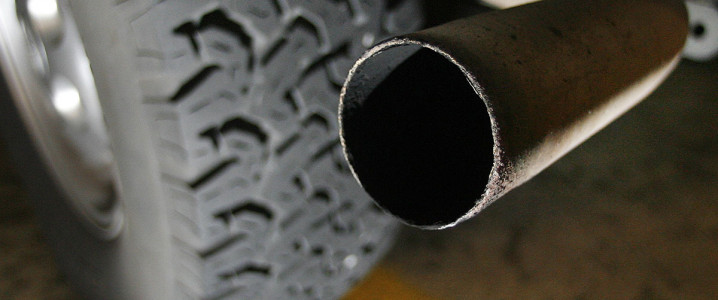
The US government on Monday finalized new lower vehicle fuel economy standards — reversing a push by the Biden administration to build more fuel-efficient vehicles.
The move is broadly seen as helping sales of gas-powered cars and trucks at the expense of electric vehicles.
The Alliance for Automotive Innovation called the rollback an “appropriate course correction” that aligns fuel economy standards with market realities and legal requirements. ( Automotive News)
Environmental groups countered that the rollback gives automakers a break while US drivers continue to grapple with sharply higher fuel prices due to the war in Iran.
The Transportation Department said it was finalizing a fleetwide average of 34.9 miles per gallon (14.7 km per liter) by 2031, down from 50.4 miles per gallon (21.4 km per liter) under Democratic former President Joe Biden.
In 2024, the Biden administration finalized rules to push automakers to build more electric vehicles to meet rising fuel-efficiency standards. Biden increased required fuel efficiency for cars by 8% annually for model years 2024 and 2025, 10% for 2026 and 2% annually from 2027 to 2031.
The lower standards mean higher global carbon emissions, a slowdown in the worldwide shift to electric vehicles, and a strategic retreat by the US from the global clean-energy race.
American drivers will burn more gasoline, adding billions of tons of extra greenhouse gases into the atmosphere and undermining global climate goals. Related: US Distillate Stocks Continue to Fall As Crude Inventories Build
The policy encourages the production of larger, less efficient gas-powered trucks and sports utility vehicles, keeping global oil demand high for decades.
It also ends a credit-trading system automakers used to comply with requirements, effective in model-year 2028, thus removing a major financial cushion for pure electric vehicle pioneers like Tesla and Rivian.
International car companies such as Toyota, Volkswagen and Hyundai can now sell more profitable gas vehicles in the US while keeping EV development focused elsewhere.
The Trump administration estimates technology costs will drop $60.6 billion through 2031, with Stellantis saving $6.6 billion, Ford $5.8 billion, Toyota $4.5 billion and Honda $4.1 billion, Automotive News reports.
While the US has finalized sharply lower standards, the European Union and China are moving in the opposite direction with strict, legally binding timelines.
Europe's regulations require a 100% reduction in tailpipe emissions for new cars by 2035. This creates a legal phase-out of traditional internal combustion engines (ICE).
China approaches vehicle regulation from two sides: a strict fuel consumption standard for gas cars and an aggressive New Energy Vehicle (NEV) mandate.
China uses a “dual-credit” system that forces automakers to accumulate points by manufacturing a high percentage of EVs and plug-in hybrids. This strategy has allowed Chinese automakers to capture roughly 60% of global EV sales.
While the US is just measuring gas consumption, China implemented a law which regulates the efficiency of electric car batteries. This forces companies to build lighter, longer-range EVs rather than just larger batteries.
The bottom line? The US has essentially hit the brakes on forcing its auto industry toward electrification, giving domestic manufacturers breathing room to focus on highly profitable gas SUVs and trucks.
Meanwhile, Europe and China are continuing down a strict regulatory pipeline, forcing global automakers to build highly advanced electric drivetrains if they want to access the European and Asian markets.
Fuel economy or greenhouse gas (GHG) emission standards for new passenger vehicles currently exist in over 40 countries, covering more than 80% of new passenger vehicle sales worldwide.
The primary regulatory drivers include the United States, the European Union, China and Japan, which together represent the largest blocks of global fuel consumption and vehicle manufacturing.
Most of these national and regional policies rely on corporate-average fuel economy (CAFE) or fleet-average greenhouse gas tailpipe limits, scaling targets based on vehicle attributes like size or weight rather than imposing a flat standard across all classes.
By Andrew Topf for Oilprice.com
More Top Reads From Oilprice.com
- LNG Canada to Double Export Capacity After Shell Approves Phase 2
- Saudi Arabia Restarts Red Sea Crude Oil Loadings
- India Looks to Boost Exploration as Hormuz Crisis Threatens Supply

Download The Free Oilprice App Today


ADVERTISEMENT
Set us as your preferred Google source
FACEBOOK Twitter LINKEDIN REDDIT PRINT
Previous Post\ \ White House Weighs Red-Dyed Diesel Relief as Fuel Prices Soar

Andrew Topf
With over two decades of journalistic experience working in newspapers, trade publications and as a mining reporter, Andrew Topf is a seasoned writer specializing in…
Related posts
Iran Threatens Middle East Energy Infrastructure as Hormuz Standoff Deepens Trump and Xi Buy Time, But Solve Almost Nothing Iran Talks Take the Heat Out of the Oil Rally
Leave a comment
First Name
Last Name
That email address is already in the database. Please login to your account to post your comment, or enter a different email address to continue with your comment & account creation.
Captcha
Comment
Please understand that, by submitting this form, you will be creating a free OilPrice.com account, and therefore agree to abide by our Terms of Use. Your details will be stored in our database and shared with our third party mailing list provider. You will be sent an email containing a link that will ask you to generate a new password - please follow the link to complete your OilPrice account activation.
We will save the information entered above in our website. Your comment will then await moderation from one of our team. If approved, your data will then be publically viewable on this article. Please confirm you understand and are happy with this and our privacy policy by ticking this box. You can withdraw your consent, or ask us to give you a copy of the information we have stored, at any time by contacting us.
ADVERTISEMENT
ADVERTISEMENT
Most Popular
 \ \ Why WTI Is Suddenly Trading $12 Below Brent
 \ \ White House Rules Out Diesel Export Ban as Prices Surge Above $6.50
  \ \ Why Are Diesel Prices So High?
  \ \ 5 Energy Stocks Positioned for a Prolonged Iran War
  \ \ Canada’s Oil Patch On Track For Biggest M&A Wave In A Decade



By signing up to our newsletter, you agree for your email address to be shared with our third party mail providers.
ADVERTISEMENT
ADVERTISEMENT
EXXON Mobil-0.35
Open57.81Trading Vol.6.96MPrevious Vol.241.7B
BUY 57.15
Sell 57.00

reCAPTCHA
Recaptcha requires verification.
protected by reCAPTCHA


