
Japan, South Korea and the U.S. Forge a New Nuclear Alliance
- Japan and South Korea are ramping up nuclear expansion and syncing it with Washington, folding energy policy into trilateral security cooperation.
- The US, Japan and South Korea signed a trilateral SMR cooperation agreement in July to give countries an alternative to Chinese and Russian reactor vendors.
- AI-driven power demand and fossil fuel supply disruptions from the wars in Russia and Iran are accelerating a global nuclear revival.
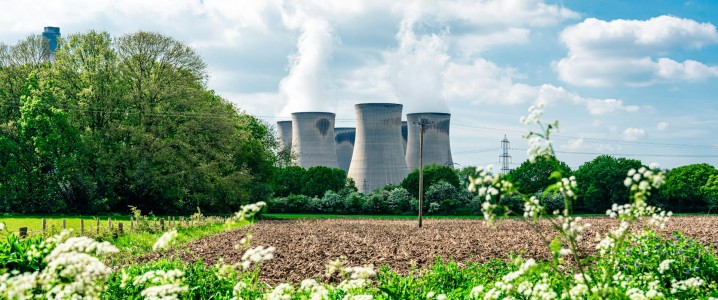
Northeast Asia is experiencing a rapid nuclear energy revival as Japan and South Korea move to prioritize the baseload clean energy source into their energy security strategies. Not only are the two major economies ramping up nuclear energy expansion, they are also changing the geopolitics of how and with whom they plan these expansions. As the artificial intelligence boom pushes an all-of-the-above approach to energy expansion and the war in Iran catalyzes a transition away from reliance on international fossil fuel supply chains, a new nuclear energy alliance is emerging between Japan, Korea, and the United States.
After the 2011 nuclear disaster in Fukushima, Japan swore off of nuclear energy entirely, planning to swiftly decommission its entire sector. But over the past decade and a half, the relative merits of nuclear energy for the country’s energy security, independence, and climate goals have pushed the technology back into the spotlight. As for South Korea, the nuclear energy industry has seen steady growth for years now, continuing to develop even as different governmental regimes with diverging views on nuclear power have come and gone. And now both have set extremely ambitious targets to continue growing their respective sectors at a rapid pace over the coming decades.
“Together, the two countries are reshaping the nuclear politics of Northeast Asia and doing so increasingly in concert with Washington, as energy policy folds into the broader architecture of trilateral security cooperation,” the Diplomat recently reported. This alliance offers strategic economic and political benefits for all involved, with a particularly strong geopolitical incentive for the United States.
“With Russia and China as the only realistic nuclear vendors for many developing countries, Washington has a clear interest in ensuring that Japan and South Korea enter the race. It would benefit Washington if its two Northeast Asian allies, rather than Beijing or Moscow, become the default suppliers of reactor technology to the rest of the region.” This logic extends to the national security concerns of Japanese and Korean leadership as well. It is in both of the nations’ best interest to limit the reach and influence of China in their energy markets. One way to do that is to ensure that these markets’ nuclear reactors are not made in China – or Russia, for that matter.
Nuclear energy is experiencing a renaissance across the globe as energy demand from AI hyperscalers, continued fossil fuel supply chain disruptions from the wars in Russia and Iran, and climate concerns highlight its many benefits. Nuclear power is a proven technology capable of producing emissions-free energy at all hours of the day, eschewing any need to build up any energy storage capacity, a necessity where utility-scale solar and wind power are concerned.
“With energy security now ranking alongside climate commitments as a top policy priority, nuclear power appears positioned to play a central role in the global electricity landscape through mid-century,” the Foreign Policy Journal reported earlier this year. However, this development is also giving China and Russia newfound opportunities to expand their influence over international critical infrastructure.
While traditional nuclear reactors continue to dominate new capacity additions, there is also a growing interest in next-gen nuclear energy technologies including nuclear fusion and small-scale modular reactors (SMRs). The United States, Japan, and South Korea signed a cooperation agreement for the deployment of SMRs in July of this year, solidifying the new nuclear triumvirate. According to the U.S. Department of State, the memorandum "outlines opportunities for our three countries, which have complementary advantages in the civil nuclear field, to encourage mutually beneficial cooperation among their respective nuclear industries."
"This framework aims to foster fleet deployment models that de-risk project development, achieve economies of scale, catalyse private investment, streamline licensing processes, and optimise supply chains,” the official statement continued. "A coordinated trilateral approach positions American, Japanese, and Korean firms to provide partners in the region with more competitive alternatives to meet their growing energy demands and to uphold the highest standards of nuclear safety, security, and non-proliferation as new reactor technology increasingly comes online."
By Haley Zaremba for Oilprice.com
More Top Reads From Oilprice.com
- Rosneft CEO: China Calls The Shots in Oil Markets, Not OPEC
- How The U.S. Fell Behind China On Nuclear Power
- U.S.-Venezuela Oil Deal Threatens China’s Oil-Backed Loans
Download The Free Oilprice App Today


ADVERTISEMENT
Set us as your preferred Google source
FACEBOOK Twitter LINKEDIN REDDIT PRINT
Previous Post\n\nAmerica Is Betting Big on a New Generation of Small Nuclear Reactors

Haley Zaremba
Haley Zaremba is an energy journalist and researcher with more than a decade of professional experience covering global energy systems, land and natural resources, and…
Related posts
How The U.S. Fell Behind China On Nuclear Power America Is Betting Big on a New Generation of Small Nuclear Reactors Why Uranium Stocks Are Falling as U.S. Production Triples
Leave a comment
First Name
Last Name
That email address is already in the database. Please login to your account to post your comment, or enter a different email address to continue with your comment & account creation.
Captcha
Comment
Please understand that, by submitting this form, you will be creating a free OilPrice.com account, and therefore agree to abide by our Terms of Use. Your details will be stored in our database and shared with our third party mailing list provider. You will be sent an email containing a link that will ask you to generate a new password - please follow the link to complete your OilPrice account activation.
We will save the information entered above in our website. Your comment will then await moderation from one of our team. If approved, your data will then be publically viewable on this article. Please confirm you understand and are happy with this and our privacy policy by ticking this box. You can withdraw your consent, or ask us to give you a copy of the information we have stored, at any time by contacting us.
ADVERTISEMENT
ADVERTISEMENT
Most Popular
 \n\nWhy Oil Majors Don’t Want to Build New U.S. Refineries
 \n\nNew Tech Breakthrough Aims To Solve The World's Plastic Waste Problem
  \n\nOil Prices Surge as U.S. and Iran Exchange Strikes
  \n\nU.S.-Venezuela Oil Deal Threatens China’s Oil-Backed Loans
  \n\nU.S. SPR Depletion Threatens Further Oil Price Volatility

ADVERTISEMENT
ADVERTISEMENT
EXXON Mobil-0.35
Open57.81Trading Vol.6.96MPrevious Vol.241.7B
BUY 57.15
Sell 57.00


