
America’s Electricity Boom Is Outrunning Its Power Grid
By Haley Zaremba - Aug 29, 2026, 12:00 PM CDT
- NERC identifies nine of 15 U.S. assessment areas as facing elevated or high resource-adequacy risks during 2026–2030.
- U.S. electricity demand is forecast to grow by nearly 2% annually through 2030, with data centers responsible for about half of the increase.
- Transmission development is struggling to keep pace, with at least 390 of nearly 900 planned or under-construction projects delayed.
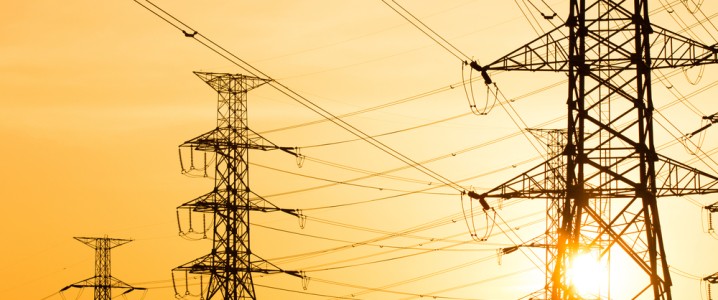
The United States’ energy grid is under extreme duress as rapid electrification and energy demand place increasing and unprecedented demand on transmission infrastructure. The artificial intelligence boom is sending energy demand rates into the stratosphere as hyperscalers race to develop energy-hungry data center campuses across the country. At the same time, clean energy campaigns and the renewable energy transition are increasingly electrifying our lives, from electric vehicles to heating and cooling systems.
An official assessment published in January by the North American Electric Reliability Corporation (NERC) found that 60 percent of grid regions in the United States (nine out of 15) are at ‘elevated’ or ‘high’ risk of falling short of energy demand as soon as 2030. High risk indicates that demand will soon outstrip supply in that region in a business-as-usual scenario. Elevated risk means that while resources are adequate, there could be critical shortfalls during extreme weather events. Some of the country’s most populous areas, including New York and Pennsylvania, are served by these at-risk grids.
This poses a major and urgent problem for the nation’s energy security. “In the short term, that imbalance can mean sending more power down transmission lines than they are rated to carry, risking equipment failure,” states a recent report from Atmos. “Over time, it can cause power outages, especially during periods of peak demand.”
This is not just a major threat to energy security and to the economy; it’s a matter of life and death. Periods of peak demand are generally caused by extreme weather events, in which people need heating or cooling as a matter of necessity rather than mere comfort. Nearly half a million people in the world died of heat every year between 2000 and 2019, according to a study from prestigious medical journal The Lancet, published in February of this year. The study estimates that air conditioning prevents approximately 190,000 deaths each year. Cold weather, too, poses a real and growing threat to human lives. And these extreme weather patterns are set to become more intense and more frequent going forward, meaning that energy demand will continue to grow, and its reliability will be more important than ever.
NERC, a non-profit watchdog organization covering grids in Canada, the United States, and Mexico, highlighted some critical drivers and bottlenecks of these elevated risk levels. The first and most notable of these is skyrocketing energy demand driven by the artificial intelligence boom. In the United States, electricity consumption is projected to rise by nearly 2 percent on average per year, more than doubling its growth rate over the last ten years, according to figures from the International Energy Agency.
The next threat to grid stability is the increased share of intermittent and weather-dependent resources like wind and solar power within the national energy mix. While energy storage presents a solution to rising variability of weather sources, expansion of battery storage systems and the development of longer-term storage solutions have not kept pace with production capacity additions.
Additionally, grids face major bottlenecks in transmission capacity additions to facilitate this massive growth in energy flows. “Transmission development in some areas is hampered by growing risks in procurement and supply chain delays. Other reasons for delays include economic impacts, planning and construction issues, permitting issues, or changing needs,” the NERC report details. “Of nearly 900 projects that were under construction or in planning for the next 10 years, at least 390 projects have been delayed from their originally expected in-service dates.”
As a result, timelines are growing longer and longer for additional capacity to actually connect to the grid. As the nation’s energy landscape has become increasingly diverse and competitive as renewable energy providers and now Big Tech companies crowd into the field, the generator interconnection process has gotten more complex and much, much slower.
“The necessary reforms are increasingly clear,” argues Atmos. “Grid operators can streamline interconnection reviews and reduce the cascading restudies triggered when projects withdraw from or change position in the queue. Utilities and regional planners can build transmission based on anticipated future needs rather than waiting for individual generators to apply. New data centers and other large electricity users can be coordinated with new generation and local grid upgrades. Stronger connections between the nation’s fragmented grids could allow regions to share surplus electricity and respond more effectively to periods of extreme demand.”
The problem is that these are huge problems involving a huge number of players and disparate grids, and coordinating such reforms is no easy feat. However, failure to coalesce around the common goal of expanding and updating the grid is not an option. The energy monster that AI has created is not going away, and its cost should not be tallied in human lives.
By Haley Zaremba for Oilprice.com
More Top Reads From Oilprice.com
- Aramco Finds a New Way to Keep Saudi Crude Flowing to China
- MIT Uses AI to Challenge a Century-Old Process for Mass Ammonia Production
- Qatar and Kuwait Restore 70% of Pre-War Oil Exports Through Hormuz
Download The Free Oilprice App Today


ADVERTISEMENT
Set us as your preferred Google source
FACEBOOK Twitter LINKEDIN REDDIT PRINT
Previous Post\ \ Oil-Rich Azerbaijan Bets Big on a Clean Energy Boom

Haley Zaremba
Haley Zaremba is an energy journalist and researcher with more than a decade of professional experience covering global energy systems, land and natural resources, and…
Related posts
U.S. Eyes 18th-Century Law to Seize and Sell Iranian Oil U.S. Oil Rig Count Falls by 5 as Gas Rigs Rise Oil Shrugs Off Trump’s ‘Toughest Sanctions in History’
Leave a comment
First Name
Last Name
That email address is already in the database. Please login to your account to post your comment, or enter a different email address to continue with your comment & account creation.
Captcha
Comment
Please understand that, by submitting this form, you will be creating a free OilPrice.com account, and therefore agree to abide by our Terms of Use. Your details will be stored in our database and shared with our third party mailing list provider. You will be sent an email containing a link that will ask you to generate a new password - please follow the link to complete your OilPrice account activation.
We will save the information entered above in our website. Your comment will then await moderation from one of our team. If approved, your data will then be publically viewable on this article. Please confirm you understand and are happy with this and our privacy policy by ticking this box. You can withdraw your consent, or ask us to give you a copy of the information we have stored, at any time by contacting us.
ADVERTISEMENT
ADVERTISEMENT
Most Popular
 \ \ U.S. Refiners Face New Crude Squeeze as Canada Cuts Oil Sands Output
 \ \ Oil Prices Fall as Iran Negotiation Hopes Return
  \ \ Aramco Finds a New Way to Keep Saudi Crude Flowing to China
  \ \ The U.S. Power Play in Iraq That Moscow and Beijing Didn’t See Coming
  \ \ The Biggest Victims Of Trump’s Economic D-Day On Iran



By signing up to our newsletter, you agree for your email address to be shared with our third party mail providers.
ADVERTISEMENT
ADVERTISEMENT
EXXON Mobil-0.35
Open57.81Trading Vol.6.96MPrevious Vol.241.7B
BUY 57.15
Sell 57.00


