Premium Content
Why More Venezuelan Oil Won’t Solve America’s Gasoline Problem
By Charles Kennedy - Aug 31, 2026, 6:00 PM CDT
- Trump’s Venezuela deal could eventually put downward pressure on oil and gasoline prices, but raising production substantially beyond the current 1.25 million bpd will require years of investment.
- More Venezuelan heavy crude is particularly valuable for U.S. Gulf Coast refiners, but with U.S. refineries already running near capacity, additional crude cannot immediately solve the global fuel shortage.
- Trump is expected to meet U.S. refiners and fuel retailers this week to discuss lowering gasoline prices, with Valero, Marathon Petroleum and PBF Energy among the companies expected to attend.
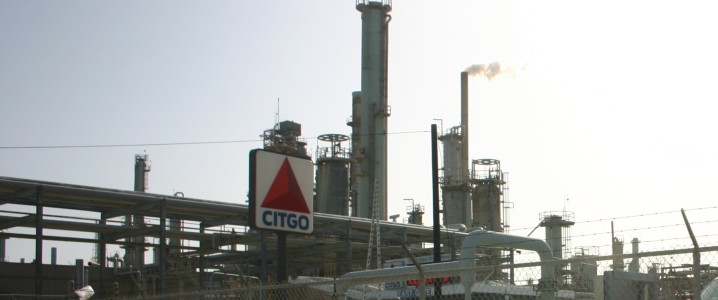
Venezuela has the largest proven oil reserves in the world, and its heavy crude is particularly well suited to the sophisticated refineries lining the U.S. Gulf Coast. More Venezuelan oil should help U.S. refiners, but that doesn’t translate directly into lower prices at the pump.
Trump announced Friday that the U.S. had secured majority control over Venezuelan fields containing more than 65 billion barrels of oil, saying the agreement would greatly increase U.S. supply and substantially lower gasoline prices “ long into the future.” On Sunday, he added another destination for Venezuelan crude, saying Washington would soon start using it to refill the Strategic Petroleum Reserve.
The deal gives the U.S. access to an enormous oil resource, but the effect on gasoline prices will depend on how much additional Venezuelan crude can actually be produced and where those barrels go.
Venezuela is currently producing roughly 1.25 million bpd, while the new projects are targeting production above 1.5 million bpd. Getting substantially beyond that will require more drilling, extensive workovers, improved infrastructure, reliableF access to diluents and significantly more drilling rigs, according to Rystad.
Venezuelan crude’s role in American refining is already substantial. U.S. imports from Venezuela averaged 637,000 bpd over the four weeks through Aug. 21, according to the EIA, reaching 662,000 bpd in the latest week. Venezuela was the second-largest U.S. crude supplier behind Canada during that period. Those barrels have become more useful as the U.S.-Iran war has disrupted crude and heavy fuel oil flows from the Middle East.
Related: Norway Wants Europe’s Energy Market, Without Sharing Its Trade-Offs
It’s not just about replacing lost barrels. The Gulf Coast spent decades building refineries capable of processing heavy, high-sulfur crude from Venezuela, Mexico and Canada. Their delayed cokers convert the residual material in those barrels into gasoline, diesel and other higher-value products. The shale boom flooded the U.S. with light crude that produces far less residual feedstock compared to Venezuelan Merey, which supplies both the crude and much of the heavy material needed to keep that equipment working.
Rystad expects heavy and extra-heavy crude and bitumen to account for roughly three-quarters of Venezuelan production through 2028, with the Orinoco Belt responsible for about 60% of total output. Higher Venezuelan production would therefore give Gulf Coast refiners a growing source of the heavy feedstock their most complex equipment was built to process, increasing competition with Canadian and other heavy grades.
The more immediate constraint on gasoline prices is refining capacity.
U.S. refinery utilization reached 97.4% in the week ending Aug. 21, the highest in nearly eight years, with crude inputs already at about 17.4 million bpd. Venezuelan barrels can replace more expensive or less readily available heavy feedstock and improve refinery economics, but replacing one crude barrel with another doesn’t add processing capacity.
And the shortage is global. Middle Eastern refinery runs are at about 7.3 million bpd, according to Kpler, down from 9.9 million bpd before the war in February. The region lost roughly 4 million bpd of refined-product supply relative to pre-conflict levels between March and August, including about 2.5 million bpd from lower refinery output. Kpler doesn’t expect Middle Eastern refinery throughput to return fully to pre-war levels before Q2 2027.
Fuel markets are pricing that shortage accordingly. According to S&P Global, the Gulf Coast diesel crack against WTI reached $91.06 per barrel on Aug. 25, up from $30 a year earlier, while the gasoline crack reached $40.43, compared with $16.40 a year earlier. S&P Global has offered two comparisons: ClearView Energy Partners estimates of a 2-3-million-bpd refined-product shortfall currently; and IEA estimates of 4.7 million bpd in lost global refinery throughput compared with 2025.
So, where does that leave us? On the slow road to lower prices at the pump.
More Venezuelan production can put some downward pressure on gasoline prices. Additional barrels increase global crude supply and can lower crude prices, while greater competition among heavy grades can reduce feedstock costs for Gulf Coast refiners. The effect on gasoline prices, however, is limited by the current shortage of refinery output rather than crude oil.
In other words, more Venezuelan crude can make the oil cheaper, but it can’t turn that oil into gasoline.
Over the longer term, substantially higher Venezuelan production can put downward pressure on crude prices and, in turn, gasoline prices. But those barrels will take years and billions of dollars of investment to develop, while the current fuel shortage is already costing American motorists. Regular gasoline is now above $4 per gallon, roughly $1 more than a year ago.
That has left the White House looking for more immediate answers. Trump is expected to meet U.S. refiners and fuel retailers this week to discuss lowering gasoline prices, with Valero, Marathon Petroleum and PBF Energy among the companies expected to attend. The meeting comes as refiners report strong earnings from the same tight fuel market pushing up prices at the pump, and Trump has publicly pressed the industry to do more to bring those prices down.
Venezuelan oil may eventually be part of the answer. But the new agreement is unlikely to add enough production before November to materially change what Americans are paying at the pump.
By Charles Kennedy for Oilprice.com
More Top Reads From Oilprice.com
- Venezuela Helped Build OPEC. Now It May Help Break It Apart
- Qatar Extends Force Majeure as Hormuz Crisis Still Blocks LNG Traffic
- MIT Uses AI to Challenge a Century-Old Process for Mass Ammonia Production
Download The Free Oilprice App Today


ADVERTISEMENT
Set us as your preferred Google source
FACEBOOK Twitter LINKEDIN REDDIT PRINT
Previous Post\n\nIran War Triggers Billions in New Oil Pipeline and Port Investment Next Post\n\nNew Tech Breakthrough Aims To Solve The World's Plastic Waste Problem

Charles Kennedy
Charles is a writer for Oilprice.com
Related posts
Iran War Triggers Billions in New Oil Pipeline and Port Investment Norway Wants Europe’s Energy Market, Without Sharing Its Trade-Offs Russian Oil Is No Longer India’s Easy Bargain
Leave a comment
First Name
Last Name
That email address is already in the database. Please login to your account to post your comment, or enter a different email address to continue with your comment & account creation.
Captcha
Comment
Please understand that, by submitting this form, you will be creating a free OilPrice.com account, and therefore agree to abide by our Terms of Use. Your details will be stored in our database and shared with our third party mailing list provider. You will be sent an email containing a link that will ask you to generate a new password - please follow the link to complete your OilPrice account activation.
We will save the information entered above in our website. Your comment will then await moderation from one of our team. If approved, your data will then be publically viewable on this article. Please confirm you understand and are happy with this and our privacy policy by ticking this box. You can withdraw your consent, or ask us to give you a copy of the information we have stored, at any time by contacting us.
ADVERTISEMENT
ADVERTISEMENT
Most Popular
 \n\nU.S. Refiners Face New Crude Squeeze as Canada Cuts Oil Sands Output
 \n\nSolar Has Crossed a Critical Economic Tipping Point
  \n\nOil Prices Fall as Iran Negotiation Hopes Return
  \n\nAramco Finds a New Way to Keep Saudi Crude Flowing to China
  \n\nThe U.S. Power Play in Iraq That Moscow and Beijing Didn’t See Coming