
Breaking News:
Canada’s New Oil Pipeline Challenged by Cold Lake First Nations
Could White Hydrogen Succeed Where Green Hydrogen Stumbled?
Green hydrogen has stalled, but…
Gulf Storm Threat Could Put 3 Million Bpd of Refining Capacity at Risk
A tropical disturbance could threaten…
Energy investors are raving about this new resource
"It's most important 8 minute read of my week…"
Premium Content
States Bet on Virtual Power Plants to Cut Grid Costs
By Felicity Bradstock - Oct 09, 2026, 12:00 PM CDT
- U.S. virtual power plant capacity has passed 40 GW, according to Wood Mackenzie, and the Department of Energy sees a path to as much as 160 GW by 2030.
- Green Mountain Power's $55-a-month home battery lease has turned its VPP into Vermont's largest power resource and anchors the utility's plan to end outages by 2030.
- California Gov. Gavin Newsom signed two VPP bills on Sept. 30 despite past utility opposition, adding the country's biggest power market to a push already underway in Virginia and Vermont.
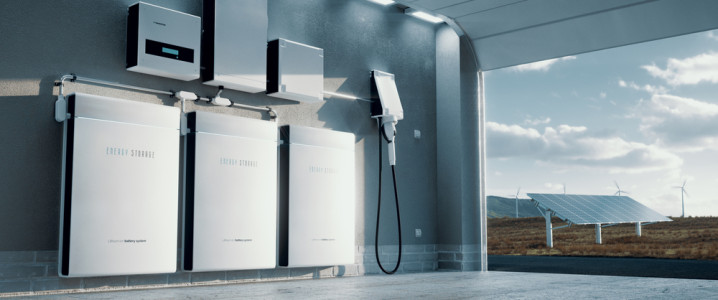
The United States has shown greater support for virtual power plants (VPPs) in recent years, as these systems are expanding across various states. A VPP is a collection of small-scale electricity generation resources that, together, can deliver electricity to the grid. When coordinated, a group of hundreds or thousands of households and businesses can use the latent potential of their thermostats, electric vehicles (EVs), appliances, batteries, and solar installations to charge or discharge, supporting grid flexibility.
When put together, these can provide many of the same energy services as a conventional power plant. Technologies such as EVs and chargers, heat pumps, home appliances, HVAC equipment, batteries, plug loads, and industrial mechanical equipment can be combined to create a VPP.
In the United States, the Department of Energy’s (DoE) Loan Programs Office is working to support deployment of VPPs across the country to make the U.S. grid more flexible, affordable, clean, and resilient as the economy electrifies. VPPs help address existing energy challenges, including rising costs, interconnection backlogs, peak-demand increases, and distribution-system congestion.
In the northeastern state of Vermont, Green Mountain Power (GMP), the state’s largest utility, has introduced a VPP initiative to combat the regular power outages caused by extreme weather events. The scheme is based on installing two batteries in participants’ homes, at a cost of $55 per month over a 10-year lease. This works out cheaper than the average cost of a backup generator.
More than 5,500 people across the state have invested in similar battery systems. These help provide backup power during an outage and allow households to participate in a VPP. The United States now has more than 40 GW of VPP capacity, according to an internal analysis by Wood Mackenzie. While this is still small compared to other power sources, a 2025 DoE report suggested that VPP capacity could rise to 160 GW by 2030, equivalent to about one-fifth of the country’s expected peak energy demand.
Vermont’s VPP has transformed into the state’s largest power source under the GMP programme. GMP saw an increase in enrolments in the battery lease programme in 2023 after state regulators lifted the cap. Enrolment has continued growing steadily in recent years, with 2,500 people enrolling since 2023. GMP now aims to eliminate all power outages by 2030, supported by the battery programme and infrastructure improvements, such as undergrounding power lines. The utility is now considering providing thousands of customers in some rural and more outage-prone areas batteries at no cost, with some pilot projects already underway.
Artificial intelligence (AI) has become a major driver for VPP deployment in recent years, as the tech sector races to acquire sufficient power to run new data centres. Tech companies have invested heavily in developing nuclear reactors, gas turbines, and wind and solar farms to power their data centres, many of which will take years to build. However, the use of VPPs could provide a more immediate power source.
The U.S. power grid runs at an average of around 50 per cent capacity. This ensures that it is prepared for peak energy use in the hot summer or cold winter months. However, it is expensive to have so much of the grid power sitting idle most of the time. If utilities increased utilisation by just 10 per cent, it could save consumers over $100 billion over the next decade, according to the head of the industry-led campaign, the Utilise Coalition, Ian Magruder.
As AI-powered systems analyse the grid hour by hour across an entire year, they do not have to plan for theoretical peaks. This allows for greater flexibility, such as temporarily reducing power for 0.5 per cent of the year or adding a battery, which could reduce the need to construct new transmission infrastructure.
Virginia recently passed legislation for a 450-MW VPP pilot programme, while Minnesota committed to 200 MW of power. These types of programmes can be deployed in six months to a year, which is much faster than it takes to develop a gas or renewable energy project. However, the government must introduce incentives to encourage more utilities to develop VPP programmes rather than to spend on new infrastructure if it hopes to accelerate deployment.
In California, in a bid to reduce state utility spending, Governor Gavin Newsom recently signed into law a slate of energy-affordability legislation, including a policy that is expected to accelerate the rollout of VPPs. This came as a surprise to many, given that several of the state’s big utilities had previously voiced opposition to such a move. Two bills, Senate Bill 905 and Senate Bill 913, are expected to create new opportunities for VPPs to reduce utility costs.
Several states have introduced legislation to encourage the development of VPPs in recent years, as policymakers seek faster access to alternative power. The development of broader VPP schemes could help reduce the need to invest heavily in new transmission infrastructure and address underused power systems.
By Felicity Bradstock for Oilprice.com
More Top Reads Fr om Oilprice.com
- 5 Stocks Cashing In as $100 Oil Pushes Drivers Toward Electric
- Why Record Crude Output Can’t Solve America’s Diesel Crisis
- The Iran War Is Fueling a Boom in Clean Energy
Download The Free Oilprice App Today
Previous Post\ \Iran War Energy Shock Puts Hydrogen Back on the Table
Felicity Bradstock
Felicity Bradstock is a writer and journalist based in Mexico City. She writes for energy websites and covers several other industries, as well as writing…
Related posts
Trump Puts Iran Strikes on Hold as Hurricane Threatens Oil Supply Hurricane Isaias Shuts In 1.28 Million Bpd of Gulf Oil Production World’s Top Crude Trader Isn’t Ruling Out $200 Oil Just Yet
Leave a comment
First Name
Last Name
That email address is already in the database. Please login to your account to post your comment, or enter a different email address to continue with your comment & account creation.
Captcha
Comment
By signing up to our newsletter, you agree for your email address to be shared with our third party mail providers.


