
Breaking News:
Ukraine Strikes Major Russian Oil Refinery
Here’s How Trump’s Using The Graham Act To Trap Russia And Crush Iran
Hurricane Isaias Shuts In 1.28 Million Bpd of Gulf Oil Production
Energy investors are raving about this new resource
Venezuela's Oil Recovery Gains Momentum as New Drilling Rigs Arrive
- NABEP is deploying 11 workover rigs and two drilling rigs to accelerate Venezuela's oil production recovery.
- Production has surged to 200,000 bpd, according to NABEP, with independent Rystad Energy estimates supporting the latest output figure.
- NABEP targets over 1 million bpd, with a proposed $100 billion investment program aimed at reviving Venezuela's vast oil reserves.
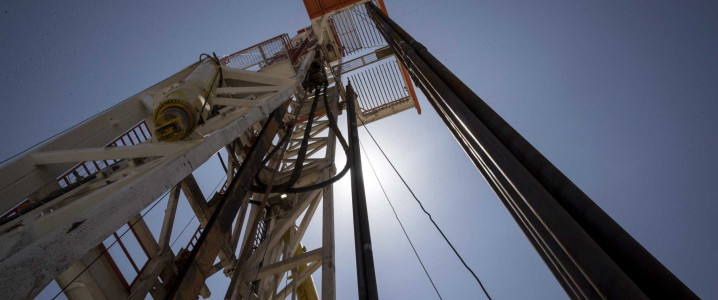
Eleven new 550-horsepower workover rigs will work in Venezuela’s oil fields this month. According to North American Blue Energy Partners (NABEP), which announced the deployment on 13 October, they are the first new mobile repair-and-maintenance units to enter the country’s fields in more than 15 years. Two 1,500-horsepower drilling rigs arrived on 7 October, with more equipment to follow. The company says it has now bought 60 rigs, 30 steam boilers and 70 pieces of heavy machinery, which it describes as the country's largest heavy-equipment fleet.
On its own, a rig delivery is a small item. Its significance lies in what it is attached to. NABEP says its production has grown from 18,000 barrels per day to more than 200,000 in two years, backed by about $1 billion in company-funded investment, a figure it first published on 31 August when it announced its agreement with the US government. “NABEP is making serious and steady progress in increasing oil production,” said Alejandro Betancourt, the company’s founder and chief executive. The new rigs are the physical means by which that number is supposed to keep rising.
The timing matters. Oil markets lack barrels they can rely on. Brent is holding above $100, tanker attacks around the Strait of Hormuz keep coming, and freight and insurance costs are at record levels. Refiners from the US Gulf Coast to India want heavy crude that does not have to pass a chokepoint, and India’s imports of Venezuelan oil have just reached a seven-year high. Venezuela holds the world's largest proven reserves and produces about 1 million barrels per day, a third of what it once did. The question every operator now crowding into Caracas faces is the same: how quickly can idle capacity be turned into barrels? Related: Europe’s Gas Prices Close to 2022 High as Hormuz LNG Flows Remain Limited
Two sets of numbers, one direction
NABEP is the company at the center of the agreement with the US Departments of State and War announced on 31 August, which covers 17 fields and, according to the company’s announcement of the deal, the rights to commercialize more than 65 billion barrels of P1 reserves. Most coverage since has dealt with the structure of that deal, and on 1 October the ranking Democrats on five House committees and subcommittees asked for more information about it. Those are legitimate questions about governance. They are separate from the operating question, which is whether the barrels are real.
On that question, two sources point the same way. The company’s own figure, published in its 31 August announcement of the agreement and repeated on 13 October, is that production has risen from approximately 18,000 barrels per day to more than 200,000 in two years. The company dates that baseline to January 2024. It counts the PetroZamora fields on Lake Maracaibo in the state where it found them before it formally took over their operation that April. Independently, Rystad Energy assesses that production across operations associated with NABEP has risen from 90,000 barrels per day at the end of 2024 to 200,000 today.
The two measure different things over different periods. The company’s figure runs from January 2024, before most of its current portfolio was in place; Rystad’s starts at the end of that year and covers everything associated with the company, not just what it operates directly. They should not be set against each other. What gives the trend its weight is that an independent estimate and the operator’s own books both arrive at the same place: around 200,000 barrels per day, more than double where they stood at the start of 2025.
PetroZamora: the clearest case
The most detailed part of the record is in the west. PetroZamora comprises the Bachaquero, Lagunillas and Ceuta fields, some of the oldest producing acreage in the Maracaibo basin. NABEP has operated them since April 2024. According to the company, the fields were producing about 18,000 barrels per day at the start of that year, about 23,000 on the day it took over in April, and 25,000 on average in that first month. By mid-2026 they were producing 100,000.
That is a fourfold increase in a little over two years, from fields that had been in decline for years. No new reservoir was found. The oil was there, the wells were there, and much of the surface infrastructure was there. What was missing was the capital, equipment, and operating discipline to keep them running.
The company’s account of how it achieved the increase is unglamorous, which makes it more credible. Gas compression plants at Ceuta that had stopped running were restarted, the first in June 2024 and another in May 2025. Portable steam generators were put to work at Bachaquero and Lagunillas, where heavy crude does not flow without heat. Service rigs and well-rehabilitation barges returned to existing wells. Each step added a few thousand barrels. The workover rigs announced this week use the same method at greater scale: a workover rig moves from well to well, fixing what has failed and bringing production back one well at a time.
This is how brownfield recovery works anywhere, from the North Sea to southern Iraq. Gains come from hundreds of small interventions, sustained month after month, and they hold only for as long as the equipment and the people stay in place.
What it says about the wider recovery
The PetroZamora record matters beyond one company because it tests an assumption that has shaped a decade of commentary on Venezuela: that the sector’s decline was so deep that recovery would take a generation and tens of billions of dollars before the first additional barrel appeared.
The evidence points to something more practical. A large share of Venezuela’s lost production sits in existing fields with known geology. Where an operator has applied capital, equipment and experienced crews, output has responded within months. That is a faster and cheaper route to supply than any greenfield project, and it is the route now open to every operator returning to the country.
That does not mean the rest will be easy. The August agreement is expected, in the company’s words, to involve $100 billion of investment in production capacity and infrastructure, and NABEP’s stated near-term goal is to lift output above one million barrels per day. The first figure is a program to be funded in stages, not capital already deployed; the second would mean extending what has been done on a handful of assets to 17, including greenfield blocks in the Orinoco Belt that are a different engineering task from reviving wells on Lake Maracaibo. Heavy-oil production also depends on diluent, power, and export logistics that no single company controls, and monthly output will not move in a straight line.
Betancourt has worked in Venezuela’s oil sector for years, and the company’s approach reflects that. It is run as an operating business: the emphasis is on rigs, steam, compression and well work, and on the sequence in which they are applied. PetroZamora's production record measures that approach, and it is the measure by which he and the company should be judged as the portfolio grows.
NABEP is not the whole of Venezuela’s recovery and should not be presented as such. Other operators are raising output in the west and in the Orinoco Belt, and the policy changes in Caracas and Washington that reopened the sector apply to all of them. NABEP offers a dated, field-level record showing the method works, plus a fleet of equipment to apply it more widely.
The fields and the towns around them
Higher output also changes the economy around the fields. NABEP says it directly employs more than 5,000 people and supports more than 10,000 contract workers in Venezuela. Every restarted compression plant and every well brought back needs contractors, transport, maintenance crews, catering, and spare parts. On the eastern shore of Lake Maracaibo, where towns such as Lagunillas and Bachaquero were built around the oil industry and declined with it, that activity reaches local businesses long before national statistics register it. Those are the engineers, technicians, and service workers Venezuela will need if the recovery is to last.
What to watch
Three things will show whether this trajectory holds. The first is whether PetroZamora stays near 100,000 barrels per day through the coming year, since holding a level is harder than reaching it. The second is whether independent trackers such as Rystad and the vessel-tracking firms keep confirming what the company reports. The third is how quickly the new rigs translate into volume from the first of the fourteen further assets.
For a market paying more than $100 for crude and counting every tanker that clears Hormuz, the conclusion is practical. Venezuela’s additional barrels do not depend on a discovery or a technological breakthrough. They depend on operators doing in other fields what has already been done on Lake Maracaibo, and on the rigs to do it with.
By Cyril Widdershoven for Oilprice.com
More Top Reads From Oilprice.com
- India’s Annual Wind Power Installations to Double by 2030
- Ship-to-Ship Oil Transfers Surge Off India’s West Coast
- U.S. Wants World Bank to Drop Ban on Upstream Oil and Gas Funding
Download The Free Oilprice App Today
Download Oilprice.com on Apple Download Oilprice.com on Android
Previous Post\n\nEIA Says US Crude Inventories Down Nearly 9 Million Barrels Next Post\n\nThe Diesel Crunch Will Persist Well into 2027
Cyril Widdershoven
Cyril Widdershoven is a senior maritime, energy, and geopolitical analyst and Senior Advisor at Blue Water Strategy, specialising in the strategic intersection of shipping, ports,…
Related posts
Standard Chartered: Trump's Russian Diesel Won't Add New Supply The Diesel Crunch Will Persist Well into 2027 Exxon’s Oil Boom Could Keep Guyana’s Gas at Home
Leave a comment
First Name
Last Name
That email address is already in the database. Please login to your account to post your comment, or enter a different email address to continue with your comment & account creation.
Captcha
Comment
Please understand that, by submitting this form, you will be creating a free OilPrice.com account, and therefore agree to abide by our Terms of Use. Your details will be stored in our database and shared with our third party mailing list provider. You will be sent an email containing a link that will ask you to generate a new password - please follow the link to complete your OilPrice account activation.
We will save the information entered above in our website. Your comment will then await moderation from one of our team. If approved, your data will then be publically viewable on this article. Please confirm you understand and are happy with this and our privacy policy by ticking this box. You can withdraw your consent, or ask us to give you a copy of the information we have stored, at any time by contacting us.


