
Wind project faces referral due to long distance objectors, citing impacts of a wind farm that doesn’t exist
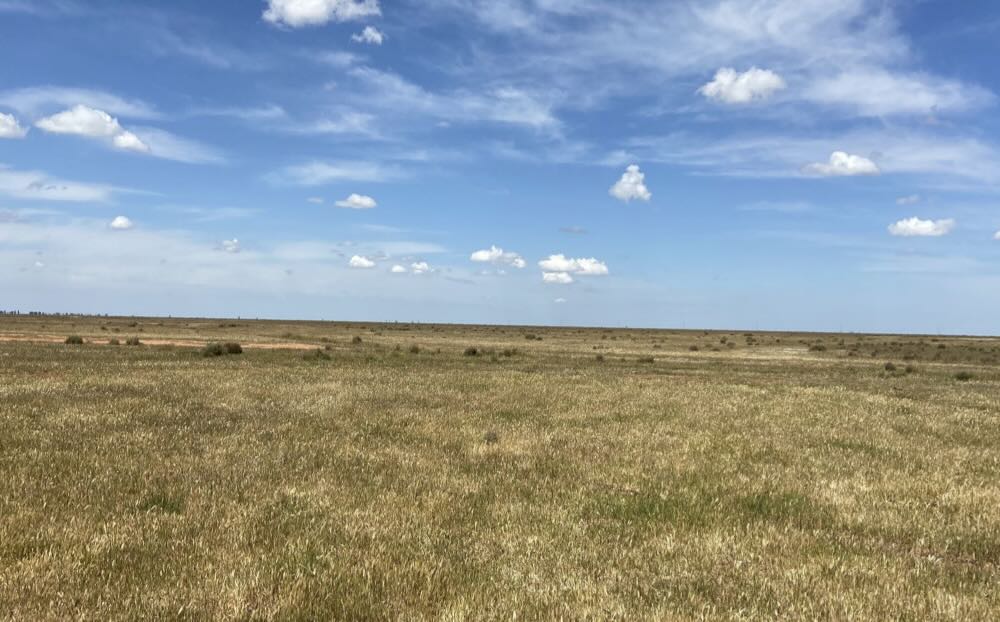 Bullawah wind site. Photo: Bay-Wa.
Jul 30, 2026
The NSW planning system continues to be held hostage by the actions of long distance objectors, and some complaints that border on the irrational – with agitators confusing wind projects, mixing wind and solar technologies and even citing the harmful impacts of a wind farm that does not exist.
As Renew Economy has documented on multiple occasions, many wind, solar and battery projects in NSW are forcibly referred to an independent planning review if there are 50 “unique” submission that object to the project, even if none make any sense.
There are indeed projects that elicit genuine concerns from the local community, and which properly merit further scrutiny. And these often result in significant changes. But the process is too often hijacked by the same groups of objectors, none of whom live within cooee of the project involved, or even in the same state.
The latest project to be taken hostage by this process is BayWa’s Bullawah wind project near Hay, which is seeking planning approval for up to 143 wind turbines totalling up to 1,000 megawatts (MW), along with a big battery sized at 359 MW and 718 megawatt hours.
The NSW Planning Department has been looking at this project for several years. There were no local objections from anyone with 15 kms of the project, and only five from people living within 50 kms. Most of 68 objections came from people living more than 100 kms away, with many of them interstate.
The submissions did not focus much on local issues such as visual amenity, noise, vibrations or traffic – just the very idea of renewables, and some wild claims that the objectors might have found on Sky News or toxic social media.
Many of the submissions came the usual suspects – regular objectors such as Ian McDonald, a Walcha grazier who opposes many projects and whose submission to Bullawah actually refers to another wind project he has objected to.
There are also a series of “SOS” (save our surroundings) groups that are notable for their consistent and familiarly short submissions, bad grammar and spelling mistakes.
The leader of one ginger group recently wrote to supporters to give advice on how to oppose renewable energy projects. The email shared with Renew Economy included a submission that could be copied or adapted: “Try to pick bits out that are relevant and put your own spelling mistakes in,” it urged.
And they do. Most are anonymous.
The standout submission against Bullawah, however, came from Rainforest Reserves, a group represented at this year’s Senate inquiry into climate disinformation by former journalist Chris Uhlmann and which, according to a report in the AFR, has recently been disbanded.
It has been successful in opposing projects in Queensland, now led by an LNP government which doesn’t like renewables anyway, and its work – including a widely discredited map of renewable projects– is still cited by the federal and state Coalition and Murdoch Media in their ongoing campaigns against the green energy transition.
In its submission against Bullawah, Rainforest Reserves cited a report from 2016 (Barron-Gafford et al. 2016, p. 8) that it said pointed to the significant “heat island” effects of large scale wind farms. But that study does not discuss wind farms at all, it is solely focused on solar projects.
The submission also confused the size of the Bullawah project with the total capacity of the south-west Renewable Energy Zone where it is located (2.5 GW), and then pointed to what it says have been the damaging impacts of the Junction Rivers wind farm.
“The Junction Rivers Wind Farm encountered similar issues with noise pollution affecting wildlife communication,” the submission claims.
“The koala population in the region experienced disruptions in their breeding patterns due to noise interference, and the greater glider population suffered from reduced access to nesting sites due to tree root damage caused by vibrations.”
That sounds really bad. The only problem is that the Junction Rivers wind farm does not exist. The company Windlab would like to build one there, near Balranald in the same part of NSW, but has not even started construction because it cannot get access to the grid.
BayWa notes that apart from the 16 submissions in support of the project, there were a further 22 submissions received from various government agencies, none of whom objected to the project, and Murrumbidgee Council also provided its support.
BayWa has made several amendments to the project as a result of the feedback, including a potential new route for turbine parts from the Port of Adelaide rather than Newcastle, potentially smaller turbines, and a different construction timeframe.
So far, however, the project has only gained grid access rights for 262.3 MW within the South West REZ, which offers limited capacity because of the regrettable undersizing of the new transmission line that links South Australia to NSW.
The IPCN – at the request of the state planning minister – has announced that a public meeting into the Bullawah project will be held on September 1 at Deniliquin to discuss objections. It will be interesting to see how many objectors turn up.
Three weeks ago, a public meeting called to hear objections to the Sundown solar farm at Spring Mountain was cancelled by the iPCN because none of the 133 objectors, almost all of them from long distances or interstate, were concerned enough to state their case, or to have their objections such to scrutiny.
The same thing happened earlier this year to the Burroway solar project: More than 80 people and groups opposed the solar project, but none could be bothered to speak to independent panel.
Meetings are also scheduled for the Dinaway and Winterbourne wind projects. Like that for Bullawah, it was requested by the minister at the start of the year. The Bullawah meeting has now been scheduled, but the others have not. BayWa had hoped to be building the project by now, but is still waiting for these final approvals.
The NSW government really needs to find a better way. There have been no wind farms reaching financial close in NSW since December, 2023, and only project – Uungula – is under construction. The state desperately needs new wind and solar to replace its ageing and increasingly decrepit coal fired generators.


