Mysterious Problems of a Key Plant. "It's Part of Strategic Infrastructure"
For several months, residents of Skórzec and the surrounding area have been protesting against the operation of an animal waste collection facility that has been functioning in the area for nearly 40 years. However, the matter is not as black and white as it might seem at first glance. Are the recent problems of the facility's owner the result of unfair competition?
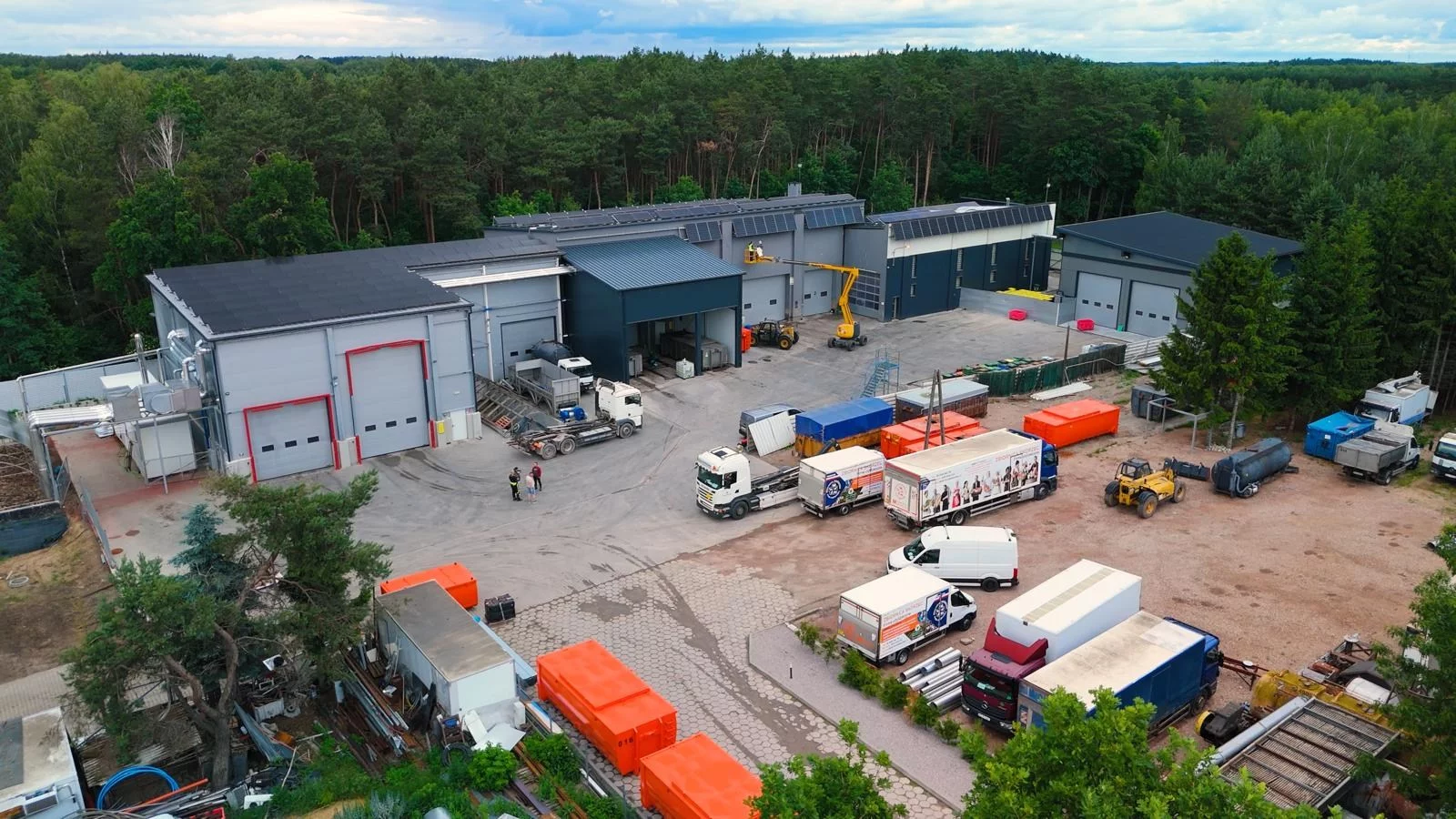
Skórzec – a village located in the Siedlce district of the Masovian Voivodeship. The municipality covers an area of about 119 km² and has over 8,000 inhabitants. It is here that the Skórzec Collection Point is located, one of the largest and most modern intermediate plants in the country, dealing with the collection and transport of category animal by-products and animal and plant waste. It is also one of the few facilities of its kind in Poland, although its role in the management of farms is invaluable. Why?
Collection Point Essential for Agriculture
A collection point for dead animals is a specialized facility for gathering and transshipping animal by-products. Dead livestock, domestic animals, and slaughter waste are brought there for safe and legal transport to rendering plants. These places also play a key sanitary role in preventing the spread of infectious diseases. Importantly, farmers and breeders have a legal obligation to report dead animals and hand them over to authorized entities. In other words, every animal that dies must be disposed of.
– Facilities dealing with the collection and management of animal by-products are an extremely important element of state security and the functioning of Polish agriculture. They are responsible for the efficient removal of dead animals and biological waste, which is crucial for limiting the risk of spreading infectious diseases such as ASF or bird flu. Without this type of infrastructure, it is impossible to maintain the sanitary safety of farms, the stability of food production, or the continuity of the entire breeding sector. Farmers must be sure that in crisis situations, the collection and disposal system operates quickly, effectively, and in accordance with the highest standards.
Therefore, such enterprises should be seen not only as a business activity but as part of the strategic infrastructure supporting the country's food security – explains Monika Przeworska, director of the Institute of Agricultural Economy.
Dynamic Evolution
Importantly, in recent years, thanks to the technological revolution, waste from meat processing has begun to return to the market as valuable biofuels, cosmetics, and clean energy, driving the transformation towards a circular economy. – A decade ago, our primary goal was the safe neutralization of biological material. Today, we are increasingly involved in the recovery of raw materials, energy, and components that are returned to use – emphasizes Marcin Cabaj, president of the Skórzec Collection Point.
Modern processing plants direct recovered substances to advanced industries. Animal fats are a desirable component for the production of ecological biofuels, while the extracted collagen components have become a valuable semi-finished product for pharmaceutical and cosmetics companies.
The Skórzec Collection Point has been operating continuously for nearly 40 years and – importantly for this story – is entirely financed by Polish capital. The company employs over 150 people and covers not only the Masovian Voivodeship but also Lublin and Podlaskie, i.e., virtually all of eastern Poland.
Mysterious Problems
However, for several months, the Skórzec Collection Point has been experiencing problems. Residents of the municipality complain about the unpleasant odor and demand intervention. As a result, the authorities have become involved and inspections have begun. They are being carried out by the Veterinary Inspection, the Provincial Inspectorate for Environmental Protection, the district building supervision, and the county office. Among other things, compliance with regulations and administrative decisions in the field of environmental protection is being checked.
The municipality has also requested explanations from the facility's owner. The mayor of the municipality, Jerzy Długosz, publicly stated that the company's owner informed him that, in accordance with the permits held, animal waste pasteurization is carried out on site. – The owner held a meeting with the municipal council, during which he presented us with a program to minimize the nuisance of the facility's operation. In the coming months, the problem of the unpleasant odor will be eliminated. Obviously, this is a process that does not take just one day – he said in an interview with "Radio dla Ciebie".
It is worth emphasizing that the owner of the Skórzec Collection Point has been investing and implementing measures to resolve the situation for some time. As he says, he cares about good relations with residents and the municipality. – The very form of transport, removal, or transshipment moments naturally generate odor emissions, but we are working on it. To meet expectations, we have invested additional funds in air filtration, such as fogging curtains or a carbon filter. Everything will be ready by the end of the month. We have also had a series of meetings and we are absolutely not ignoring information from residents – explains Marcin Cabaj, owner of the Skórzec Collection Point.
The entrepreneur would also like to build a biogas plant at the facility, which would ultimately solve the problem because the transport of waste to the installation would be underground. Moreover, one biogas plant with a capacity of 1 MW produces about 9 GWh of green energy per year, and such a volume allows for completely covering the electricity demand for about 3,000 households. Cabaj emphasizes that current processing plants have nothing in common with installations from a decade ago.
However, residents do not agree to this; they have submitted comments to the draft of the Municipality's General Plan (POG). As they point out, the problem is not only the unpleasant odors but also the potential possibility of spreading dangerous substances on the wheels of passing cars, which could threaten nearby livestock farms.
Huge Money in the Background
– Society must realize that animal waste does not disappear on its own. If we do not create infrastructure to handle it, the problem will not go away but will return in a much worse form... For the system to work, one thing is needed – understanding. The whole system works only when all its elements – from residents, through companies, to infrastructure – are coherent. What we throw away today comes back to us tomorrow – in the quality of the environment, health, and costs that we all bear – explains the president of the Skórzec Collection Point.
There is another important aspect to this whole matter – huge money. According to estimates by the European Food Safety Authority (EFSA), over 20 million tons of animal by-products are generated each year in the European Union. Experts point out that the potential of this business is enormous and continues to grow, and by 2031, the global market related to upcycling could reach a value of nearly $100 billion.
The question is whether the current problems of the Skórzec Collection Point, which has been successfully operating on the market for nearly 40 years, can be considered a coincidence? It is possible that this is just the calm before the storm. Especially since Western competition is lurking around the corner, ruthlessly pushing Polish entrepreneurs out of the market.


