
EU Struggles to Curb Energy Transition Dependence on China
By Tsvetana Paraskova - Sep 01, 2026, 4:00 PM CDT
- Europe has reduced its reliance on Russian fossil fuels only to become heavily dependent on China for solar panels, batteries, critical minerals and other clean-energy technologies.
- Brussels now wants to rebuild domestic supply chains and diversify imports, but officials warn this will increase costs and take years to achieve.
- Current efforts have made little progress, with China still supplying 98% of European solar panels and 88% of its lithium-ion battery imports in 2024.
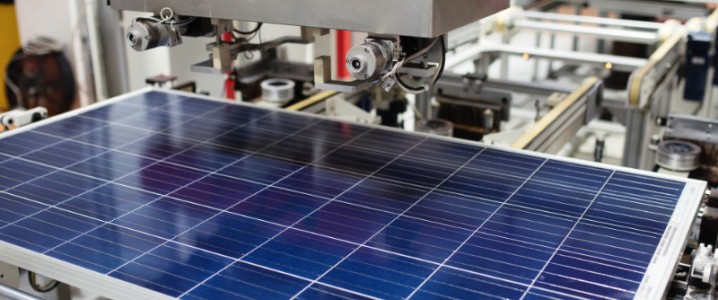
In recent years, the European Union has replaced one critical energy and security vulnerability with another heavy dependence for its green energy ambitions.
As the EU has moved to phase out Russian energy imports and reduce the overall dependence on oil and gas, it has rolled out massive renewable energy capacity. But the clean energy transition has become dependent on another global power, which could undermine Europe’s energy security—China.
China Dependence
For its renewable energy buildout, the EU has relied on imports of solar panels, wind turbines, critical minerals, battery materials, and other key equipment from China.
Cheaper Chinese products have flooded the EU market, raising concerns about the EU’s domestic manufacturing, energy security, and national security.
Since the launch of the EU green deal, the Russian invasion of Ukraine, and the Middle East crisis, the EU has moved to slash its oil and gas dependence. But in the process of rapidly rolling out solar, wind, and battery capacity, Europe has moved to replace the fossil fuel dependence with dependence on China for critical minerals and components of clean energy installations.
The EU is realizing this dependence on China is untenable, and has launched measures to reduce the reliance on Chinese clean energy components.
None have made a meaningful impact so far.
Europe has struggled to find the balance between fast green energy rollout to meet its ambitious climate goals and cut fossil fuel dependence, on the one hand, and too much reliance on Chinese products for the energy transition, on the other hand.
The Cost of Reducing Reliance on China
The move away from Chinese dependence will cost the EU, a lot.
Building domestic capacity will reduce the reliance on China, but it will come with high costs in the short term, according to EU Climate Action Commissioner Wopke Hoekstra.
The EU must act now to reduce the outsized dependence on China, Hoekstra told Euronews in an interview this week.
Europe should have acted five or ten years ago, and the longer it delays decisive action, the higher the costs will be in the long term, according to the Commissioner.
“But it will be much cheaper and much more to our advantage to do it now than be wishy washy and wait another five to 10 years,” Hoekstra told Euronews. Related: Asia Spot LNG Prices Hit 5-Month High as Hormuz Blockage Drags On
The high dependence on China is a “dangerous and uncomfortable” vulnerability for both Europe’s climate ambitions and economic security, the Commissioner added.
Chinese parts and equipment are also a vulnerability for Europe’s security of critical infrastructure, Hoekstra said.
Europe’s challenge right now is to build domestic capacities to reduce dependence on China, even at higher costs in the short term, according to Commissioner.
Europe’s Challenges and Struggles
But this is easier said than done.
The EU is struggling to diversify its imports, a report by the European Court of Auditors (ECA) found earlier this year.
“EU action on import diversification is not producing tangible results, bottlenecks hinder domestic production, and recycling is still in its infancy,” the auditors said.
“Against this backdrop, many EU-supported projects are unlikely to succeed in time.”
“Unfortunately, we are now dangerously dependent on a handful of countries outside the EU for the supply of these materials”, said Keit Pentus-Rosimannus, the ECA Member responsible for the audit.
“It is therefore vital for the EU to up its game and reduce its vulnerability in this area.”
The EU this year launched a platform to aggregate demand of raw materials and boost diversification under its Raw Materials Mechanism to diversify supplies of critical raw materials.
The EU is looking to partner with non-EU countries such as Brazil to diversify its supply chains away from China.
Analysts warn that dependence on China, while helping cheaper and faster clean energy installations, is undermining the economic and national security of the EU.
In 2024, China accounted for 98% of European solar panels, 88% of lithium-ion battery imports, and 61% of inverter imports, according to a report by non-profit strategy center Loom from earlier this year.
Despite the EU’s efforts in recent years, policies have not led to any significant de-risking of clean technology manufacturing, said the report, co-authored by Michal Meidan from the Oxford Institute for Energy Studies (OIES) and Michael Collins, a former deputy head of national security strategy at the UK Cabinet Office.
If Europe doesn’t rein in its dependence on China’s clean tech, its economies will suffer, and its AI ambitions could be undermined and risk becoming dependent on Chinese batteries, the authors said.
“The fastest, cheapest route to deploying clean energy at scale — solar panels, battery storage, grid technologies, heat pumps — currently runs overwhelmingly through China,” Loom’s Executive Director Joss Garman said.
“Europe’s response to its oil and gas dependency risks quietly consolidating another dependency: this time on Chinese clean energy technology,” Garman noted in the foreword to the report.
“One chokepoint replaced by another, no less real for being less visible on an energy bill.”
By Tsvetana Paraskova for Oilprice.com
More Top Reads From Oilprice.com
- Two Supertankers Hit by Unknown Projectiles in Strait of Hormuz
- Russia Doubles Dark Fleet to Ship LNG to Asia
- U.S. Energy Storage Capacity Installations Hit Record High in Q2
Download The Free Oilprice App Today


ADVERTISEMENT
Set us as your preferred Google source
FACEBOOK Twitter LINKEDIN REDDIT PRINT
Previous Post\ \ India Builds Clean Power Faster Than It Can Use It

Tsvetana Paraskova
What I Cover Tsvetana Paraskova is an energy and commodities journalist who has contributed to Oilprice.com for nearly a decade, covering global energy markets, commodities,…
Related posts
Solar Power Is Booming in Emerging Markets U.S. Army To Spend $2.2B On Nuclear Microreactors At Military Bases Solar Has Crossed a Critical Economic Tipping Point
Leave a comment
First Name
Last Name
That email address is already in the database. Please login to your account to post your comment, or enter a different email address to continue with your comment & account creation.
Captcha
Comment
Please understand that, by submitting this form, you will be creating a free OilPrice.com account, and therefore agree to abide by our Terms of Use. Your details will be stored in our database and shared with our third party mailing list provider. You will be sent an email containing a link that will ask you to generate a new password - please follow the link to complete your OilPrice account activation.
We will save the information entered above in our website. Your comment will then await moderation from one of our team. If approved, your data will then be publically viewable on this article. Please confirm you understand and are happy with this and our privacy policy by ticking this box. You can withdraw your consent, or ask us to give you a copy of the information we have stored, at any time by contacting us.
ADVERTISEMENT
ADVERTISEMENT
Most Popular
 \ \ U.S. Refiners Face New Crude Squeeze as Canada Cuts Oil Sands Output
 \ \ Solar Has Crossed a Critical Economic Tipping Point
  \ \ Aramco Finds a New Way to Keep Saudi Crude Flowing to China
  \ \ New Tech Breakthrough Aims To Solve The World's Plastic Waste Problem
  \ \ The U.S. Power Play in Iraq That Moscow and Beijing Didn’t See Coming

ADVERTISEMENT
ADVERTISEMENT
EXXON Mobil-0.35
Open57.81Trading Vol.6.96MPrevious Vol.241.7B
BUY 57.15
Sell 57.00


